Former UN torture expert blasts ‘obsessive’ focus on Gaza, says hostage-taking was overlooked
Summary
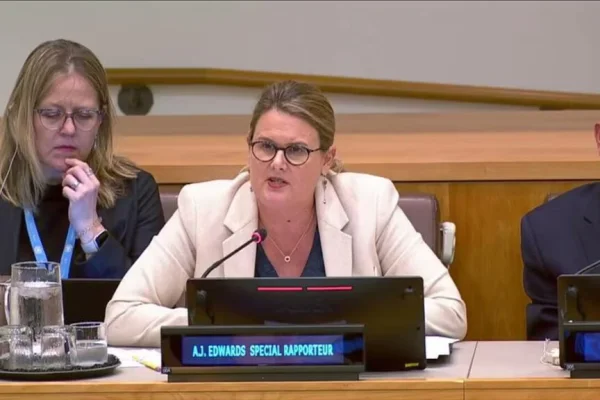
Former UN special rapporteur on torture Alice Jill Edwards accused the organization of applying an imbalanced standard to the Gaza war, emphasizing Palestinian suffering while inadequately documenting Hamas’s alleged torture, sexual violence, hostage-taking, starvation, and coercion of Israeli captives. Citing her visit to Kfar Aza and hostage footage involving Evyatar David, Edwards criticized fellow UN officials and broader funding and independence problems. She also faulted Secretary-General António Guterres for insufficiently forceful conflict mediation and urged institutional reform.
Watchmen Signals
Biblical Context
The reported allegations involve the treatment of vulnerable captives, coercion through hostage videos, possible torture and starvation, sexual violence, and the duty of international authorities to judge abuses impartially. These issues connect meaningfully with Scripture’s repeated demand that rulers defend the weak and administer justice without favoritism. Psalm 82:3–4 calls those with authority to defend the weak, uphold the afflicted, and rescue the vulnerable from oppression. That principle is directly relevant to the reported concern that hostages and their families were not given equal attention by international human-rights mechanisms. Proverbs 31:8–9 similarly commands advocates to speak for those who cannot speak for themselves and to defend the rights of the poor and needy; applied here, it supports attention to victims regardless of whether they are Israeli or Palestinian. Leviticus 19:15 and Deuteronomy 16:19 prohibit partiality and corrupt judgment. These passages do not establish whether the UN acted improperly, but they provide a clear standard against selectively recognizing suffering or allowing political commitments to determine whose testimony receives consideration. James 2:1–4 likewise condemns partiality, though its immediate context concerns favoritism within the Christian assembly rather than international institutions. Psalm 10:17–18 emphasizes God’s concern for the oppressed and the duty to secure justice for the vulnerable. Romans 13:1–4 describes governing authority as having a responsibility to restrain wrongdoing and serve the public good; the passage concerns civil authorities generally, not the UN specifically, but it offers a relevant framework for evaluating claims that an institution charged with conflict mediation failed to confront abuse effectively. These passages support moral principles of impartial justice, protection of victims, and accountability. They do not validate every allegation in the report, settle disputed evidence, or identify a specific prophetic fulfillment. The supplied facts therefore support a meaningful ethical and justice-related connection, while offering no distinctive basis for a prophecy claim.
Biblical Sources
Scripture references supporting the biblical context above.
Forbids partiality and corrupted judgment, providing a biblical standard relevant to allegations of selective documentation or politically influenced investigations.
Condemns showing partiality based on status; although its immediate context is the Christian community, it offers an indirect parallel to the reported concern about unequal attention to victims.
Prohibits unjust judgment and requires fair treatment, supporting the concern that victims should not receive unequal consideration because of political or national identity.
Commands advocacy for those who cannot speak for themselves and impartial defense of the rights of the vulnerable, relevant to the reported treatment of hostages and their families.
Presents God as attentive to the oppressed and concerned with justice for the vulnerable, relating to alleged torture, coercion, and the need for accountability.
Calls authorities to defend the weak and afflicted and rescue the vulnerable from oppression, directly relating to alleged hostage abuse and institutional responsibility to protect victims.
Describes governing authority as responsible for restraining wrongdoing and serving the public good; this provides a broader framework for assessing claims about institutional failure, though it does not specifically address the UN.
Comments
No comments yet.
Sign in to join the conversation.
Sign InStay Informed. Grow in Biblical Understanding.
Explore important news from around the world through the context of God's Word. Create your FREE Watchmen account to discover more news analysis, Biblical Insights, and Scripture-based perspectives.
Create Your FREE AccountFree to join. No credit card required.