Michigan Democratic Senate nominee says Israel ‘is actually not our friend’
Summary
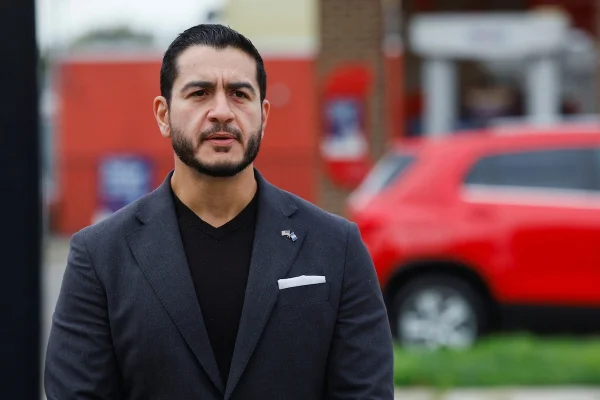
Michigan Democratic Senate nominee Abdul El-Sayed said Israel is not an ally because he believes it uses U.S. financial support to draw America into unnecessary wars. His remarks have intensified scrutiny over his views on Israel, terrorism, and antisemitism. Republican Jewish Coalition CEO Matt Brooks accused El-Sayed of excusing the March attack on Temple Israel in West Bloomfield and announced a $2 million voter-turnout effort targeting Michigan’s Jewish community. Reports also suggest some traditionally Democratic Jewish voters may support the Republican nominee.
Watchmen Signals
Biblical Context
The reported dispute touches several subjects Scripture addresses meaningfully: hostility toward Israel and the Jewish people, violence against a synagogue, alleged excuses for terrorism, and the responsibility of public officials to pursue justice. These connections concern ethical and political principles, not proof that a particular biblical prophecy is being fulfilled. Genesis 12:1-3 presents God’s promise to Abraham and says that blessing and cursing Abraham’s family have consequences. In Christian interpretation, this passage supports taking hostility toward the Jewish people seriously and rejecting antisemitism. It does not, however, settle every modern policy question involving Israel, nor does it require agreement with every action of the Israeli government. The article reports criticism of Israel as a state and concerns about anti-Israel rhetoric; those facts should not automatically be equated with antisemitism, although the reported calls to protect Jewish Americans amid rising antisemitism are directly relevant to the passage’s broader concern with the treatment of Abraham’s descendants. The attack on Temple Israel, if accurately described, also relates to the biblical condemnation of murder and violence. Exodus 20:13 prohibits murder, while Psalm 82:3-4 calls for the defense of the vulnerable and the restraint of the wicked. These passages support condemning an attack on Jewish worshipers and insisting on protection and justice, while leaving the factual and legal questions about the attacker’s motives to proper investigation. Romans 13:1-4 describes civil authority as responsible for restraining wrongdoing and punishing evil. That principle bears on the article’s discussion of terrorism, security watchlists, and the duties of elected officials. It does not endorse every watchlist practice or exempt governments from accountability; it establishes the general responsibility of public authority to protect people and administer justice. The article’s allegations about family members and terrorism therefore require evidence rather than guilt by association, consistent with biblical warnings against false accusation and partial judgment, such as Exodus 23:1-3 and Proverbs 18:13. No specific prophetic passage is sufficiently matched by the reported remarks, campaign spending, or possible movement among Jewish voters. The presence of Israel, antisemitism, and political conflict is not by itself evidence of prophetic fulfillment.
Biblical Sources
Scripture references supporting the biblical context above.
The command against murder directly supports condemnation of the reported violent attack against a synagogue and its potential victims.
These instructions prohibit spreading false reports and warn against partiality in legal judgment. They are relevant to the article’s unverified allegations about relatives, terrorism, and political associations.
God’s covenantal promise to Abraham includes consequences associated with blessing or cursing his family. It provides a meaningful biblical basis for taking hostility toward the Jewish people seriously, while not resolving every modern dispute over Israeli policy.
The proverb warns against answering a matter before hearing it. It supports caution about claims involving El-Sayed’s family members and the incomplete context surrounding his comments about the synagogue attack.
The passage calls for defending the weak and rescuing people from the hand of the wicked, which relates to protecting Jewish worshipers and pursuing justice after terrorist violence.
Paul describes governing authorities as responsible for restraining wrongdoing and administering justice. This illuminates the article’s discussion of terrorism, security systems, and the responsibilities of public officials without endorsing every government policy.
Comments
No comments yet.
Sign in to join the conversation.
Sign InStay Informed. Grow in Biblical Understanding.
Explore important news from around the world through the context of God's Word. Create your FREE Watchmen account to discover more news analysis, Biblical Insights, and Scripture-based perspectives.
Create Your FREE AccountFree to join. No credit card required.