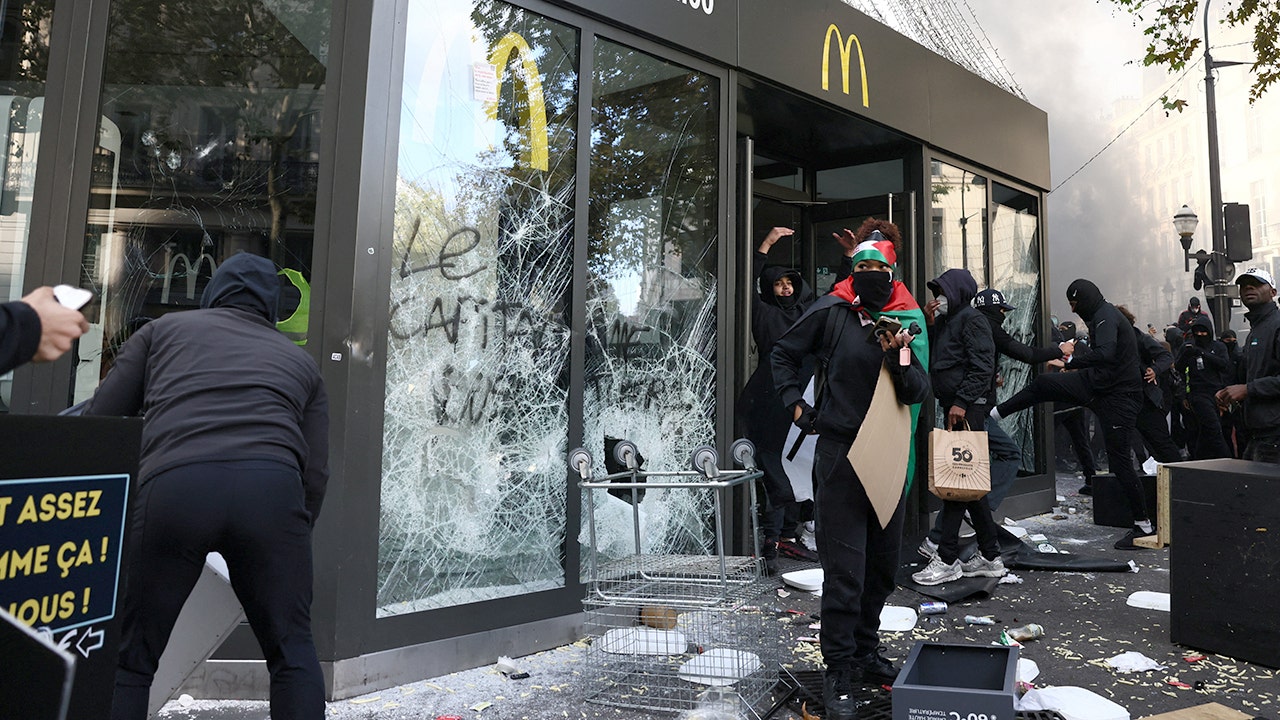
McDonald's ransacked and wrecked as stores, restaurants suffer from violence and rioting
Summary
Violent unrest following cost-of-living demonstrations caused extensive damage and looting across Paris. A McDonald’s near Gare de l’Est was ransacked, while a café near Place de la République was burned and its owner’s son said his mother was hospitalized after suffering a head injury. Supermarkets, wine shops, and other businesses were also targeted, and journalists were reportedly assaulted. Paris issued curfews in two locations, while some European governments advised travelers to avoid large crowds. A commentator additionally alleged rising antisemitism, though the article provides limited evidence for that broader claim.
Watchmen Signals
Biblical Context
The looting, vandalism, assault, and threats described in Paris correspond directly to biblical prohibitions against theft and violence. The eighth commandment forbids stealing, which applies plainly to removing goods from supermarkets and damaging businesses in ways that deprive owners of their property (Exodus 20:15). Scripture also condemns violence and calls people to seek justice rather than exploit disorder; Leviticus 19:11 prohibits stealing and dealing falsely, while Leviticus 19:18 establishes the duty to love one’s neighbor. These passages address the conduct reported, not the legitimacy of every underlying grievance about living costs. Government authorities also have a recognized responsibility to restrain wrongdoing and protect the public. Romans 13:1-4 describes civil authority as accountable for punishing evil and maintaining order. That principle supports the need for lawful responses to riots, while not automatically endorsing every government policy or policing tactic. Isaiah 1:17 likewise calls for justice and protection of the vulnerable, which is relevant to residents, workers, business owners, and injured bystanders affected by the unrest. The allegation of rising antisemitism raises an additional biblical concern because Scripture gives the Jewish people a continuing historical and theological significance, and it condemns hatred, false witness, and oppression. However, the supplied account does not document enough specific incidents to establish the extent or causes of antisemitism in Paris. The events therefore have meaningful biblical relevance through the concrete issues of theft, violence, lawlessness, justice, and hostility toward Jews, but they do not identify a particular end-times prophecy. General social instability and disorder should not be treated as proof of prophetic fulfillment.
Biblical Sources
Scripture references supporting the biblical context above.
The commandment against stealing directly addresses the reported looting of supermarkets and other businesses.
The call to cease wrongdoing, seek justice, correct oppression, and defend the vulnerable relates to protecting injured people, residents, workers, and businesses affected by the unrest.
This passage prohibits stealing, false dealing, and hatred, and commands love of one’s neighbor; those principles apply to looting, vandalism, threats, and harm to ordinary residents.
Paul’s discussion of Israel’s continuing place in God’s purposes provides relevant theological context for concern about hostility toward Jews, although the supplied report does not establish the scope of the alleged antisemitism.
Paul describes civil authority as responsible for restraining wrongdoing, providing biblical context for curfews and lawful efforts to protect the public, without endorsing every government action.
Comments
No comments yet.
Sign in to join the conversation.
Sign InStay Informed. Grow in Biblical Understanding.
Explore important news from around the world through the context of God's Word. Create your FREE Watchmen account to discover more news analysis, Biblical Insights, and Scripture-based perspectives.
Create Your FREE AccountFree to join. No credit card required.