Myanmar’s Military Intensifies Attacks as U.S. Reopens Diplomatic Talks
Summary
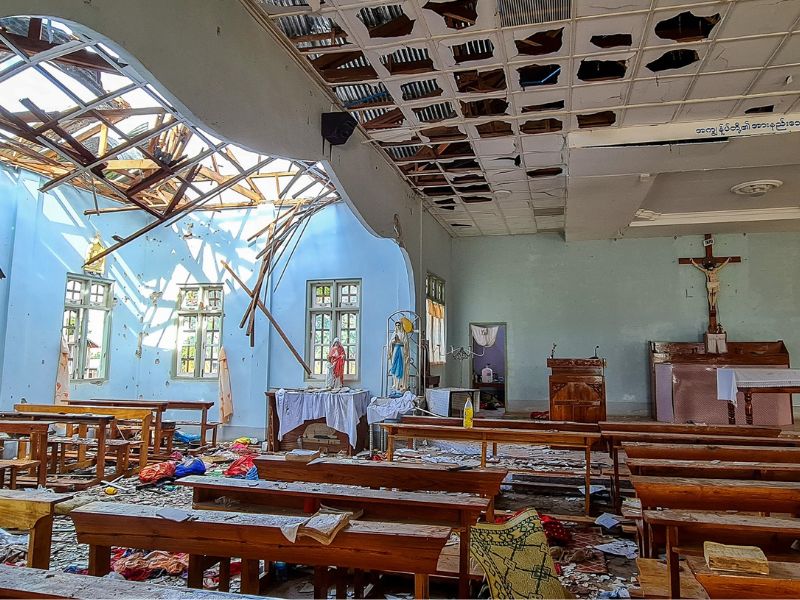
Myanmar’s military-backed authorities and aligned militias are accused of killing Christian pastors, occupying church properties, and burning churches amid continuing armed conflict. Reported incidents include the September killing of Baptist pastor Rev. Dal Thawn Tuang in Chin state, earlier executions of two Christian men, and military use or destruction of Christian sites in Kachin state. The allegations coincide with the United States resuming high-level talks with Myanmar’s military leadership over issues including detained Americans and scam centers, prompting concern that religious freedom and accountability could receive insufficient attention.
Watchmen Signals
Biblical Context
The killing of pastors and other Christians directly relates to Jesus’ teaching that his followers may face hatred, persecution, and false accusations because of their allegiance to him. Matthew 5:10-12 calls persecuted believers blessed and urges faithfulness without suggesting that persecution itself is evidence that every related event fulfills a particular prophecy. John 15:18-20 similarly explains that hostility toward Jesus’ disciples can arise because the world opposed Jesus first. These passages help interpret the reported danger faced by Christian leaders, while also cautioning against treating suffering as a license for retaliation. The reported attacks also relate to the apostolic teaching that faithful Christian living can bring persecution. Second Timothy 3:12 states that all who desire to live a godly life in Christ Jesus will be persecuted. This is a direct principle concerning the experience of believers under hostile authorities, though it does not identify Myanmar’s events as a specific end-times fulfillment. Scripture also gives governments a responsibility to restrain wrongdoing and protect people from violence. Romans 13:1-4 describes civil authority as accountable to God and intended to punish evil and uphold order. The passage does not endorse every government action; applied to the reported killings, destruction, and occupation of religious sites, it underscores the moral failure of authorities who use power to harm civilians or suppress worship rather than protect them. The article’s allegations should nevertheless remain distinguished from claims independently established in court. The article’s inclusion of displaced families and vulnerable religious minorities also connects with the biblical demand for justice and protection of the oppressed. Psalm 82:3-4 calls those with authority to defend the weak and rescue the needy from violence. This is a broad moral application rather than a prediction about Myanmar. The references to Rohingya abuses further show that biblical concern extends beyond one religious community; Scripture’s call to justice applies to victims regardless of ethnicity or faith. These passages support a direct biblical connection because the central reported issues are persecution of believers, attacks on Christian leaders and places of worship, displacement, and the conduct of governing authorities. They do not, however, establish that a particular prophetic event is unfolding.
Biblical Sources
Scripture references supporting the biblical context above.
Paul teaches that those who seek to live faithfully in Christ should expect persecution, directly relating to the reported suffering of Christians under repression.
Jesus warns that his disciples may be hated and persecuted because the world opposed him, providing direct context for hostility toward Christian believers and leaders.
Jesus addresses persecution, insult, and false accusation directed at his followers, directly illuminating the reported threats and killings affecting Christian communities.
The psalm calls rulers and authorities to defend the weak and rescue the vulnerable from violence, relating to displaced civilians and persecuted religious minorities.
Paul describes civil authority as responsible before God for restraining wrongdoing and promoting order; the passage highlights the moral accountability of authorities accused of violence and abuse.
Comments
No comments yet.
Sign in to join the conversation.
Sign InStay Informed. Grow in Biblical Understanding.
Explore important news from around the world through the context of God's Word. Create your FREE Watchmen account to discover more news analysis, Biblical Insights, and Scripture-based perspectives.
Create Your FREE AccountFree to join. No credit card required.