Hungary and Poland defend tough migration policies as France reels from violent unrest
Summary
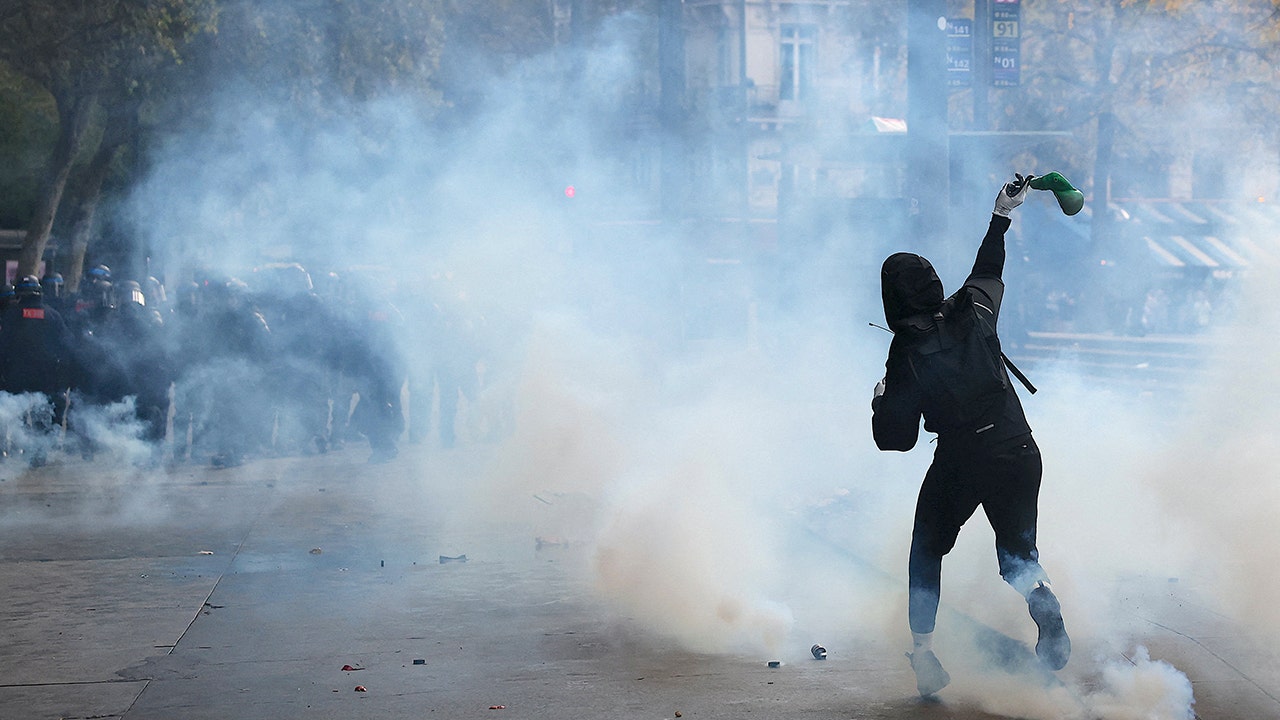
More than 800 people were reportedly arrested in France after protests involving looting, arson, and clashes with police. The unrest, also described in connection with demonstrations in Italy, has become political ammunition for Hungary’s Péter Magyar and Poland’s Donald Tusk, who defend stricter immigration and border policies. Commentators say images of disorder are strengthening anti-immigration arguments in Central and Eastern Europe. The article also cites foreign-born population and crime figures, though their definitions, sourcing, and comparability are not independently established in the report.
Watchmen Signals
Biblical Context
Violent disorder and deliberate destruction are directly relevant to Scripture’s teaching on public authority and justice. Romans 13:1-4 describes governing authorities as responsible for restraining wrongdoing and commends punishment of those who do evil; this supports the article’s distinction between peaceful protest and criminal violence, while not endorsing every government policy or every political claim made in response. First Peter 2:13-17 likewise calls for respect toward legitimate authority and insists that Christian freedom must not become a cover for evil. The migration debate also has a genuine biblical dimension, but Scripture does not reduce it to either unrestricted admission or blanket exclusion. Leviticus 19:33-34 commands Israel to treat the foreigner residing among them with justice and love, grounding that duty in Israel’s own experience as a sojourner. That principle is relevant to the article’s discussion of migrants, asylum policy, deportation, and integration. At the same time, the passage does not settle modern questions about border administration, eligibility for asylum, or the criminal consequences of violating a country’s laws. The article’s use of riots as political ammunition raises a further issue of judgment and responsibility. Leaders may legitimately address public safety, but Scripture condemns partiality and unjust treatment; Deuteronomy 16:19 warns judges not to pervert justice or show partiality. That principle cautions against treating all migrants, protesters, or political opponents as responsible for the acts of violent individuals. No specific prophetic passage is established by these events. The unrest may resemble broad biblical warnings about lawlessness, but the supplied facts do not identify a distinctive prophetic fulfillment or pattern.
Biblical Sources
Scripture references supporting the biblical context above.
Calls for proper regard for governing authorities while warning that Christian freedom must not be used as a cover for evil; relevant to the article’s distinction between lawful protest and violence.
Prohibits perverting justice and showing partiality, cautioning against assigning collective guilt to migrants or protesters because of the crimes of particular individuals.
Commands Israel to treat the resident foreigner with love and equality before the law, materially informing the article’s discussion of migrants, integration, and national policy.
Teaches that governing authorities have responsibility to restrain wrongdoing and punish criminal conduct, directly relating to riots, arson, looting, and public order.
Comments
No comments yet.
Sign in to join the conversation.
Sign InStay Informed. Grow in Biblical Understanding.
Explore important news from around the world through the context of God's Word. Create your FREE Watchmen account to discover more news analysis, Biblical Insights, and Scripture-based perspectives.
Create Your FREE AccountFree to join. No credit card required.