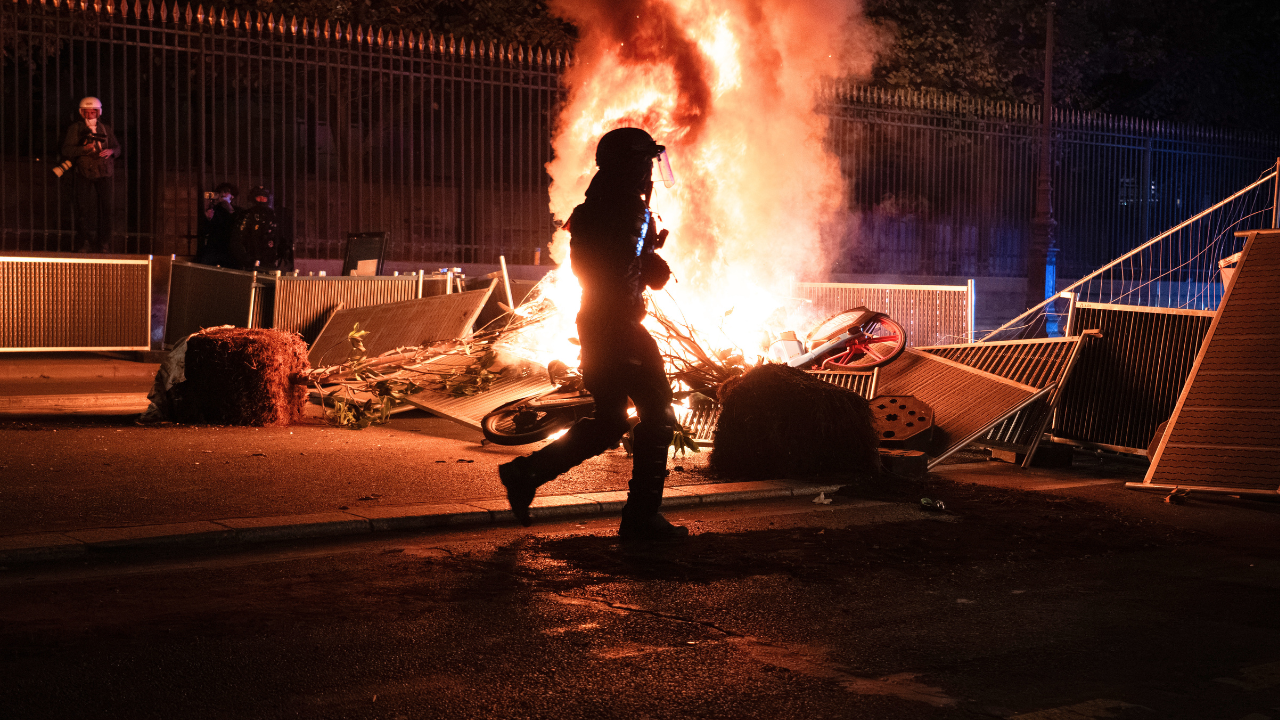
Photos show aftermath of riots as masked groups clash with police across France
Summary
France faced widespread unrest on October 17, 2026, as hundreds of thousands demonstrated over rising living costs, fuel prices, and poor school conditions. Police reported 1,800 arrests, including 855 in the Paris region, amid clashes, looting, arson, and property damage. In Limoges, fire severely destroyed the historic town hall, with officials saying much of the building was lost. President Emmanuel Macron had urged calm but drew criticism after attending a concert during the unrest. Donald Trump blamed immigration and called for tighter borders.
Watchmen Signals
Biblical Context
The reported looting, arson, assaultive clashes, and destruction of public and private property connect directly with biblical teaching about theft, violence, and social order. The eighth commandment prohibits stealing (Exodus 20:15), while Ephesians 4:28 contrasts theft with honest labor and generosity. These passages address the conduct described in the report, though they do not determine whether the protesters’ complaints about living costs or education were justified. Romans 13:1-4 describes governing authorities as responsible for restraining wrongdoing and preserving public order. That principle is relevant to the French police response and to the government’s duty to protect residents, businesses, and historic institutions. It does not mean every government policy is beyond criticism, nor does it make every act of protest illegitimate. Peaceful protest and lawful appeals for reform must be distinguished from violence and destruction. Scripture also recognizes obligations toward people facing hardship. James 2:14-17 teaches that professed concern for people in need should involve practical care, and Proverbs 31:8-9 calls for defending the vulnerable and judging fairly. These passages provide a broader framework for considering economic distress and public welfare, but the supplied report does not establish the precise causes of France’s rising costs or show whether authorities have acted unjustly. The biblical connection is therefore strongest concerning lawlessness, property destruction, justice, and the responsibilities of public authority—not a specific endorsement or condemnation of this French movement. Nothing in the reported facts identifies a particular prophetic event. The unrest resembles general biblical warnings about violence and disorder, but such broad resemblance is insufficient to claim fulfillment of a specific prophecy.
Biblical Sources
Scripture references supporting the biblical context above.
Paul contrasts theft with honest work and generosity, providing a direct ethical framework for evaluating looting and property damage.
The commandment against stealing directly relates to the reported looting of businesses and destruction of property.
James emphasizes practical concern for people in need, which bears indirectly on the reported economic hardship and public-welfare grievances.
The call to speak for the vulnerable and judge justly relates to legitimate public concerns about hardship, fairness, and government responsibility.
This passage describes governing authorities as responsible for restraining wrongdoing, relevant to the police response and the state’s duty to preserve public order.
Comments
No comments yet.
Sign in to join the conversation.
Sign In