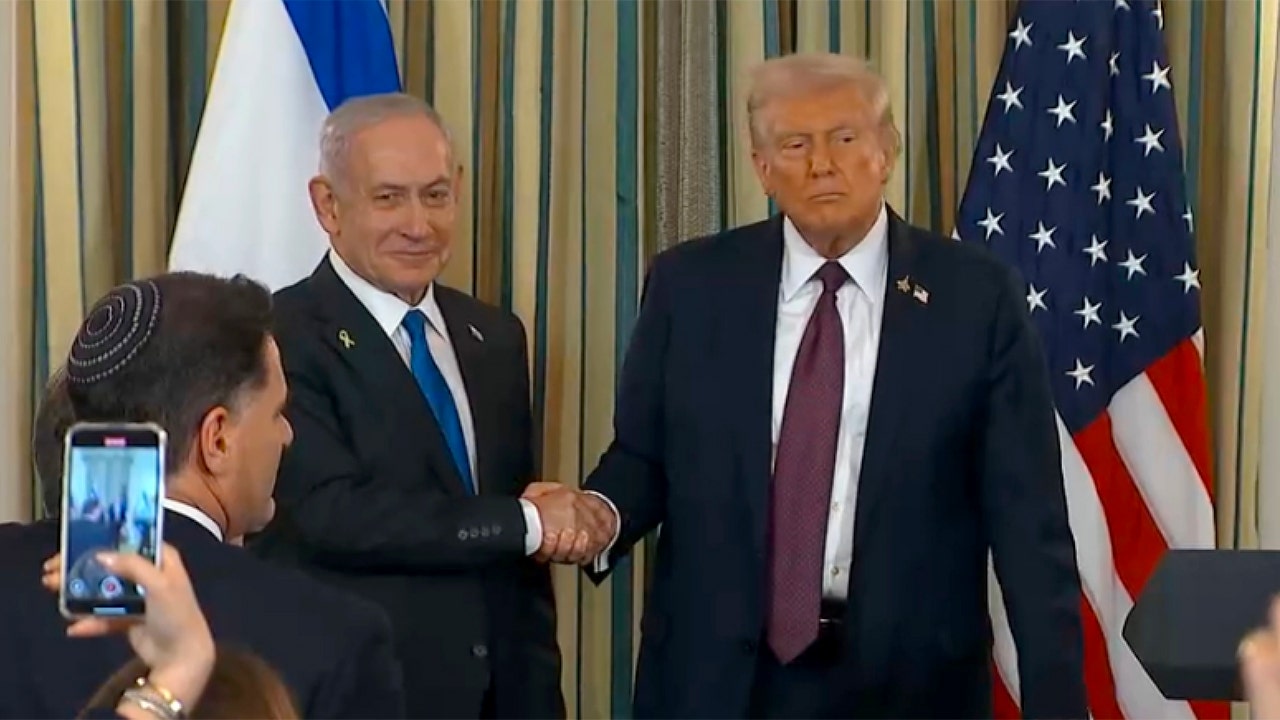
Trump says Netanyahu needs to be re-elected, or else US will have to 'finish the job’ against Iran alone
Summary
President Donald Trump endorsed Israeli Prime Minister Benjamin Netanyahu and Likud ahead of Israel’s Oct. 27 Knesset election, presenting Netanyahu as a strong U.S. partner amid conflict with Iran and its proxies. Netanyahu thanked Trump and said they would complete their mission together. Likud is reportedly projected to win about 18–22 seats, while Netanyahu’s broader right-religious bloc is forecast at roughly 49–51 seats—below the 61 needed to form a government, leaving smaller parties decisive in coalition negotiations.
Watchmen Signals
Biblical Context
Israel’s choice of national leadership and the conduct of rulers during war are matters Scripture treats seriously, even though the modern Knesset election is not specifically foretold. Romans 13:1–4 describes governing authorities as accountable to God and assigns them a responsibility to restrain wrongdoing and pursue public order. That principle is relevant to evaluating the responsibilities of Netanyahu, the Knesset, coalition partners, and foreign leaders involved in decisions affecting security and war; it does not endorse any particular candidate or party. Israel’s political structure is not the monarchy described in the Old Testament, but Deuteronomy 17:14–20 gives a specific framework for considering leadership in Israel: a ruler was to remain under God’s law, avoid self-exaltation and the accumulation of military and personal power, and lead with covenantal accountability. The passage offers a theological standard for judging leadership rather than a prediction about Netanyahu or the election. The article also reports a major-power relationship in which the United States is pressing for a particular Israeli leader while regional conflict continues. Scripture repeatedly treats rulers’ decisions about war, security, and alliances as morally consequential. Proverbs 21:1–2 emphasizes that rulers remain subject to God’s oversight and that human leaders can misjudge their own conduct. This supports careful scrutiny of political claims and military policy, but it does not identify a prophetic fulfillment. The election’s outcome depends on coalition-building and the choices of smaller parties. That feature illustrates the practical importance of counsel and collective decision-making reflected in Proverbs 15:22, although the connection is a general wisdom principle rather than a direct description of Israel’s parliamentary system. No specific biblical prophecy is established by the reported endorsement, polling, or conflict with Iran. The presence of Israel, political tension, and war is not by itself sufficient to identify fulfillment of a particular prophetic passage.
Biblical Sources
Scripture references supporting the biblical context above.
Sets out standards for an Israelite king, including humility, restraint of power, and submission to God’s law; it provides a leadership standard rather than a prediction about the modern election.
Highlights the value of counsel in decision-making, a general principle relevant to coalition negotiations and collective governance, though not a direct description of Israel’s electoral system.
Teaches that rulers remain under God’s sovereignty and that people may wrongly judge their own conduct as right, supporting careful evaluation of political and military claims.
Describes governing authorities as accountable to God and responsible for restraining wrongdoing and pursuing public order, which bears on the conduct of Israeli and foreign leaders reported in the story.
Comments
No comments yet.
Sign in to join the conversation.
Sign In