Arizona man threatened with arrest for preaching at holiday festival files lawsuit
Summary
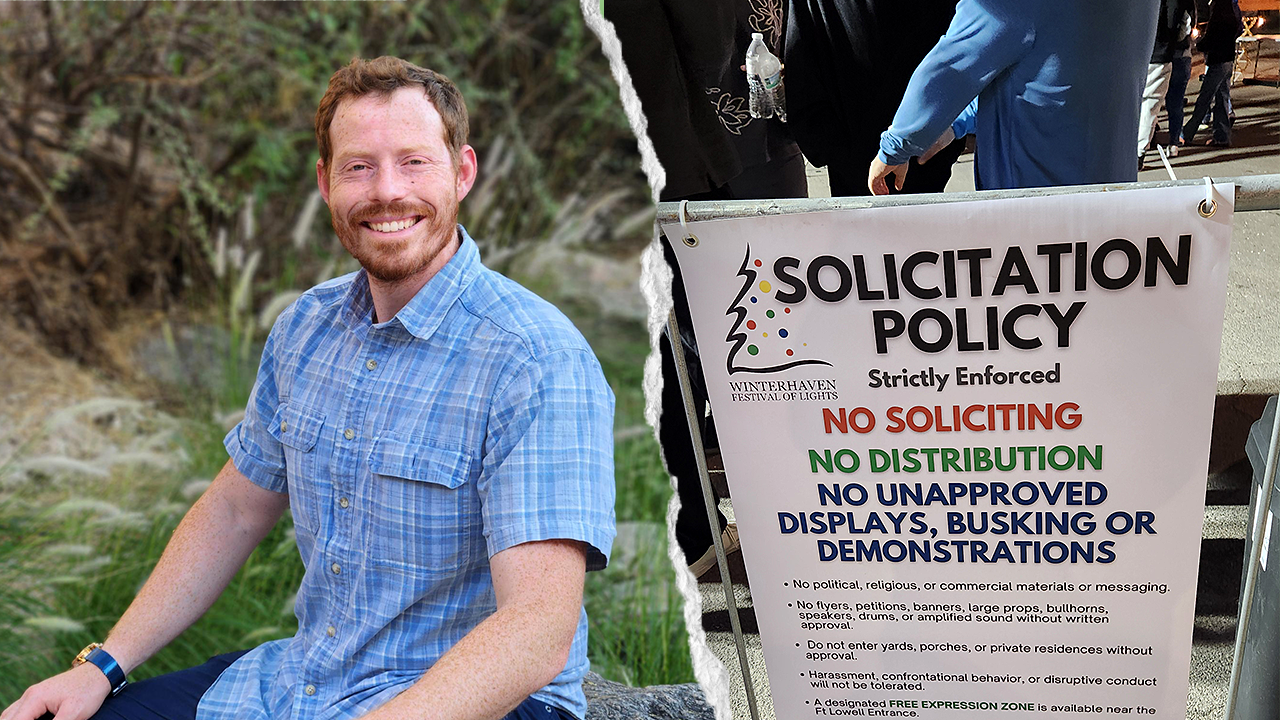
Arizona evangelist David Hoffman is suing Tucson after police allegedly removed him from the December 2025 Winterhaven Festival of Lights and threatened him with trespassing charges for discussing Jesus and distributing gospel materials. A city policy reportedly barred religious, political, and issue-based leafleting inside the festival, while directing Hoffman to a separate “free expression” zone. First Liberty Institute claims the policy violated his First Amendment, religious-exercise, due-process, and Arizona constitutional rights. Tucson declined to comment on the pending litigation, and police had not responded to media inquiries.
Watchmen Signals
Biblical Context
Hoffman’s stated purpose—to speak with people who may not attend church and to share the gospel at a public gathering—connects directly with Jesus’ command to make disciples and teach others. Matthew 28:19-20 gives Christians a positive commission to proclaim the faith; it does not by itself settle the constitutional question or authorize Christians to disregard neutral public-safety rules. The reported instruction that Hoffman could not discuss Jesus even with a person who approached him raises a closer parallel to the apostles’ experience in Acts 4:18-20. After being ordered not to speak in Jesus’ name, Peter and John said they could not stop speaking about what they had seen and heard. The passage supports the importance of faithful witness when authorities attempt to silence specifically Christian testimony, though the Tucson dispute is a modern civil lawsuit and is not equivalent in scale or circumstance to the apostles’ persecution. Scripture also recognizes governing authority and its responsibility to maintain public order. Romans 13:1-4 describes civil authorities as accountable for exercising authority and restraining wrongdoing. That principle allows room for legitimate event rules, but it does not provide a biblical endorsement of viewpoint discrimination or prove that Tucson’s policy was unlawful. Whether the rule treated religious speech differently from comparable speech remains a matter for the court. The reported event is a local conflict over religious expression, not an identifiable end-times development. Scripture warns that believers may face opposition, but these facts do not correspond to a specific prophetic passage or establish prophetic fulfillment.
Biblical Sources
Scripture references supporting the biblical context above.
The authorities ordered Peter and John not to speak or teach in Jesus’ name, but they refused to stop reporting what they had seen and heard. This provides a specific biblical parallel to alleged governmental restrictions on Christian witness, while the circumstances remain materially different.
Jesus commands his disciples to make disciples, baptize, and teach the nations. This directly supports the Christian duty to proclaim the gospel, which Hoffman says he was attempting to do.
Paul teaches that governing authorities possess real responsibility and are accountable for maintaining order and punishing wrongdoing. This helps frame the city’s asserted authority to regulate a public event without resolving whether its particular policy was just or constitutional.
Comments
No comments yet.
Sign in to join the conversation.
Sign In