NFL monitors France street violence before Saints-Steelers game near Paris with a major decision looming
Summary
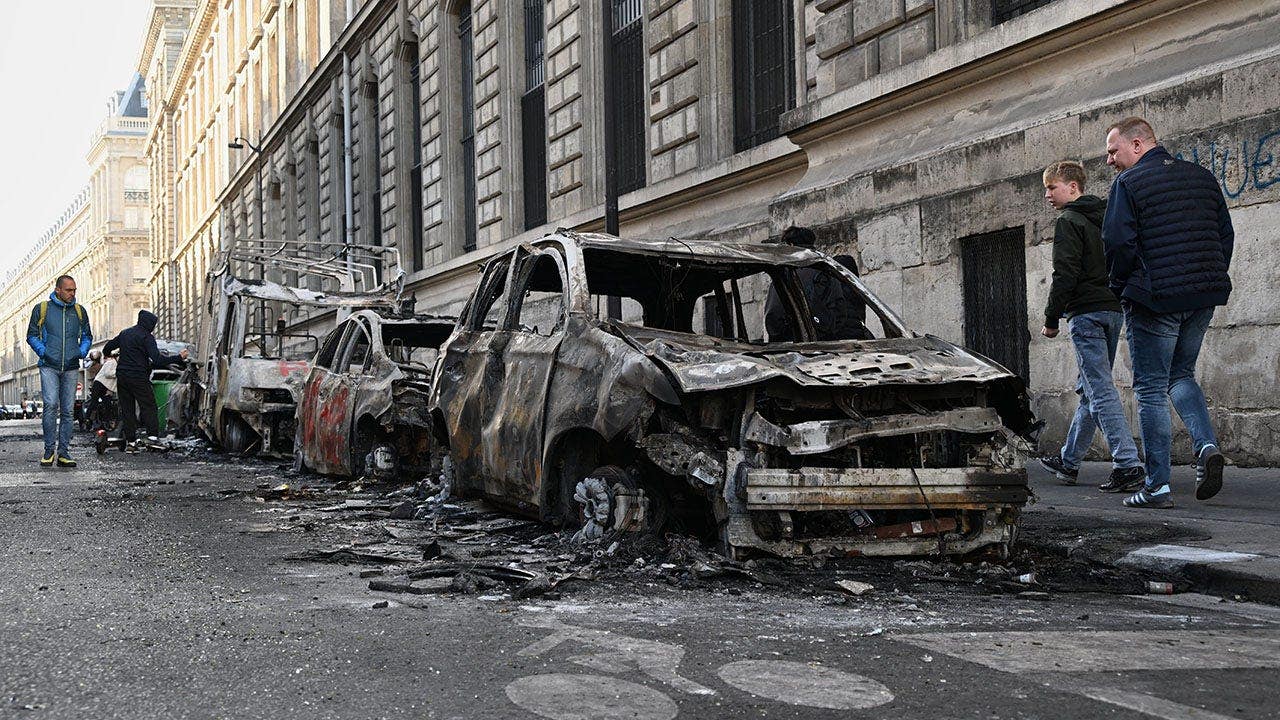
Violence reportedly spread across France after large demonstrations on Saturday, with masked groups clashing with police, looting businesses, and setting fire to private property and public buildings, including Limoges’ historic city hall. Arrests reportedly rose from about 1,000 to 1,800, with 855 in the Paris region. The unrest has drawn international attention and created uncertainty around the NFL’s scheduled October 25 game between the New Orleans Saints and Pittsburgh Steelers near Paris. The league says relocation remains possible if security conditions worsen.
Watchmen Signals
Biblical Context
The reported arson, looting, vandalism, and clashes with police connect directly to Scripture’s treatment of violence, lawlessness, property, and civil authority. Romans 13:1-4 describes governing authorities as responsible for restraining wrongdoing and maintaining public order; it does not endorse every action of a government, but it establishes a legitimate civil role in punishing serious wrongdoing. That principle relates to the reported challenge facing French authorities as they respond to arson, destruction of public buildings, and attacks on property. Proverbs 29:2 observes that people generally rejoice when the righteous exercise authority and groan when the wicked rule. In context, the verse concerns the moral quality of leadership rather than offering a prediction about civil unrest. It can illuminate the public consequences of disorder and unjust governance, but the supplied facts do not establish whether the unrest resulted from righteous or wicked rule, nor do they justify assigning collective moral guilt to every demonstrator. The destruction and looting also conflict with the biblical prohibition against stealing and the broader duty to respect another person’s property, reflected in Exodus 20:15. That passage is a direct moral prohibition, though applying it to the reported events remains straightforward and does not explain the political causes of the protests. Scripture also condemns false witness and urges impartial justice, so claims about the protesters’ ideology, the causes of the unrest, and the government’s response should be evaluated carefully rather than accepted solely from partisan descriptions. These passages support a meaningful connection to biblical teaching about lawlessness, violence, justice, and governmental responsibility. They do not identify the French unrest as fulfillment of a particular prophecy. The reported events are serious social disorder, but general unrest and violence are not sufficient evidence of prophetic fulfillment.
Biblical Sources
Scripture references supporting the biblical context above.
The prohibition against stealing directly conflicts with the reported looting of businesses and destruction of private property.
The proverb connects the character and exercise of authority with the well-being or distress of a population. It offers a general principle relevant to the public consequences of disorder, though it does not explain the specific causes of the French unrest.
Paul presents governing authorities as having a legitimate responsibility to restrain wrongdoing and punish serious offenses, which directly relates to the reported clashes, arson, looting, and law-enforcement response.
Comments
No comments yet.
Sign in to join the conversation.
Sign In