Settlers attack European diplomats day after severely injuring Washington Post journalist
Summary
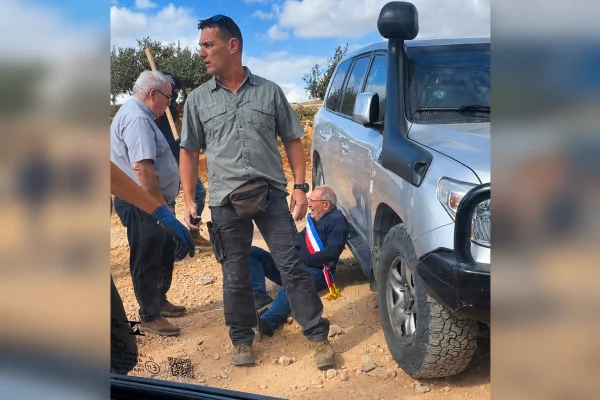
Masked Israeli youths reportedly attacked European diplomats observing the olive harvest near Taybeh in the West Bank on October 17, 2026, damaging a Belgian consular vehicle and assaulting French mayor Bernard Baudoux. The incident followed a separate attack on Washington Post photographer Heidi Levine, who suffered serious hand and spinal injuries. Israeli police and the IDF condemned the violence and opened investigations. European officials called for prosecutions and possible EU sanctions. Settler leaders disputed the account, alleging Palestinians had initiated confrontations with slings.
Watchmen Signals
Biblical Context
Assaults on diplomats, a journalist, and other civilians raise a direct biblical concern about the protection of human life and the punishment of violent wrongdoing. Genesis 9:6 treats the taking of human life as a grave matter requiring accountability; it does not establish the facts of this incident, but it supports the seriousness of investigating alleged beatings and injuries. The reported dispute over olive harvesting and competing claims to land also engages biblical prohibitions against theft and unjust seizure. The article reports that Rabbi Dov Lior claimed Jews could harvest olives from Palestinian land as an expression of ownership, while another rabbinic group rejected theft from anyone, Jew or non-Jew. Exodus 20:15 directly prohibits stealing, and the passage does not create an ethnic exception. That principle does not resolve modern title disputes or determine who legally owns the land, but it weighs against taking another person’s produce or property through coercion. Leviticus 19:33-34 specifically commands Israel not to oppress the foreigner and to love the foreigner as oneself. The diplomats and journalist described in the report are not necessarily foreigners in the precise legal setting contemplated by the passage, so the application is principled rather than a claim that the text directly adjudicates this event. It nevertheless speaks meaningfully to mistreatment of outsiders and vulnerable people. Deuteronomy 16:19 condemns bribery and partiality in judgment, supporting the need for impartial investigation and prosecution regardless of whether suspects are Jewish settlers, Palestinians, or others. Romans 13:1-4 describes governing authorities as responsible for restraining wrongdoing and carrying out justice; this makes the reported police and military investigations relevant, while leaving open whether enforcement has been adequate. These passages support concern about violence, oppression, property taking, and impartial justice. They do not validate either side’s territorial theology, establish the truth of the competing accounts, or identify the incident as fulfillment of prophecy. The supplied facts show a serious conflict requiring evidence-based investigation, not a basis for assigning collective guilt to Israelis, Jews, Palestinians, or religious communities.
Biblical Sources
Scripture references supporting the biblical context above.
The command against partiality in judgment supports impartial investigation and prosecution rather than selective enforcement based on ethnicity, nationality, or political affiliation.
The prohibition against stealing is relevant to reported claims that settlers took or sought to take Palestinian olives and to the allegation that equipment was removed during the assault on the journalist.
The passage treats the taking of human life as a grave offense requiring accountability, supporting the seriousness of investigating the reported assaults and injuries without deciding who was responsible.
Israel is commanded not to oppress the foreigner and to treat the foreigner with love and fairness, providing a meaningful principle concerning alleged mistreatment of foreign diplomats and other outsiders.
The passage describes civil authorities as responsible for restraining wrongdoing and administering justice, making the reported police and military investigations relevant while not proving that authorities have fulfilled that responsibility.
Comments
No comments yet.
Sign in to join the conversation.
Sign In