Violence erupts at France protests as Macron warns unrest is being exploited
Summary
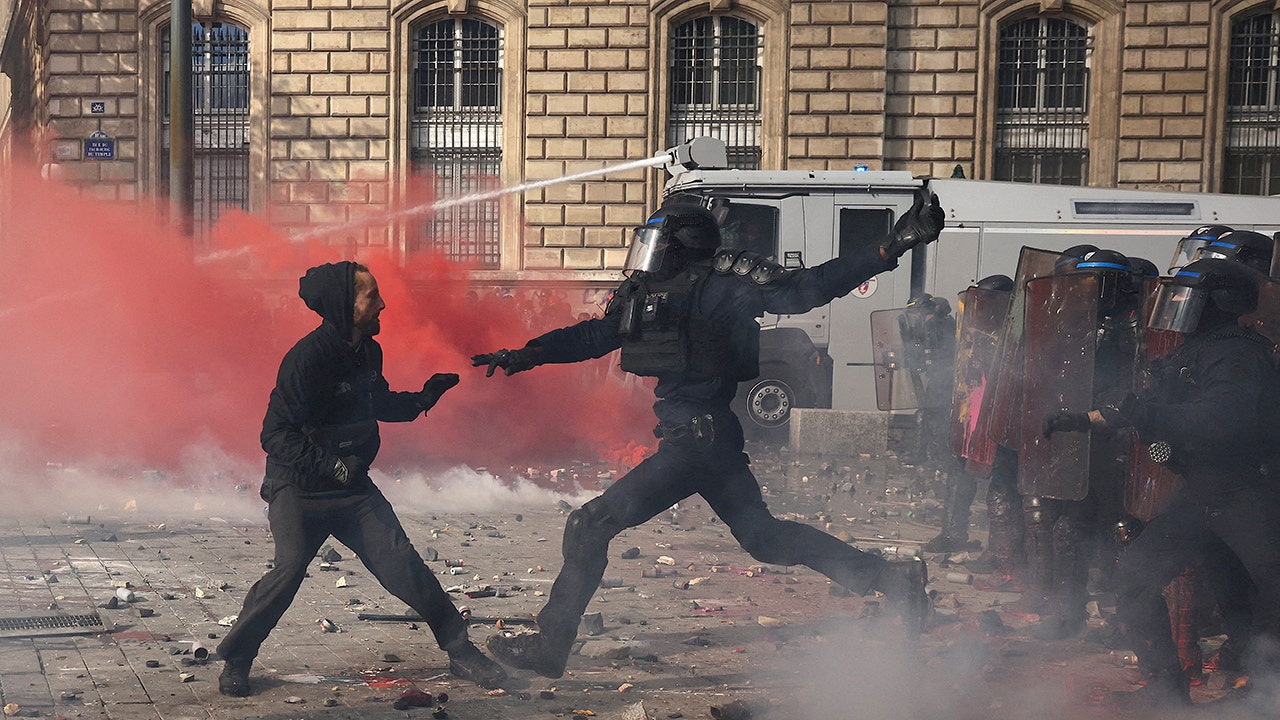
Violent demonstrations continued across France on Saturday, entering their fourth week amid anger over living costs, fuel prices, education costs, and proposed reforms. Police reported clashes, looting, property damage, and at least 272 arrests during the day, while nearly 8,000 arrests have reportedly occurred since the unrest began. Officials said 937 police officers and 149 education workers have been injured. Allegations of police abuse are under investigation. Protests have also spread to Brussels and Liege, while smaller demonstrations in Luxembourg and Switzerland remained peaceful.
Watchmen Signals
Biblical Context
Violent disorder, contested police conduct, and the responsibility of public authorities are matters Scripture addresses directly, although it does not identify these French protests as a fulfillment of prophecy. Romans 13:1–4 presents civil authority as having a legitimate responsibility to restrain wrongdoing and protect public order. That principle supports the government's duty to respond to assaults, looting, and destruction, while also requiring that authority be understood as serving the public good rather than merely exercising force. Macron's statement that the right to protest must be accompanied by respect for people and property is consistent with the biblical rejection of violence, destruction, and malicious conduct. Ephesians 4:31–32 calls believers to put away bitterness, anger, slander, and malice, though the passage addresses Christian conduct rather than prescribing a particular policing policy. Acts 19:28–41 provides a more specific narrative parallel: a public disturbance in Ephesus becomes an unruly crowd, while the city clerk seeks an orderly legal process and warns against acting without proper grounds. The passage does not equate the French protests with that event, but it illustrates the importance of distinguishing legitimate grievances from disorder and of using lawful procedures. The allegations of excessive police force also matter biblically. Romans 13 does not grant rulers or officers permission to act arbitrarily, and Leviticus 19:15 requires impartial justice rather than favoring either side. Accordingly, investigations into alleged police violence are relevant to the same biblical concern for accountable and just governance. Scripture supports neither unrestrained rioting nor the automatic assumption that every official use of force is justified. The article describes political exploitation claims, competing public narratives, and pressure on leaders to respond. Those facts warrant attention to justice, truthfulness, and responsible authority, but they do not provide a specific prophetic correspondence. The protests represent a contemporary episode of social unrest and political conflict, not an identifiable fulfillment of a particular biblical prophecy.
Biblical Sources
Scripture references supporting the biblical context above.
The Ephesian disturbance shows a crowd becoming disorderly over a contested issue, while a civic official seeks lawful and orderly resolution. It offers a contextual parallel to the distinction between legitimate protest, mob violence, and due process.
The passage condemns anger, malice, slander, and related destructive conduct while calling for kindness and forgiveness. It supports the broader biblical rejection of violent and malicious behavior, though it primarily addresses personal Christian conduct rather than public policy.
The command to judge fairly and without partiality supports impartial investigation of alleged police abuse and fair treatment of protesters, officers, and other affected people.
Paul describes governing authorities as having a legitimate role in maintaining order and restraining wrongdoing. This directly illuminates the government's responsibility to protect people and property during violent unrest, while not excusing arbitrary or unjust conduct.
Comments
No comments yet.
Sign in to join the conversation.
Sign In