US pushes for unity gov’t after Israeli elections, with Netanyahu resignation after peace on all fronts – report
Summary
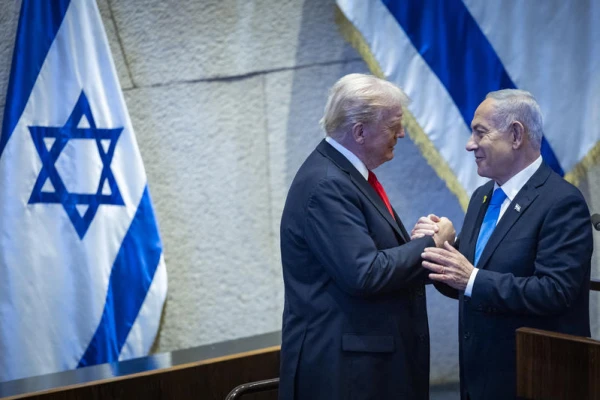
Reports cited by Israel Hayom and Kan News describe a possible U.S.-backed regional settlement after Israel’s elections, potentially involving a unity government led by Benjamin Netanyahu and Gadi Eisenkot. The proposed framework reportedly includes ending Israel’s wars, expanding the Abraham Accords, pursuing Saudi normalization, and advancing negotiations with Syria and Lebanon. The claims remain unconfirmed: U.S. Ambassador Mike Huckabee denied meeting Eisenkot secretly or participating in election manipulation, while Eisenkot and President Isaac Herzog’s alleged involvement was also disputed or denied.
Watchmen Signals
Biblical Context
The proposed settlement concerns Israel’s government, regional conflict, relations with surrounding nations, and international treatment of Israel—subjects Scripture addresses in meaningful ways, even though the reported political framework is modern and remains unconfirmed. Genesis 12:3 presents God’s promise concerning those who bless or dishonor Abraham’s descendants. It does not prescribe a particular modern foreign policy, but it provides biblical context for why international treatment of Israel and efforts to secure Israel’s safety carry theological significance. Psalm 122:6 urges prayer for the peace of Jerusalem, making the reported effort to end Israel’s wars and pursue regional peace a directly relevant subject for biblical reflection, without implying that the proposed agreement fulfills the psalm. Zechariah 12:2-3 portrays Jerusalem as a source of intense international contention. The passage is prophetic, but the current reports do not contain enough specific or confirmed elements to identify the proposed coalition or settlement with that prophecy. It is relevant as context for the continuing international and regional significance of Jerusalem, not as evidence that the prophecy is being fulfilled. Romans 13:1-4 describes government as an authority responsible for public order and justice. That principle bears on the proposed unity government, institutional checks and balances, and the debate over judicial reforms and accountability. Scripture does not determine whether this particular coalition or constitutional arrangement is wise; those claims require political and factual evaluation.
Biblical Sources
Scripture references supporting the biblical context above.
God’s promise concerning those who bless or dishonor Abraham’s descendants provides relevant context for reported international treatment of Israel and diplomatic efforts affecting its security, without endorsing a particular modern policy.
The command to pray for the peace of Jerusalem directly relates to reported efforts to end Israel’s wars and pursue regional peace, while not establishing that the proposed settlement is divinely authorized.
Paul’s teaching on government authority and responsibility for public order bears on the proposed unity government, institutional checks, judicial reform, and political accountability.
This prophetic passage describes Jerusalem’s future international significance and contention. It supplies relevant biblical context, but the reported and disputed diplomatic framework does not specifically establish fulfillment of the prophecy.
Comments
No comments yet.
Sign in to join the conversation.
Sign In