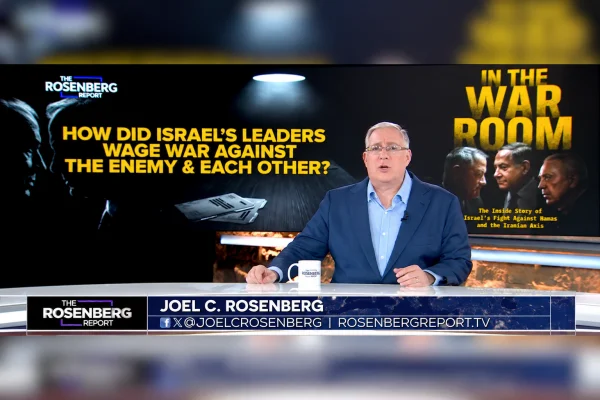
'IN THE WAR ROOM' – Inside the clashes that divided Israel’s leadership
Summary
A three-part interview series examines Israel’s wartime decision-making after Hamas’s October 7, 2023 attack. Authors Yonah Jeremy Bob and Elliot Kaufman describe divisions among Prime Minister Benjamin Netanyahu, former ministers Benny Gantz and Yoav Gallant, and former IDF chief Gadi Eisenkot, including disputes over Gaza, hostage negotiations, Hezbollah, and possible action against Iran. The account portrays a leadership team that worked together despite distrust, leaks, and conflicting views about whether continuing the war or pursuing a hostage and Saudi-normalization deal best served Israel’s security.
Watchmen Signals
Biblical Context
Israel’s war, the responsibilities of national leaders, the danger of internal division, and the moral tension between military objectives and the rescue of captives are all subjects Scripture addresses meaningfully. Proverbs 11:14 and 24:6 emphasize the importance of wise counsel and multiple advisers; that principle relates to Netanyahu’s decision to bring Gantz and Eisenkot into the wartime leadership, while also warning that disagreement and distrust can undermine counsel. These passages do not determine which Israeli leader’s strategy was correct. Romans 13:1-4 describes governing authority as having responsibility to restrain wrongdoing and protect the public. That provides a relevant framework for Israel’s stated national-security decisions and military responsibility, but it does not automatically approve every military action or political policy. Luke 14:31-32 uses a king considering war to illustrate sober calculation before entering conflict. The passage is not a direct commentary on Gaza or Israel’s current war, but it is a meaningful biblical principle for evaluating the costs, objectives, and likely consequences of military decisions. The hostage dispute also raises biblical concerns about preserving life, justice, and the responsibilities of leaders toward vulnerable people. Proverbs 24:11-12 calls for rescuing those being led toward death and rejects indifference to endangered people. That connection supports the seriousness of hostage negotiations, but the passage does not prescribe a particular exchange or require abandoning a broader military objective. Scripture also repeatedly condemns internal strife and urges leaders toward unity where possible. Psalm 133:1 celebrates unity among God’s people, while Ecclesiastes 4:9-12 describes the practical strength of people working together. These are broader principles rather than direct instructions for a wartime cabinet, and they should not obscure legitimate disagreements over security or justice. The article’s focus on Israel and regional hostility is biblically relevant because Scripture treats Israel’s national history, conflicts, and leadership as significant subjects. Genesis 12:1-3 establishes God’s promises concerning Abraham and his descendants, but it does not identify modern governments, endorse every action taken by the modern state of Israel, or establish that this particular war fulfills prophecy. No specific prophetic event is sufficiently identified in the supplied facts. The conflict, Iranian and Hezbollah threats, Gaza’s future, and hostage negotiations are important developments to monitor, but the report does not present the distinctive elements of a particular biblical prophecy.
Biblical Sources
Scripture references supporting the biblical context above.
God’s promises concerning Abraham and his descendants provide a broad biblical context for Israel’s continuing significance, but do not identify modern actors or establish that this war fulfills prophecy.
Jesus refers to a king weighing the cost and prospects of war, offering a principle of sober strategic calculation applicable to debates over Gaza, Hezbollah, and possible negotiations.
The proverb teaches that wise counsel helps protect a nation from failure, relating to Israel’s expanded wartime leadership and the value—and difficulty—of counsel among divided officials.
The passage links successful warfare with guidance and many advisers, providing a relevant principle for the reported strategic debates, while not deciding which policy was correct.
The passage calls for rescuing people in mortal danger and rejects indifference to their plight, making it relevant to the moral urgency of efforts to free hostages without prescribing a specific deal.
The psalm commends unity, which relates thematically to the reported national-unity government and the need for cooperation during a national crisis.
Paul describes governing authorities as responsible for public order and protection against wrongdoing, a framework relevant to national security and the responsibilities claimed by Israel’s leaders.
Comments
No comments yet.
Sign in to join the conversation.
Sign In