Would you let AI design your next tattoo? Tattoo artists say AI is changing the way they work
Summary
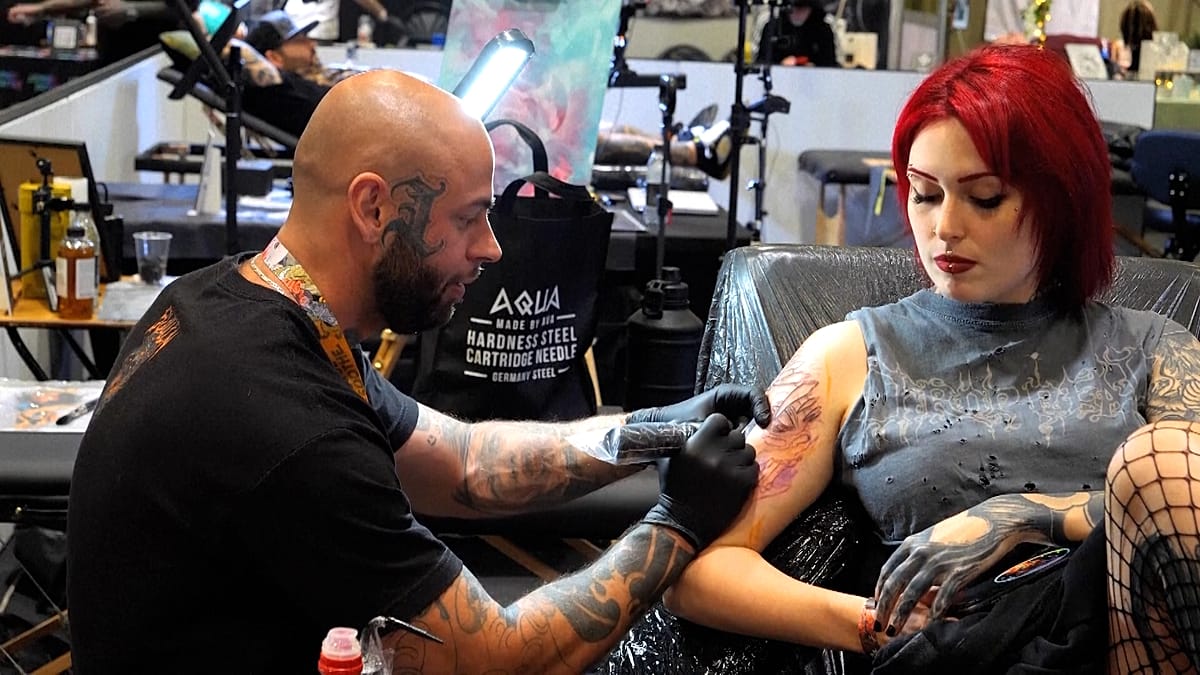
The article examines how artificial intelligence is influencing tattoo design and the relationship between customers and tattoo artists. Hungarian artist Brigi Fuzes says about 70% of her customers now bring AI-generated images. She uses AI as a reference tool but emphasizes that such images often fail to account for how light, shadows, fine details, and aging affect designs once translated into ink. Edinburgh artist David Corden similarly views AI as an additional design tool, including for restoring blurry photographs of deceased relatives, but objects to the assumption that highly detailed digital work must have been produced by AI. Other artists, including Tiago Miranda and Ellie Diamond, largely rely on personal imagination, sketches, and artistic interpretation rather than generated images. The article also considers whether AI could replace tattoo artists as tattooing becomes more common in Europe. It cites studies reporting that 29% of adults aged 20 to 68 in Sweden had tattoos in 2026 and 11.5% of more than 111,000 adults surveyed in France had tattoos in 2025. Artists interviewed generally reject the idea that AI will replace them, emphasizing human creativity, judgment, and the personal nature of tattooing. Dan Gold instead raises concerns about AI companies using artists’ work to train systems without compensation.
Watchmen Signals
Biblical Context
No strong biblical connection is identified. The article concerns AI-assisted creative work, tattoo design, artistic authorship, and the future of a profession. Although tattoos can be discussed in relation to biblical passages, the supplied article does not address religious practice, moral judgment, or the theological meaning of tattooing. Applying a specific biblical prohibition or prophecy to this discussion would go beyond the article’s subject matter.
Comments
No comments yet.
Sign in to join the conversation.
Sign In