The Gulf has entered a new era of instability. If its leaders think they can rely on old alliances, they are wrong | Nesrine Malik
Summary
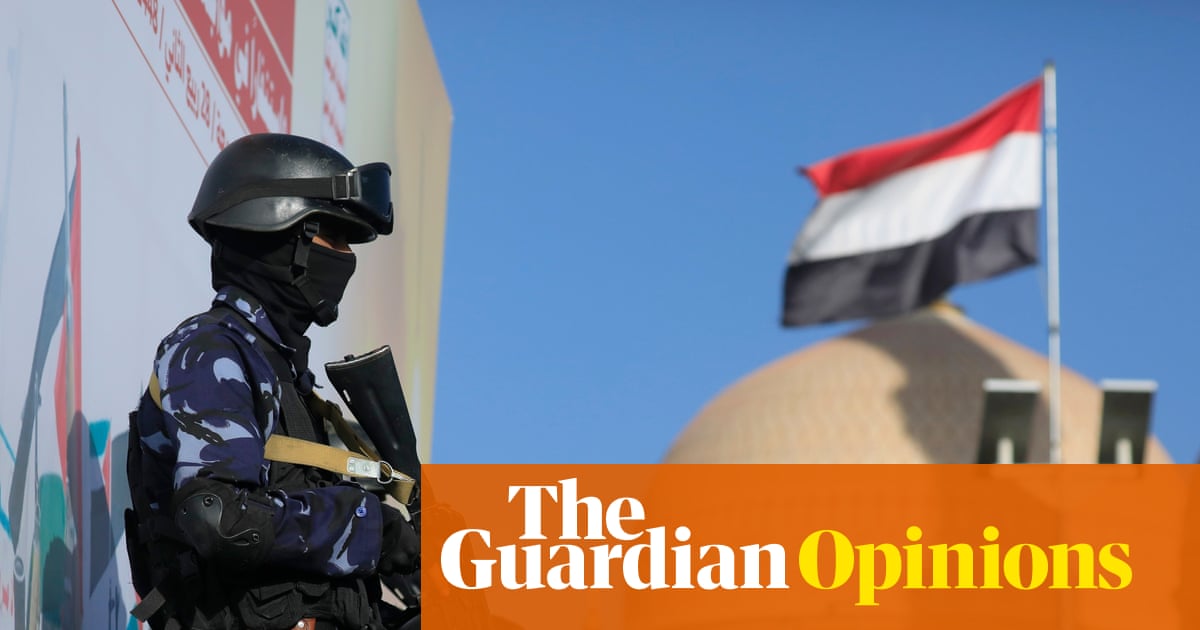
The report says a Houthi missile attack struck King Khalid International Airport in Riyadh, killing at least 13 people and injuring 300. It presents the strike as a major escalation in a widening regional war involving Iran, Israel, the United States, Saudi Arabia, and other Gulf states. The report also describes attacks on Gulf military and civilian infrastructure, renewed Houthi advances in Yemen, weakened confidence in US protection, and the risk of a prolonged Saudi-Houthi conflict with severe humanitarian and economic consequences.
Watchmen Signals
Biblical Context
The reported deaths, injuries, attacks on civilian-linked infrastructure, and prospect of retaliatory escalation engage Scripture’s direct teaching about the protection of life, the responsibility of rulers, justice, and the destructive causes of conflict. Psalm 82:3-4 calls those with authority to defend the weak and rescue the vulnerable. That principle bears directly on reported attacks affecting civilians, airports, energy systems, schools, and other infrastructure on which ordinary people depend. The passage does not decide which party is telling the truth about particular strikes, but it provides a clear standard by which the treatment of civilians and the conduct of governments and armed groups can be evaluated. Jeremiah 22:3 similarly commands rulers to practice justice, rescue the oppressed, and refrain from violence against the foreigner, orphan, and widow. In the context of Yemen’s humanitarian catastrophe and the report’s allegations of attacks on civilian infrastructure, the passage is a relevant standard for assessing both state military campaigns and insurgent violence. It does not imply moral equivalence between all actors or verify the report’s allegations. Romans 13:1-4 describes governing authority as having a responsibility to restrain wrongdoing and pursue public order. This can illuminate the stated responsibilities of Saudi, Iranian, Yemeni, and other governments, while also underscoring that political authority is accountable to a moral purpose rather than being unlimited permission for retaliation. Scripture does not endorse every action taken by a government simply because it exercises authority. James 4:1-2 identifies quarrels, desires, and struggles for power as sources of conflict. Applied cautiously, it helps explain the report’s account of competing territorial, political, and strategic aims. It is a general moral analysis, not a determination of the motives of every faction involved. Matthew 5:9 commends peacemakers, while Matthew 26:52 warns that those who rely on the sword may suffer its consequences. These teachings support concern over cycles of retaliation and the human cost of treating military escalation as the primary solution. They do not amount to a prediction that this particular conflict fulfills prophecy. The reported conflict is therefore meaningfully related to biblical teaching on war, justice, governance, civilian protection, and accountability. At the same time, no specific prophetic passage is established by the facts supplied. The presence of warfare in the Middle East, involvement by Iran or Israel, and regional instability are not by themselves sufficient to identify fulfillment of a particular prophecy.
Biblical Sources
Scripture references supporting the biblical context above.
Explains quarrels and conflicts in terms of disordered desires and competing aims, offering a general moral lens for the report’s account of regional escalation.
Commands rulers to do justice, rescue the oppressed, and avoid violence, providing a standard for evaluating state and armed-group conduct in the reported conflict.
Jesus commends peacemaking, making it relevant to the report’s description of retaliation, widening hostilities, and the breakdown of regional security.
Jesus warns about reliance on the sword, a relevant caution regarding cycles of armed retaliation, though not a prophecy about this particular conflict.
Calls those in authority to defend the weak, uphold the afflicted, and rescue the vulnerable, directly bearing on reported civilian deaths and damage to essential infrastructure.
Describes the public responsibility of governing authorities to restrain wrongdoing and preserve order, while implying accountability in the exercise of power.
Comments
No comments yet.
Sign in to join the conversation.
Sign In