Why Israel’s existence is a theological crisis for fundamentalist Islam
Summary
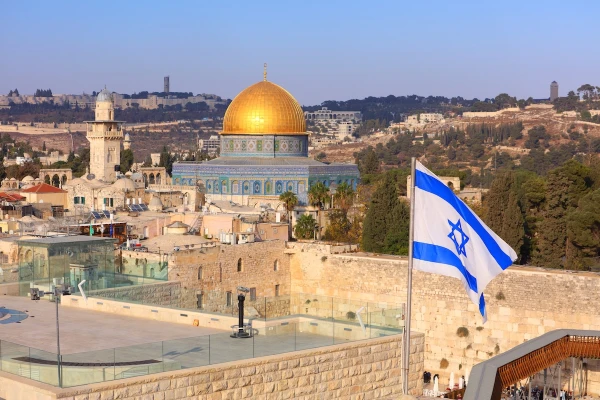
The article argues that Israel’s existence presents militant Islamist movements with a theological as well as territorial challenge. It claims that Jewish sovereignty reverses the historical dhimmi system, in which Jews lived under Muslim protection but subordination, and that Israel’s control of Jerusalem contradicts ideas of permanent Islamic supremacy. The article traces this interpretation through Haj Amin al-Husseini’s mobilization around al-Aqsa and the 1929 violence, Hamas’s use of the name “Al-Aqsa Flood” for its October 7, 2023 attack, and Hamas’s 1988 covenant and 2017 policy document. It also discusses the use of the Khaybar narrative, including Iran’s 2022 Kheibar Shekan missile, and interpretations of Qur’an 17:4–8 as predicting judgment against Israel. The article describes Iran’s support for regional militant groups and its combination of revolutionary, strategic, and Shi’a religious objectives. It further argues that Soviet anti-Zionist propaganda added secular revolutionary language to older religious hostility. Finally, it connects Hamas’s concern over red heifers with fears of renewed Jewish Temple worship and concludes that the conflict involves competing claims about sovereignty, Jerusalem, and sacred history, not only negotiable borders.
Watchmen Signals
Biblical Context
The article directly engages biblical subjects by discussing Israel’s restoration, Jerusalem, Jewish sovereignty, the Temple, red-heifer purification, and the anticipated Messianic Kingdom. Scripture does provide a framework in which Israel, Jerusalem, and the future reign of God are significant themes. Romans 11:25–29 presents Israel’s continuing significance in God’s redemptive purposes, while Zechariah 12:2–3 depicts Jerusalem as a focal point of international conflict. These passages support the conclusion that Jerusalem and Israel have genuine biblical importance, but they do not prove that the events or interpretations described in the article fulfill prophecy. The article’s treatment of Hamas and other Islamist movements should not be equated with biblical teaching. Its claims about Islamic eschatology, Khaybar, Qur’an 17, and the Last Hour arise from Islamic texts and interpretations, not from the Bible. Likewise, the article’s assertion that modern Jewish sovereignty necessarily points to a specific prophetic timetable is an interpretive conclusion, not an explicit biblical statement. Scripture condemns hatred, murder, oppression, and false accusations; therefore, religiously justified violence against Jews, Muslims, or any other civilians cannot be treated as biblically legitimate.
Biblical Sources
Scripture references supporting the biblical context above.
Jesus condemns murder and the hateful anger that leads toward it. This is relevant to the article’s discussion of violence justified through religious narratives, although the passage does not address the specific political conflict.
This passage describes a future exaltation of Zion accompanied by the cessation of war. It relates to the article’s reference to a coming Messianic Kingdom while also showing that biblical prophetic hope is oriented toward divine peace, not conquest or violence.
This passage presents Israel as continuing to have significance within God’s redemptive purposes. It supports the article’s identification of Israel as a biblically significant subject, without establishing that any particular modern political event fulfills prophecy.
These verses portray Jerusalem as a focal point of conflict among nations. They provide a legitimate biblical parallel to the article’s discussion of Jerusalem’s exceptional religious and geopolitical importance, but not proof of prophetic fulfillment.
Comments
No comments yet.
Sign in to join the conversation.
Sign In