AI is supercharging political ad wars. But viral doesn’t mean victorious
Summary
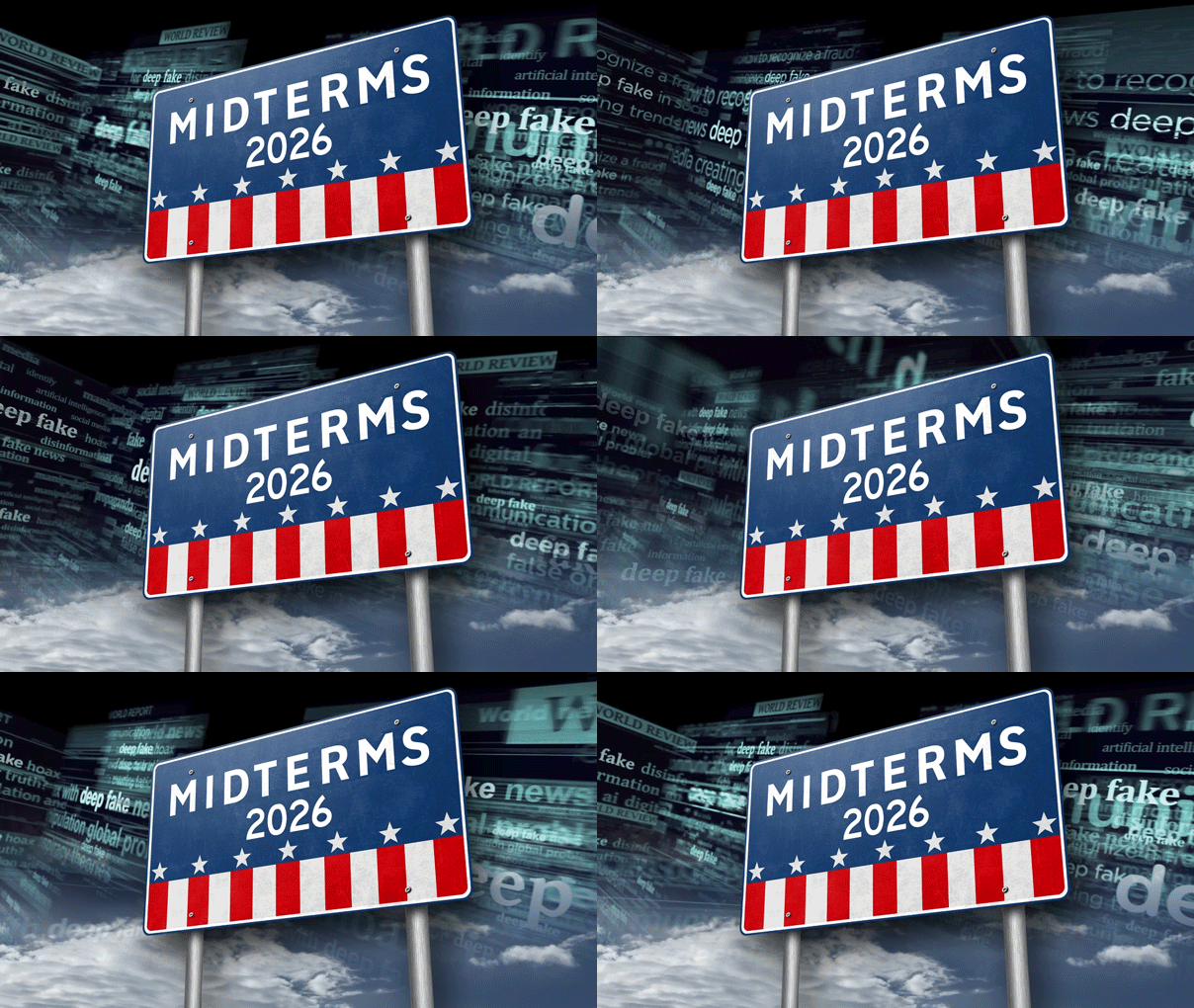
Generative artificial intelligence is sharply reducing the cost and production time of political advertising, enabling campaigns and outside groups to create large volumes of targeted videos, audio, images, memes, and messages. The article cites 29 federally or gubernatorially disclosed AI ads and at least 164 AI-influenced ads identified by the Wesleyan Media Project. Examples involving Massachusetts, Los Angeles, Texas, and Michigan show that AI content can generate attention and visibility, but its effect on election outcomes remains uncertain. Thirty-one states reportedly regulate political deepfakes, while the FEC has not adopted AI-specific rules.
Watchmen Signals
Biblical Context
The article's central issue—using technologically amplified media to create, distribute, or imitate claims about real people—has a meaningful biblical connection to truthfulness, false testimony, deception, and the responsibility of communicators. Exodus 20:16 directly prohibits bearing false witness against one's neighbor; an AI-generated voice or image that falsely attributes words or actions to a person can fit the moral category of deceptive testimony, although the passage does not address artificial intelligence specifically. Proverbs 12:22 contrasts lying lips with faithfulness and therefore supports concern about deliberately deceptive political content. Ephesians 4:25 commands believers to put away falsehood and speak truthfully, providing a direct ethical principle relevant to campaigns and audiences. James 3:1-6 also offers a broader thematic connection: it emphasizes the serious responsibility attached to teaching and the power of speech to cause widespread effects. That principle is relevant to mass-produced political messaging, but it should not be treated as a prediction about AI. Matthew 24:4-5 and 24:24 mention deception and false claimants in an explicitly eschatological context, but this article does not provide a specific correspondence to those prophecies. The use of AI in political advertising is therefore biblically relevant as a matter of truth and deception, while the reported facts do not establish prophetic fulfillment or a particular prophetic development.
Biblical Sources
Scripture references supporting the biblical context above.
The command to put away falsehood and speak truthfully is directly relevant to the moral handling of campaign claims, endorsements, and representations of opponents.
The prohibition against bearing false witness provides a direct biblical ethical principle relevant to fabricated audio, video, or images that falsely attribute statements or conduct to political figures.
James emphasizes the serious responsibility and broad influence associated with communication, offering a thematic parallel to the large-scale distribution of political messages through AI.
This passage condemns lying and commends faithfulness, supporting concern about deliberately deceptive political messaging and the erosion of trust caused by synthetic content.
Comments
No comments yet.
Sign in to join the conversation.
Sign In