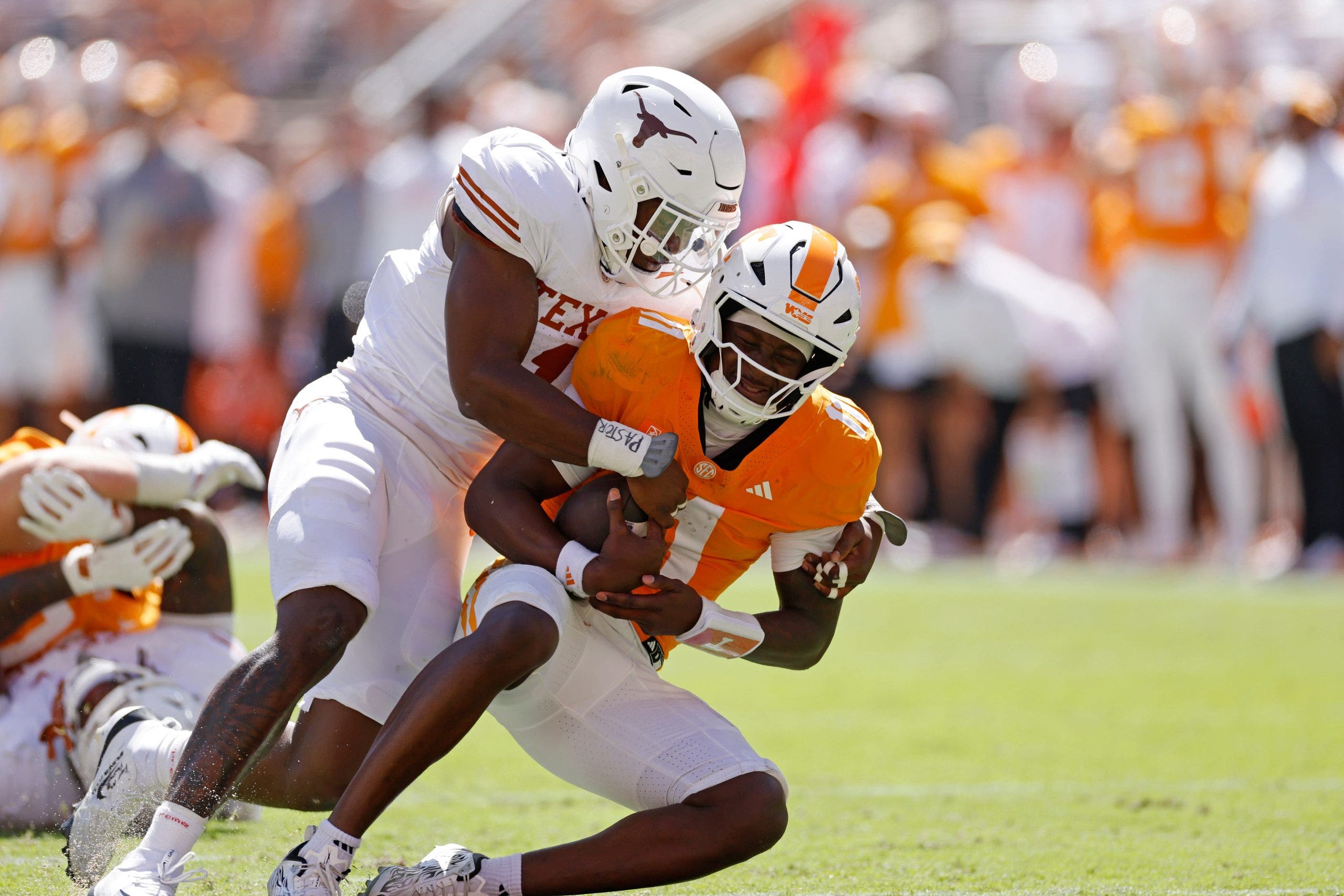
Texas Longhorns Colin Simmons' vulgar sack celebration was inexcusable for a Christian athlete
The Watchmen's Summary
The article criticizes Texas Longhorns defensive end Colin Simmons for a vulgar sack celebration during Texas’s victory over Tennessee on Sept. 26, 2026. Simmons appeared to simulate urinating on the field, drawing condemnation from broadcasters and later apologizing on social media. The writer argues that Simmons’s public Christian profession increases his responsibility to model holiness and self-control. The article also cites Ole Miss quarterback Trinidad Chambliss’s profane postgame remark, C.J. Stroud’s comments on Christian speech, and calls for accountability, repentance, and better conduct.
Biblical Context
The article directly addresses Christian conduct, public witness, self-control, repentance, accountability, and the tension between professed faith and behavior. James 3:1-12 materially supports the discussion of speech, the difficulty of controlling the tongue, and the responsibility of teachers or public representatives; its direct subject is speech rather than an obscene athletic gesture, so the connection is principial but substantial. 1 Peter 4:1-5 addresses leaving behind former sinful practices and living differently from one’s former way of life, which supports the article’s call for conduct consistent with Christian identity. Proverbs 27:17—not Proverbs 17:7—contains the “iron sharpens iron” principle that supports mutual correction and accountability. These passages support moral reflection and accountability, not a claim that the incident fulfills prophecy. No specific biblical prophecy is meaningfully connected to the reported sports incident.
Watchmen Signals
The article substantially concerns Christian conduct, accountability, holiness, repentance, public witness, and disciplining speech and behavior. These are matters Scripture addresses directly, particularly through James 3, 1 Peter 4, and the mutual-correction principle in Proverbs 27:17.
The incident concerns personal morality, sportsmanship, and Christian testimony. It does not correspond in a specific or meaningful way to a biblical prophecy or identifiable prophetic pattern. The relevant passages address ethical instruction rather than future prophetic events.
This is retrospective commentary on a sports incident and subsequent apology, not a rapidly developing event requiring prompt attention.
Biblical Sources
Scripture references supporting the biblical context above.
Peter contrasts Christian living with the sinful practices of a former life and calls believers to live differently. This supports the article’s appeal for conduct consistent with a professed Christian identity.
This passage addresses the responsibility associated with teaching, the power of speech, and the difficulty of controlling the tongue. It supports the article’s broader emphasis on disciplined Christian communication and public conduct, though it does not specifically describe athletic celebrations.
The statement that iron sharpens iron supports the article’s call for teammates, family, coaches, and fellow Christians to encourage correction and accountability. The article cites Proverbs 17:7, but the quoted principle is found in Proverbs 27:17.
Comments
No comments yet.
Sign in to join the conversation.
Sign InStay Informed. Grow in Biblical Understanding.
Explore important news from around the world through the context of God's Word. Create your FREE Watchmen account to discover more news analysis, Biblical Insights, and Scripture-based perspectives.
Create Your FREE AccountFree to join. No credit card required.