2 years after Nasrallah assassination: Israeli intel officers say they knew 'when he went to sleep, what he liked to eat'
Summary
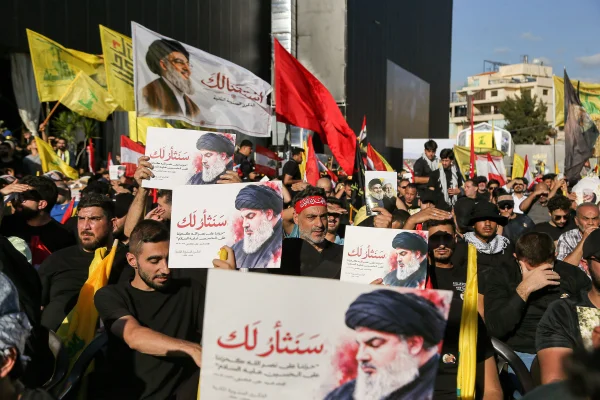
The article commemorates the reported September 27, 2024 Israeli strike that killed Hezbollah Secretary-General Hassan Nasrallah beneath a residential area in Beirut’s Dahiyeh district. Israeli officials describe a yearslong intelligence effort, followed by an 83-bomb attack that they say killed Nasrallah, Hezbollah personnel, and approximately 30 uninvolved civilians. The article portrays his death as a major blow to Hezbollah’s military and political influence, while reporting that the group is attempting to restore its public standing in Lebanon despite internal and regional pressure.
Watchmen Signals
Biblical Context
The article substantially concerns Israel’s armed conflict with Hezbollah, Iran’s support for an anti-Israel regional network, and the effects of warfare on Lebanon and civilians. Scripture materially addresses Israel’s conflict with hostile surrounding nations and presents future opposition to Israel in passages such as Ezekiel 38–39. However, the article does not report the distinctive elements of that prophetic event: a specific multinational invasion, the named coalition described by Ezekiel, or the divine judgment and aftermath in the prophecy. Therefore, the biblical connection supports a Relevant classification but not a claim that the reported assassination fulfills a particular prophecy. Ezekiel 38:1-6 describes a future coalition led by Gog involving several nations associated with regions north and east of Israel, including Persia. This provides a relevant biblical framework for considering hostile regional alignments involving Israel and Iran, but the present article concerns an Israeli strike against Hezbollah in Beirut rather than the specific invasion described by Ezekiel. Ezekiel 38:18-23 describes God’s direct judgment on that future invasion; no comparable prophetic fulfillment can be established from the article. The connection is consequently thematic and contextual, not a direct identification of the reported event with Ezekiel’s prophecy.
Biblical Sources
Scripture references supporting the biblical context above.
Describes a future hostile coalition that comes against Israel and includes Persia among the named participants. It materially supports the article’s biblical context of regional opposition involving Israel and Iran, while not establishing that the reported Hezbollah-Israel conflict is that prophecy.
Describes divine judgment against the prophesied invasion of Israel. It helps distinguish the specific prophetic event from the article’s reported Israeli military operation, which does not contain the passage’s defining elements.
Comments
No comments yet.
Sign in to join the conversation.
Sign In