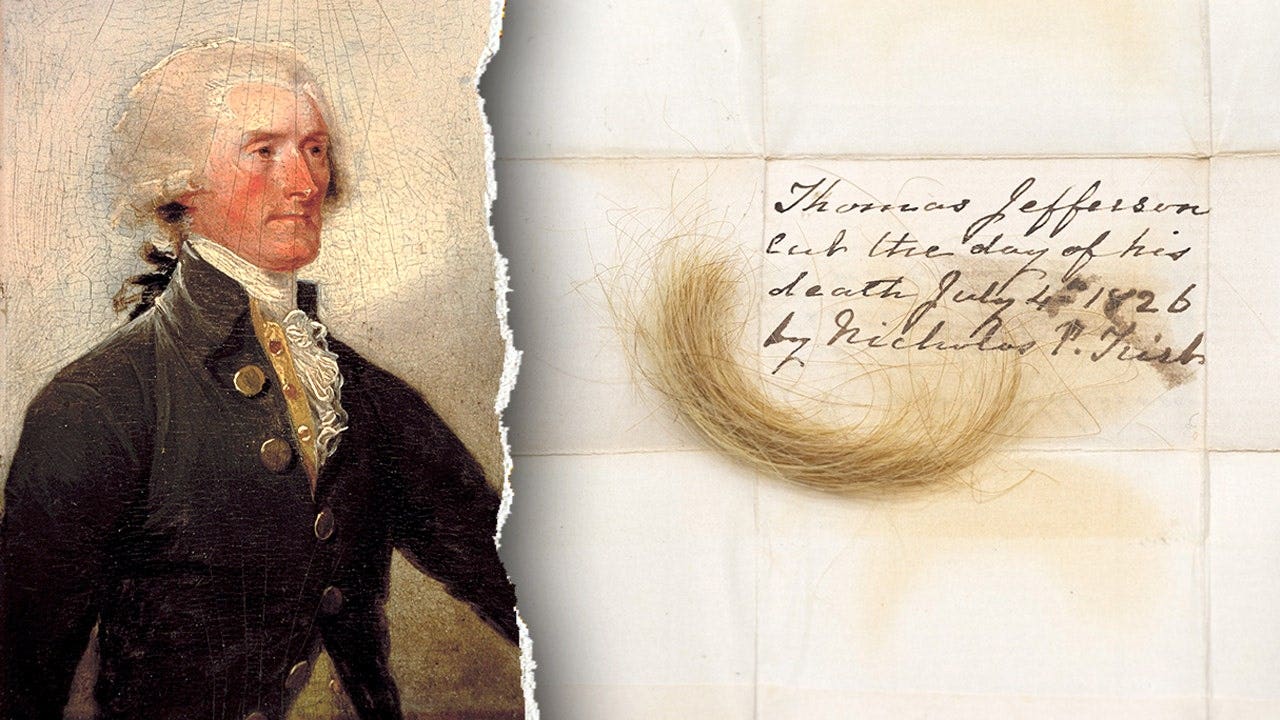
DNA from Thomas Jefferson's hair delivers compelling new evidence in centuries-old paternity mystery
Summary
New DNA analysis described in Richard Kurin’s forthcoming book, “History by a Hair,” reinforces historians’ longstanding conclusion that Thomas Jefferson fathered children with Sally Hemings, whom he enslaved. Researchers compared genetic material from hair linked to Jefferson and modeled competing paternity scenarios involving Jefferson, his brother Randolph, and Randolph’s sons. The analysis reportedly found less than a one-in-1,000 chance that Jefferson fathered neither Madison nor Eston Hemings. Historians say the findings strengthen, rather than fundamentally change, the established historical record.
Watchmen Signals
Biblical Context
The article has a legitimate but broad biblical connection through its focus on slavery, unequal power, the dignity of an enslaved woman, and moral accountability in interpreting the past. Scripture repeatedly condemns oppression and instructs those with power to act justly; these principles can inform reflection on Hemings’s lack of freedom and Jefferson’s position of authority. The passages do not identify Jefferson or Hemings, predict this event, or establish that the DNA findings fulfill prophecy. The connection is therefore ethical and thematic rather than prophetic.
Biblical Sources
Scripture references supporting the biblical context above.
This passage directly addresses people who hold authority over servants and requires them to abandon threats while recognizing that they themselves answer to the same heavenly Master; it is relevant to the article’s subject of power over an enslaved person, although the historical circumstances are not identical.
James condemns partiality based on social status and emphasizes the command to love one’s neighbor, offering a relevant principle for evaluating systems that treat people as inferior or without equal dignity.
This proverb condemns oppression of the vulnerable and connects treatment of the poor with one’s regard for their Creator, providing a broad biblical principle relevant to the article’s discussion of enslavement and unequal power.
Comments
No comments yet.
Sign in to join the conversation.
Sign In