Abdul El-Sayed suggests Israel should not be a Jewish state, says he opposes ‘ethno-states’
The Watchmen's Summary
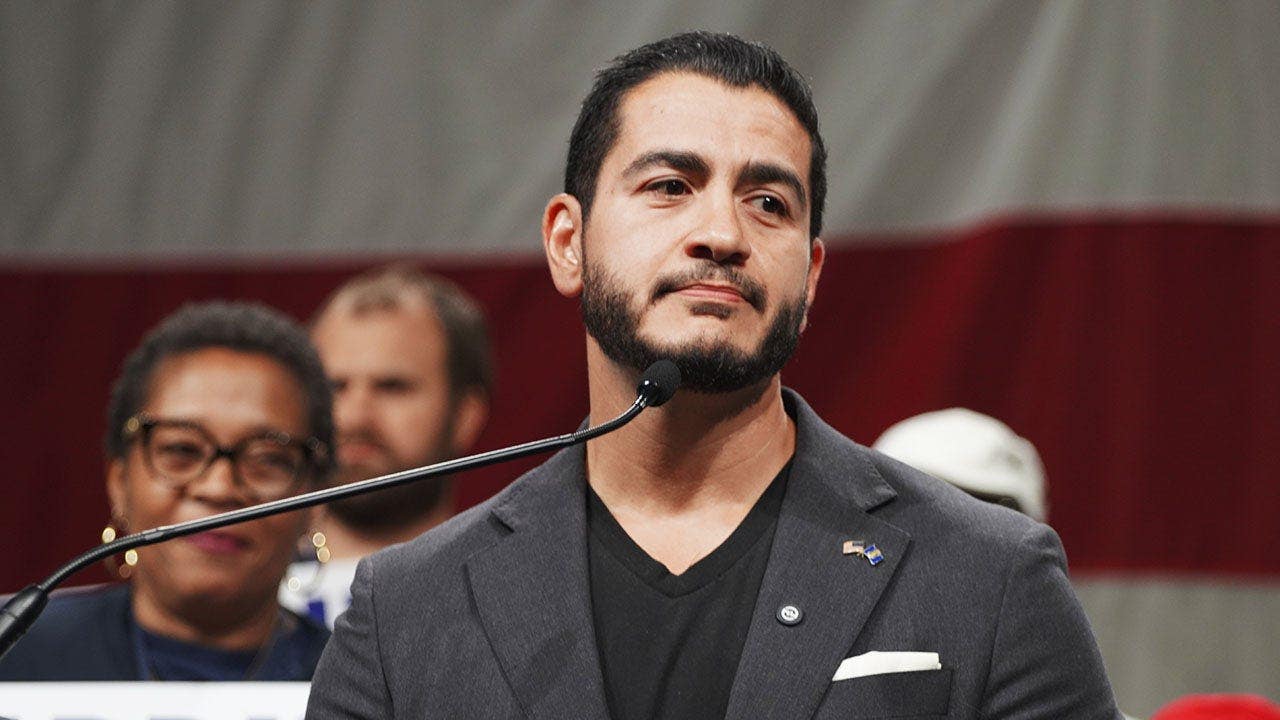
Michigan Sen.-elect Abdul El-Sayed said Israel should prioritize democracy and equal rights rather than maintain a specifically Jewish national identity. In an NBC interview, he reiterated opposition to “ethno-states” and defended Palestinian self-determination. Rabbi Yaakov Menken accused him of singling out Israel while overlooking unequal treatment of Jews elsewhere. El-Sayed also defended criticism of Israel’s policies toward Palestinians, citing deaths and destruction in Gaza, though those figures and claims are presented as his assertions in the report.
Biblical Context
Israel’s national identity, Jerusalem, and the treatment of people living in the land are subjects Scripture addresses, although the biblical texts do not provide a simple constitutional model for the modern State of Israel or settle the debate over an “ethno-state.” Genesis 12:1–3 presents Israel’s national story within God’s covenant purposes and connects that calling with blessing to other peoples; it should not be treated as a direct endorsement of every modern government policy. Leviticus 19:33–34 commands Israel to treat the foreigner among them with love and justice, offering a relevant principle for the article’s discussion of equal rights and the dignity of Palestinians and Jewish Israelis. Psalm 122:6–9 calls for the peace and welfare of Jerusalem, placing concern for the city and its inhabitants within a posture of prayer rather than partisan political certainty. Romans 11:25–29 likewise speaks of Israel’s continuing place in God’s redemptive purposes, but it addresses salvation history, not the precise legal structure of a contemporary state. These passages support careful attention to Israel, justice, and human dignity while leaving the article’s political dispute unresolved.
Watchmen Signals
Abdul El-Sayed’s challenge to Israel’s Jewish national identity and his emphasis on equal rights, Palestinian self-determination, and the treatment of people in the Holy Land touch subjects Scripture addresses through Israel’s identity, justice, and treatment of foreigners. Those passages provide principles and theological context, but they do not resolve the modern constitutional dispute or validate every claim made by either side.
The comments concern a political argument over Israel’s national identity, democracy, and Palestinian statehood, but they do not establish a distinctive prophetic event. Scripture’s references to Israel, Jerusalem, or the nations cannot by themselves demonstrate prophetic fulfillment, and the supplied facts do not identify a specific prophecy with enough precision to make that connection.
The comments came during a scheduled television interview and describe an ongoing political dispute rather than a sudden attack, government action, or rapidly changing emergency.
Biblical Sources
Scripture references supporting the biblical context above.
God’s call of Abram establishes Israel’s national story within a covenant purpose that also extends blessing to other peoples, providing context for discussion of Israel’s identity and its relationship to the nations.
Israel is commanded to treat the foreigner living among its people with love and fairness, directly informing the article’s discussion of equal rights and the dignity of Palestinians and Jewish Israelis.
The psalm calls God’s people to seek the peace and welfare of Jerusalem, offering a biblical framework for concern about the city and the people connected to it without prescribing a modern political solution.
Paul discusses Israel’s place in God’s redemptive purposes and God’s faithfulness to His calling, a relevant theological boundary when evaluating claims about Israel’s continuing identity; the passage does not determine modern state policy.
Comments
No comments yet.
Sign in to join the conversation.
Sign InStay Informed. Grow in Biblical Understanding.
Explore important news from around the world through the context of God's Word. Create your FREE Watchmen account to discover more news analysis, Biblical Insights, and Scripture-based perspectives.
Create Your FREE AccountFree to join. No credit card required.