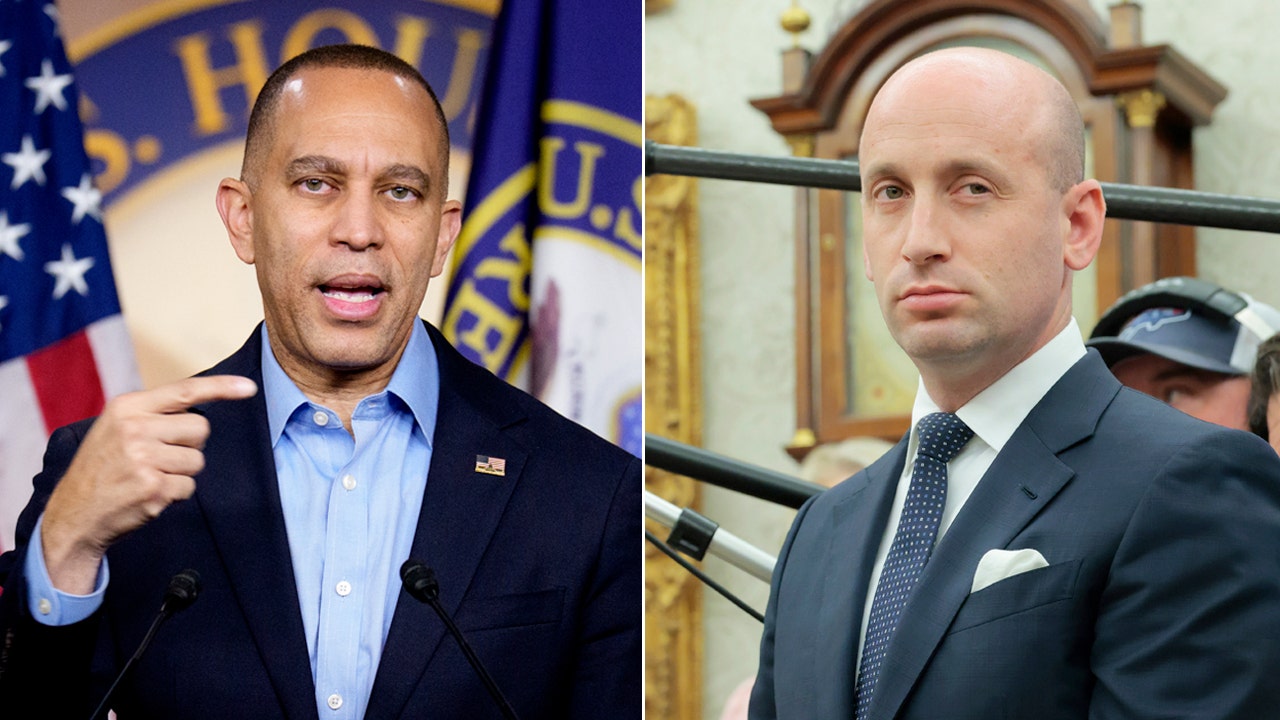
Hakeem Jeffries calls Trump chief of staff Stephen Miller a ‘stone-cold racist,’ refuses to sit down with him
The Watchmen's Summary
Speaker-designate Hakeem Jeffries said he will not meet with White House Chief of Staff Stephen Miller, whom he called a “stone-cold racist” and the architect of a violent mass-deportation effort. Jeffries said he remains willing to work with President Donald Trump, Vice President JD Vance, and other officials on legislation. The White House defended Miller’s record and policies, while Trump praised his border stance. Jeffries cited alleged deaths during immigration-enforcement actions but did not provide additional evidence in the interview.
Biblical Context
Government leaders are accountable for how authority is exercised, particularly when enforcement affects life, public safety, and vulnerable people. Romans 13:1–4 describes governing authority as having a legitimate role in restraining wrongdoing and pursuing public order, while also presenting that authority as accountable to a moral purpose rather than as permission for arbitrary cruelty. That principle bears on the competing claims about immigration enforcement, although the supplied text does not establish whether the alleged deaths or abuses occurred as described. Leviticus 19:33–34 commands Israel not to mistreat or oppress the foreigner and to love the foreigner as oneself. The passage does not prescribe a modern immigration system, but it directly establishes a biblical concern for the humane treatment of immigrants and outsiders. Micah 6:8 likewise calls God’s people to practice justice, mercy, and humility; it provides a broader ethical standard for public accusations, political conduct, and the treatment of people affected by government policy. These passages illuminate the issues without resolving the factual dispute between Jeffries, the White House, and Trump.
Watchmen Signals
Hakeem Jeffries’ dispute with Stephen Miller centers on government authority, alleged violence during immigration enforcement, and the treatment of immigrants. Scripture directly addresses the moral responsibilities of rulers and the obligation not to oppress foreigners, though it does not settle the article’s competing factual claims or prescribe a particular modern deportation policy.
The dispute between congressional and White House officials, including accusations about immigration enforcement, does not correspond to a specific biblical prophecy in a defensible way. Political hostility, alleged wrongdoing, and national controversy are general conditions rather than evidence of prophetic fulfillment.
The dispute reflects an evolving relationship between Congress and the incoming administration, with future communication channels still being determined. No immediate emergency or sudden policy action is announced, but the conflict may shape negotiations over immigration policy.
Biblical Sources
Scripture references supporting the biblical context above.
These verses prohibit mistreating or oppressing the foreigner and require love for the foreigner, directly illuminating concerns about how immigrants are treated under enforcement policies.
The call to do justice, love mercy, and walk humbly with God provides a broader biblical standard for political conduct and decisions affecting vulnerable people.
Paul describes governing authority as responsible for restraining wrongdoing and serving a legitimate public-order function, which bears on the dispute over executive enforcement power and alleged abuses.
Comments
No comments yet.
Sign in to join the conversation.
Sign InStay Informed. Grow in Biblical Understanding.
Explore important news from around the world through the context of God's Word. Create your FREE Watchmen account to discover more news analysis, Biblical Insights, and Scripture-based perspectives.
Create Your FREE AccountFree to join. No credit card required.