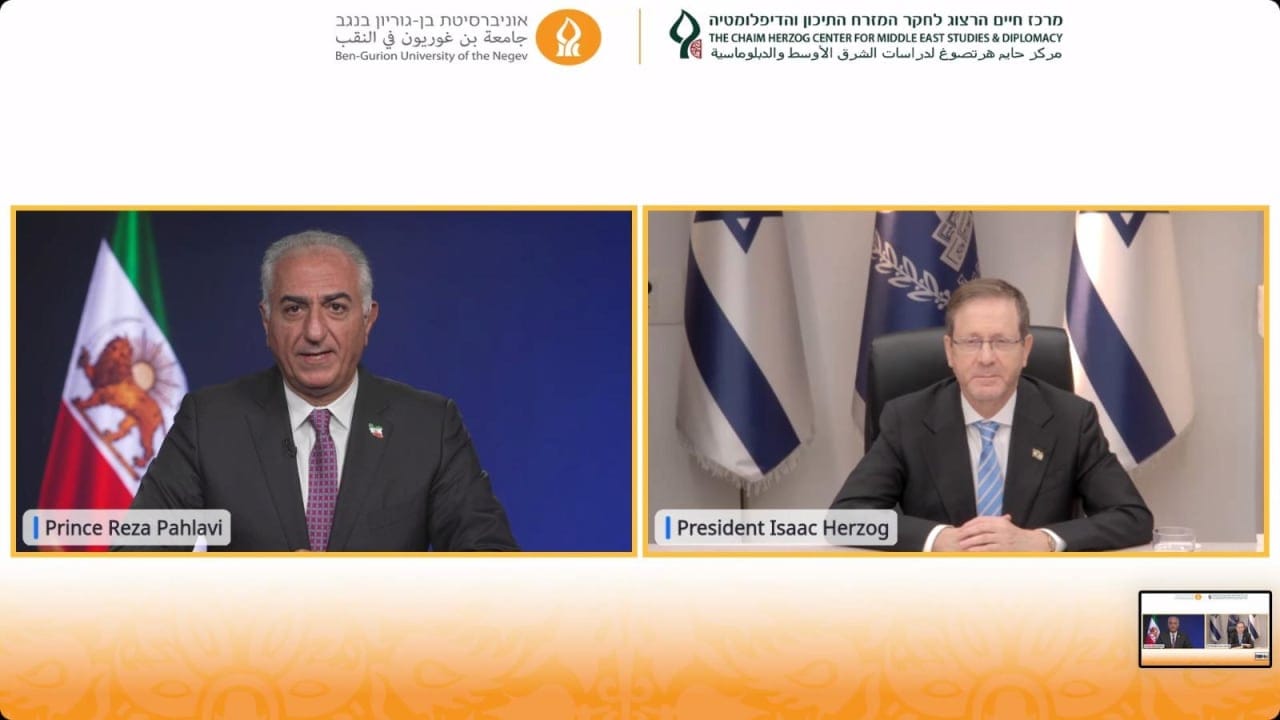
Herzog to Crown Prince Pahlavi: 'I hope to see you return to Iran after fall of Islamic regime'
The Watchmen's Summary
Israeli President Isaac Herzog told exiled Iranian Crown Prince Reza Pahlavi that he hopes Pahlavi will return to Iran after the Islamic Republic falls. During a joint webinar, the two discussed Iran’s hostility toward Israel, their countries’ historical ties, and the possibility of future peace and cooperation. Pahlavi urged stronger international support for Iranian opposition forces and claimed 40,000 people were killed in a crackdown on demonstrations, though the article provides no independent verification. No regime change or diplomatic agreement has occurred.
Biblical Context
The discussion draws on a genuine biblical-historical connection: Cyrus the Great of Persia is named in Scripture as the ruler who authorized the Jewish exiles’ return and supported the restoration of Jerusalem and the temple. Isaiah 44:28–45:1 identifies Cyrus in connection with that decree, and Ezra 1:1–4 records the return policy itself. These passages illuminate Pahlavi’s reference to Persian-Jewish history, but they describe an ancient act of providential use of a Persian ruler, not a prediction that a modern Iranian opposition leader will return to power or that Israel and Iran will form a particular alliance. The desire for peaceful relations among nations can also be compared with Isaiah 2:2–4, where the nations are portrayed as turning from conflict toward the ways of the Lord. That passage concerns a future, God-centered reign and should not be treated as evidence that the proposed Israel-Iran relationship fulfills prophecy. Scripture also gives weight to the security and peace of Jerusalem in Psalm 122:6–9, but the passage offers a prayerful biblical principle rather than a direct interpretation of the webinar’s political claims. The article therefore has a meaningful biblical-historical and ethical connection, while its present political developments remain distinct from specific prophetic fulfillment.
Watchmen Signals
Israel’s security, Iranian hostility toward the Jewish state, the history of Persian rule, Jewish exile and return, and hopes for peace among nations all have meaningful biblical connections. Scripture directly supplies historical context for Cyrus and Israel’s return from exile, although it does not directly address a modern Israel-Iran alliance or Reza Pahlavi’s political future.
Cyrus’s role in the Jewish return from exile is a specific biblical-historical reference, but the webinar reports no comparable decree, restoration, or divinely identified ruler. The proposed fall of the Islamic Republic and future Israel-Iran cooperation therefore cannot be responsibly presented as fulfillment of a particular prophecy.
The webinar records political appeals and warnings about an ongoing regional threat, but no sudden military action, government collapse, or immediate policy decision requires prompt notification.
Biblical Sources
Scripture references supporting the biblical context above.
Ezra records Cyrus’s proclamation permitting the Jewish exiles to return and rebuild the temple, corresponding to Pahlavi’s reference to the Persian king and the Jewish return from exile.
The passage presents a future vision of nations abandoning war and learning the ways of the Lord. It provides a biblical framework for discussing peace among nations, but the reported proposal does not establish fulfillment of this vision.
Cyrus is identified as the ruler who would authorize Jerusalem’s restoration, providing direct biblical context for the article’s reference to Cyrus and Persian support for the Jewish return.
The passage describes God’s use of Cyrus, a Persian ruler, in relation to Israel and Jerusalem. It supports historical context but does not identify a modern Iranian political development as prophecy.
The psalm calls for prayer for Jerusalem’s peace and connects peace with the well-being of God’s people, offering a relevant biblical principle alongside discussion of Israel’s security and hoped-for regional peace.
Comments
No comments yet.
Sign in to join the conversation.
Sign InStay Informed. Grow in Biblical Understanding.
Explore important news from around the world through the context of God's Word. Create your FREE Watchmen account to discover more news analysis, Biblical Insights, and Scripture-based perspectives.
Create Your FREE AccountFree to join. No credit card required.