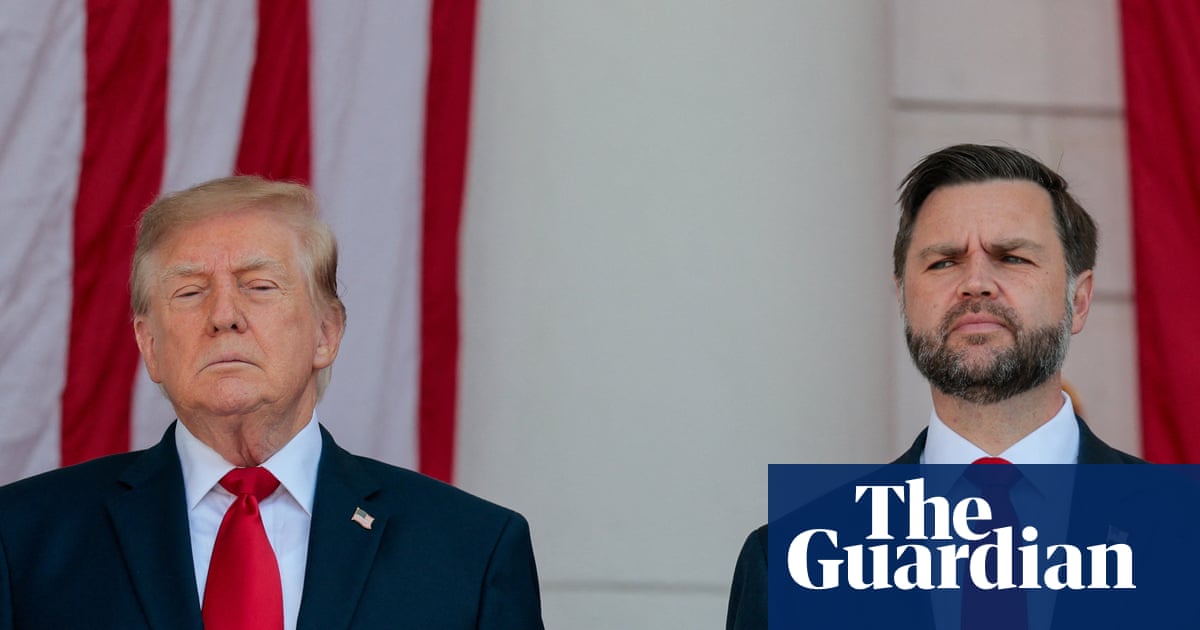
Trump says no deal needed on Iran war and orders Vance to focus on domestic issues
The Watchmen's Summary
President Donald Trump says the United States has abandoned efforts to negotiate an agreement ending its war with Iran and has redirected Vice-President JD Vance toward domestic political issues. The conflict reportedly began with joint US-Israeli strikes in February, followed by Iran’s closure of the Strait of Hormuz and higher global fuel costs. Although Trump says the war is “effectively over” and has not ordered renewed major strikes, the US blockade, unresolved hostilities, and warning that it remains “locked and loaded” leave the confrontation unstable.
Biblical Context
The conflict places national leaders in a setting Scripture repeatedly addresses: the responsibility to exercise authority justly, the grave consequences of war, and the value of pursuing peace. Romans 13:1-4 describes governing authorities as responsible for public order and restraint of wrongdoing; it does not automatically validate every military decision made by a government. That distinction is relevant when Trump presents the war as necessary to prevent Iran from obtaining a nuclear weapon while also leaving open the possibility of renewed strikes. Jesus blesses peacemakers in Matthew 5:9, and 1 Timothy 2:1-2 urges prayer for rulers so that societies may experience peace and stability. These passages support serious concern for diplomatic efforts and for the people exposed to the consequences of prolonged confrontation, without deciding whether the reported negotiations or military policies are wise. Luke 14:31-32 also uses a king’s consideration of whether he can meet an opposing army as an illustration of prudent judgment; the passage is not a direct teaching on modern foreign policy, but it offers a limited parallel to the article’s questions about escalation, preparedness, and negotiation. The article’s reference to Israel, Iran, and regional warfare does not by itself identify a biblical prophecy. Iran’s historical association by some interpreters with ancient Persia, together with a conflict involving Israel, is insufficient to establish Ezekiel 38–39 or another prophetic fulfillment. The article does not report the distinctive coalition, invasion, or other defining features needed for that conclusion.
Watchmen Signals
The decisions of US, Iranian, Israeli, and Gulf leaders are shaping an active regional conflict, the pursuit of peace, and risks to civilians, commerce, and national security—subjects Scripture addresses through its teaching on government, war, prudence, and peacemaking. Those teachings help evaluate the stakes without turning the geopolitical account into a claim of prophetic fulfillment.
Israel’s involvement in a war with Iran and Iran’s possible association with ancient Persia do not, by themselves, identify a particular prophecy. The supplied account does not establish the distinctive coalition, invasion of Israel, or other defining features associated with passages such as Ezekiel 38–39, so it cannot responsibly be presented as fulfillment.
Trump’s decision to halt negotiations represents a fresh shift in an unresolved US-Iran conflict with continuing military and economic consequences. It warrants close monitoring, but the account does not describe a new attack or immediate escalation requiring urgent notification.
Biblical Sources
Scripture references supporting the biblical context above.
Paul calls Christians to pray for rulers and for peaceful, stable societies. The passage relates directly to the consequences of decisions by Trump, Vance, Iranian leaders, and regional mediators.
Jesus illustrates the importance of soberly assessing the cost of conflict and considering terms of peace. The connection to modern military strategy is interpretive rather than a direct prediction or policy command.
Jesus identifies peacemakers as blessed, making the reported abandonment of negotiations and the continuing absence of a formal peace agreement ethically significant.
Paul describes the governing authority’s responsibility to maintain order and restrain wrongdoing. This provides context for evaluating the claimed security rationale and the use of military power without endorsing every governmental action.
Comments
No comments yet.
Sign in to join the conversation.
Sign InStay Informed. Grow in Biblical Understanding.
Explore important news from around the world through the context of God's Word. Create your FREE Watchmen account to discover more news analysis, Biblical Insights, and Scripture-based perspectives.
Create Your FREE AccountFree to join. No credit card required.