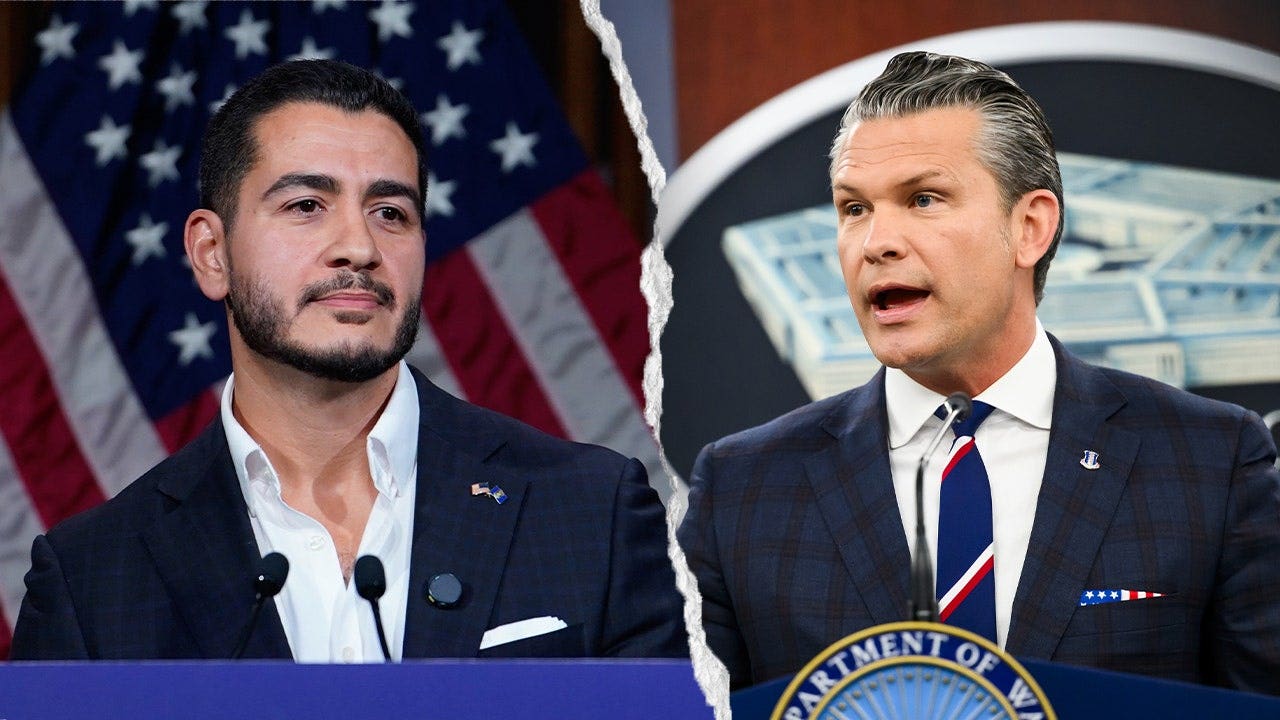
El-Sayed tells Hegseth to resign after impeachment effort fails: 'Make it easy for everybody'
The Watchmen's Summary
Sen.-elect Abdul El-Sayed called for Secretary of War Pete Hegseth to resign, accusing him of mishandling military operations and failing his responsibilities. The comments followed House Republicans’ 211-204 vote to refer Rep. Thomas Massie’s impeachment resolution to the Judiciary Committee, preventing an immediate full House vote. President Trump defended Hegseth, citing recruitment and operations in Iran and Venezuela, while Hegseth called the impeachment effort a political spectacle and insisted that operations in Iran, Venezuela, and Yemen were lawful.
Biblical Context
The dispute over Hegseth’s conduct and the congressional response brings government authority and accountability into view. Romans 13:1-4 describes civil government as having authority to punish wrongdoing and a duty to serve the public good; it does not grant officials unlimited permission to act unlawfully. That principle supports scrutiny of military decisions while also cautioning against treating political opposition alone as proof of misconduct. Deuteronomy 16:18-20 requires judges and officials to administer justice without partiality, accepting no bribe, and pursuing what is right. Applied by analogy, the impeachment question should be examined through truthful evidence, fair procedure, and impartial judgment rather than partisan loyalty or personal resentment. The passage does not determine whether Hegseth’s operations were lawful, because the supplied report does not establish the relevant facts. Those principles provide a genuine biblical connection to the reported dispute over executive authority, congressional oversight, alleged misconduct, and the use of military force. They do not identify a specific prophecy being fulfilled. Political conflict, war, and contested leadership are too general to establish a prophetic correspondence on the facts presented.
Watchmen Signals
The dispute over Hegseth’s leadership, the legality of military operations, and Congress’s attempt to investigate or remove a senior official all concern the exercise and accountability of government authority. Scripture directly addresses the responsibilities of rulers and the need for impartial justice, although it does not decide the factual or legal merits of these specific allegations.
No particular prophetic passage is established by the reported vote, accusations, or military operations. War, political division, and contested leadership appear broadly in Scripture, but those general similarities do not show that a specific prophecy is being fulfilled.
The House has just blocked a full impeachment vote, while disputes over the administration’s military actions and the defense secretary’s future remain active. These developments warrant monitoring, but the article does not describe an immediate emergency requiring urgent notification.
Biblical Sources
Scripture references supporting the biblical context above.
These instructions require officials to judge fairly, reject partiality, and pursue justice, which relates to the demand for evidence-based congressional oversight and impartial consideration of impeachment claims.
Paul presents civil authority as accountable to God’s purposes and responsible for restraining wrongdoing and serving the public good, providing a framework for evaluating government power and alleged misconduct.
Comments
No comments yet.
Sign in to join the conversation.
Sign InStay Informed. Grow in Biblical Understanding.
Explore important news from around the world through the context of God's Word. Create your FREE Watchmen account to discover more news analysis, Biblical Insights, and Scripture-based perspectives.
Create Your FREE AccountFree to join. No credit card required.