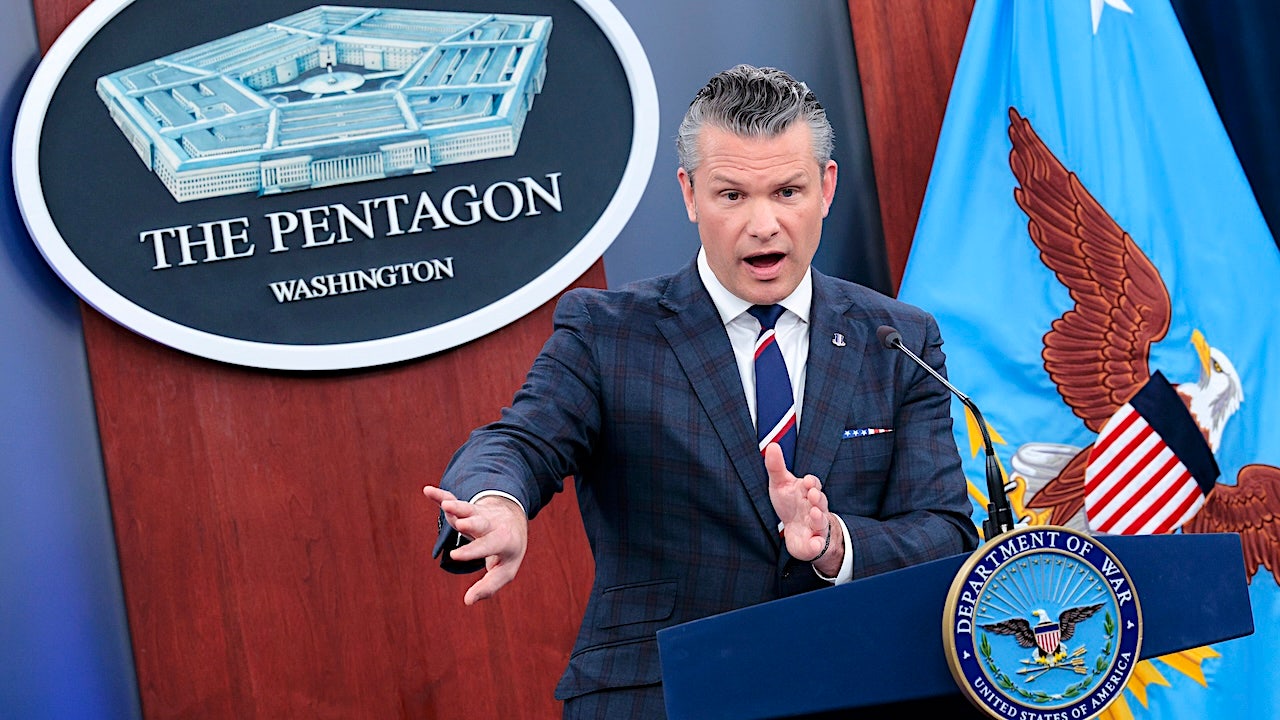
Hegseth rips impeachment push from outgoing Republican as 'farce,' 'stunt'
The Watchmen's Summary
War Secretary Pete Hegseth defended military operations in Iran, Venezuela, and Yemen while confronting a privileged House resolution containing eight impeachment articles. He called the effort by Rep. Thomas Massie a political spectacle and said the operations were lawful, authorized by President Trump, reported to Congress, and successfully executed. Trump publicly backed Hegseth and urged Congress to reject impeachment. The article provides little detail about Massie’s allegations or independent verification of Hegseth’s legal claims, leaving the dispute unresolved.
Biblical Context
Pete Hegseth’s defense of executive military authority and the impeachment effort both raise questions Scripture addresses concerning government authority, justice, and accountability. Romans 13:1-4 recognizes civil government as an institution permitted by God and describes its responsibility to restrain wrongdoing and uphold public order; it does not, however, grant unlimited authority to political leaders or settle modern disputes over war powers. First Peter 2:13-14 likewise describes rulers as responsible for punishing evil and honoring what is good, which makes lawful conduct and genuine public accountability important considerations rather than assuming that official claims are sufficient. The allegations and counter-allegations also call for careful judgment. Deuteronomy 16:18-20 commands judges to administer justice without partiality, while Proverbs 18:17 observes that an initial account can appear persuasive until the opposing side is heard. Those principles support examining both Hegseth’s defense and Massie’s allegations, especially because the supplied text gives extensive attention to Hegseth’s position but little detail about the impeachment articles themselves. Scripture does not prescribe the U.S. impeachment process, nor does it identify these operations as fulfilling prophecy. Its relevance here is principled: rulers wield authority under moral accountability, military action should not be treated as beyond scrutiny, and disputed accusations require truthful and impartial examination.
Watchmen Signals
Pete Hegseth’s defense of military operations and the House impeachment effort involve government authority, the use of force, justice, and accountability—subjects Scripture addresses through its teaching on rulers and judgment. The Bible does not establish the modern impeachment process or determine whether these particular operations were lawful, so its guidance applies as a moral framework rather than a direct ruling on the case.
The operations in Iran, Venezuela, and Yemen and the accompanying political conflict do not correspond to a specific prophetic passage on the facts provided. Scripture speaks broadly about war, rulers, and turmoil, but those general themes are not enough to identify these events as prophetic fulfillment.
An impeachment vote is approaching while the secretary of war continues defending recent military operations and receiving presidential backing. The situation is evolving and worth monitoring, but the passage does not describe an immediate attack, emergency, or sudden government breakdown requiring urgent notification.
Biblical Sources
Scripture references supporting the biblical context above.
Peter presents governing authorities as responsible for punishing evil and honoring what is good. That principle relates to the dispute over whether military actions were lawful and whether officials should be held accountable.
These instructions require judges to administer justice fairly, reject partiality, and pursue justice. They provide a relevant standard for evaluating sharply partisan accusations and defenses in an impeachment dispute.
The proverb warns that the first account in a dispute can seem right until another party presents its case. It directly supports caution because the supplied text largely presents Hegseth’s defense without detailing Massie’s allegations.
Paul describes civil authorities as permitted by God to maintain order and punish wrongdoing. The passage helps frame Hegseth’s claims of executive authority while also placing government power within a moral responsibility to serve justice.
Comments
No comments yet.
Sign in to join the conversation.
Sign InStay Informed. Grow in Biblical Understanding.
Explore important news from around the world through the context of God's Word. Create your FREE Watchmen account to discover more news analysis, Biblical Insights, and Scripture-based perspectives.
Create Your FREE AccountFree to join. No credit card required.