Noah's Ark site yields first look at charred wood fragments recovered deep below soil
The Watchmen's Summary
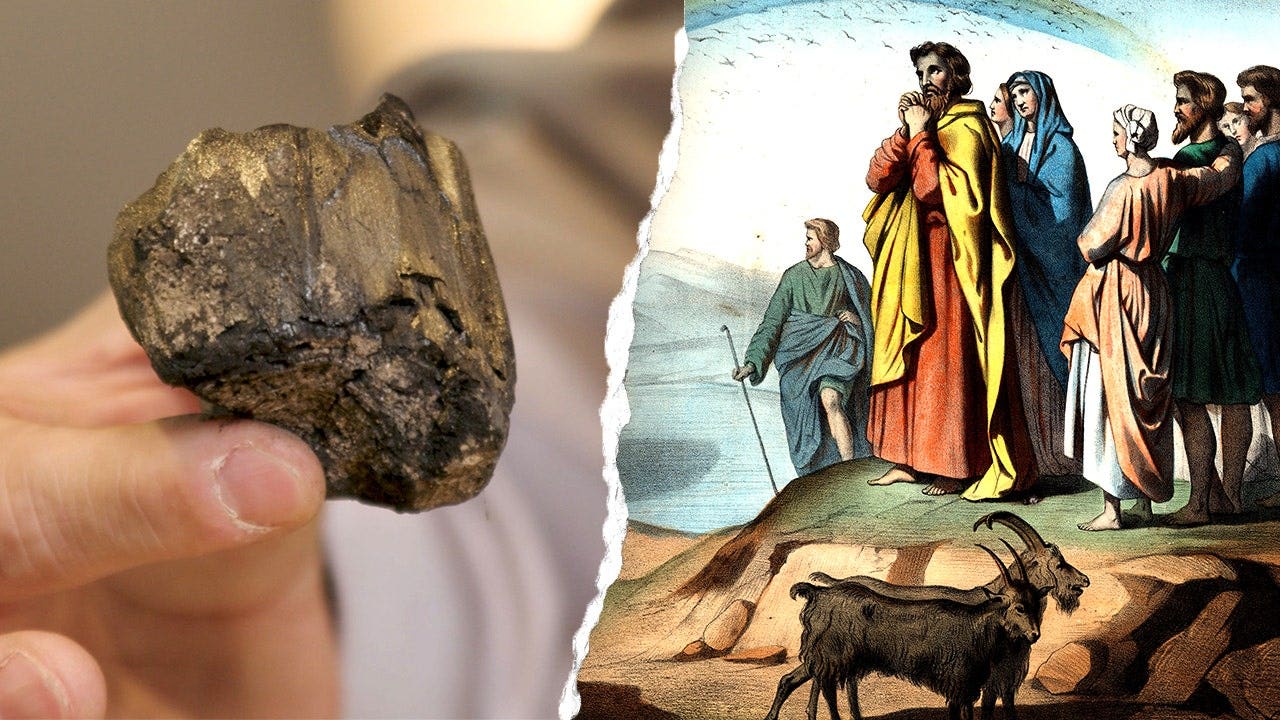
Researchers affiliated with Turkish universities say they recovered charred wood fragments from about 30 feet beneath the Durupınar formation, a boat-shaped site near Mount Ararat that some believe could be Noah’s Ark. The team is using drilling, radar surveys, soil analysis and laboratory testing, including carbon-14 dating and species identification. Researchers have not established the fragments’ age, origin or connection to the biblical vessel. Geologists have previously argued that the formation is a natural structure, and further excavation may depend on future permits and test results.
Biblical Context
Genesis 6–9 records Noah’s Ark as part of the Flood narrative, making a physical site proposed as the Ark’s resting place directly connected to a specific biblical account. Genesis says the vessel was made of wood and gives its basic dimensions and structure, while Genesis 8:4 places it on the mountains of Ararat. Those passages explain why the Durupınar investigation has biblical and archaeological interest. At the same time, Scripture does not identify the Durupınar formation as the Ark, nor does the biblical account establish that surviving fragments must be found there. The reported samples, radar patterns and geological interpretations therefore require historical and scientific testing rather than theological assumption. No specific end-times prophecy is implicated: the Ark narrative in Genesis is not a prophecy being fulfilled by the pending laboratory work.
Watchmen Signals
Noah’s Ark is a specific biblical account in Genesis 6–9, and researchers are testing a physical site near Mount Ararat that some associate with the vessel’s resting place. The connection is direct because the investigation centers on an object and location described in Scripture, although the recovered fragments have not been dated or independently linked to the Ark.
Genesis presents Noah’s Ark as part of the Flood narrative, not as an end-times prophecy. Pending carbon dating, radar interpretations and possible excavation may bear on an archaeological claim, but they do not correspond to a specific prophetic prediction or demonstrate prophetic fulfillment.
Researchers have recovered samples and are awaiting carbon-14 and species-identification results, making this an evolving story worth watching. Nothing described requires immediate reader notification; the key conclusions may not come until later laboratory work and possible excavation.
Biblical Sources
Scripture references supporting the biblical context above.
This passage establishes the broader biblical account of Noah, the coming Flood and the construction of the Ark, which is the subject of the archaeological claim being tested.
God instructs Noah to build the Ark from wood and provides its dimensions and multiple levels, which are among the biblical details researchers compare with the Durupınar formation.
The passage states that the Ark came to rest on the mountains of Ararat, supplying the specific biblical geographic connection behind investigations near Mount Ararat.
Comments
No comments yet.
Sign in to join the conversation.
Sign InStay Informed. Grow in Biblical Understanding.
Explore important news from around the world through the context of God's Word. Create your FREE Watchmen account to discover more news analysis, Biblical Insights, and Scripture-based perspectives.
Create Your FREE AccountFree to join. No credit card required.