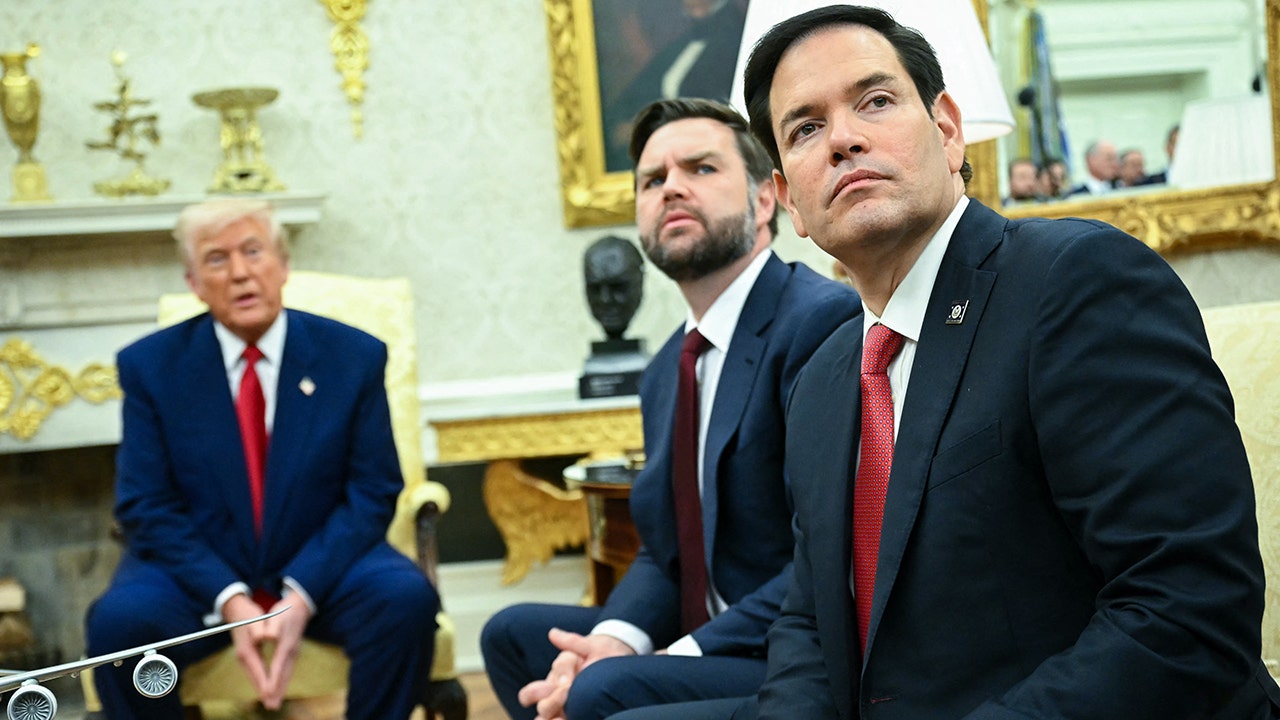
Rubio's defense of Trump's Iran war draws sharp contrast with Vance's midterm blame
The Watchmen's Summary
Secretary of State Marco Rubio defended the Trump administration’s continuing military and economic confrontation with Iran, while Vice President JD Vance argued that the conflict contributed significantly to Republicans’ midterm losses. Polling cited in the report shows cost-of-living concerns outweighed the war as a stated voting factor, though the issues may overlap. Diplomatic efforts involving Qatar are underway, but Rubio says Iran’s demands remain unrealistic. The administration also faces conflicting assessments over whether its military objectives were achieved and what strategy should follow.
Biblical Context
The continuing war, competing claims about military necessity, and uncertainty over its endpoint raise questions Scripture addresses about governmental authority, accountability, conflict, and the pursuit of peace. Romans 13:1-4 describes governing authorities as having responsibility to restrain wrongdoing and pursue justice. That passage can illuminate the administration’s stated duty to protect the United States and regional interests, but it does not automatically validate every military action or policy. Leaders remain accountable for whether force is lawful, proportionate, and directed toward a legitimate good. Jesus warned in Matthew 24:6-7 that His followers would hear of wars and rumors of wars, while cautioning them not to treat such events by themselves as proof that the end had arrived. The continuing U.S.-Iran confrontation therefore fits a general biblical description of a troubled world, but the passage does not identify this conflict as a particular prophetic fulfillment. James 4:1-2 connects conflicts to disordered desires and rivalry. It does not assign blame to one government in this dispute, but it provides a moral framework for examining the ambitions, fears, and competing interests that can prolong war. Luke 14:31-32 also uses a king considering the costs of war as an illustration of sober judgment, which is relevant to the article’s questions about objectives, consequences, and whether renewed combat would serve U.S. interests. No specific prophetic fulfillment is established by the supplied facts. Although some interpreters associate modern Iran with ancient Persia, the article’s military confrontation, maritime tensions, and negotiations do not present the distinctive invasion and coalition described in Ezekiel 38. The comparison therefore remains speculative rather than a demonstrated connection.
Watchmen Signals
The U.S.-Iran confrontation involves war, the use of governmental power, competing claims of justice and security, civilian and military risks, and an uncertain pursuit of peace. Scripture directly addresses the responsibilities of rulers, the reality of conflict, and the need for sober judgment, while leaving modern policy choices to careful moral evaluation rather than endorsing one political position.
The conflict does not correspond to a clearly identifiable prophetic event in the supplied facts. References to Iran as possible modern Persia are insufficient by themselves, and the reported strikes, maritime tensions, and negotiations do not match the distinctive invasion and coalition described in Ezekiel 38; no fulfillment claim can responsibly be made.
Qatar-mediated negotiations and continued disagreement over military objectives show that the confrontation remains unresolved and could change course. However, the story describes an extended conflict and political reassessment rather than a newly occurring attack or immediate emergency requiring urgent notification.
Biblical Sources
Scripture references supporting the biblical context above.
James links conflicts to sinful desires and rivalries, offering a moral lens for examining the competing ambitions and interests that can sustain political and military confrontation.
Jesus’ illustration of a king weighing the cost of war relates to the article’s dispute over military objectives, strategic planning, risks to forces and allies, and the consequences of renewed combat.
Jesus refers to wars and rumors of wars as features of the present age and warns against treating them alone as proof of the end, which limits prophetic conclusions drawn from the U.S.-Iran conflict.
These verses describe government’s responsibility to restrain wrongdoing and pursue justice, providing a framework for considering the administration’s claimed duty to protect the nation while recognizing that authority does not make every policy automatically righteous.
Comments
No comments yet.
Sign in to join the conversation.
Sign InStay Informed. Grow in Biblical Understanding.
Explore important news from around the world through the context of God's Word. Create your FREE Watchmen account to discover more news analysis, Biblical Insights, and Scripture-based perspectives.
Create Your FREE AccountFree to join. No credit card required.