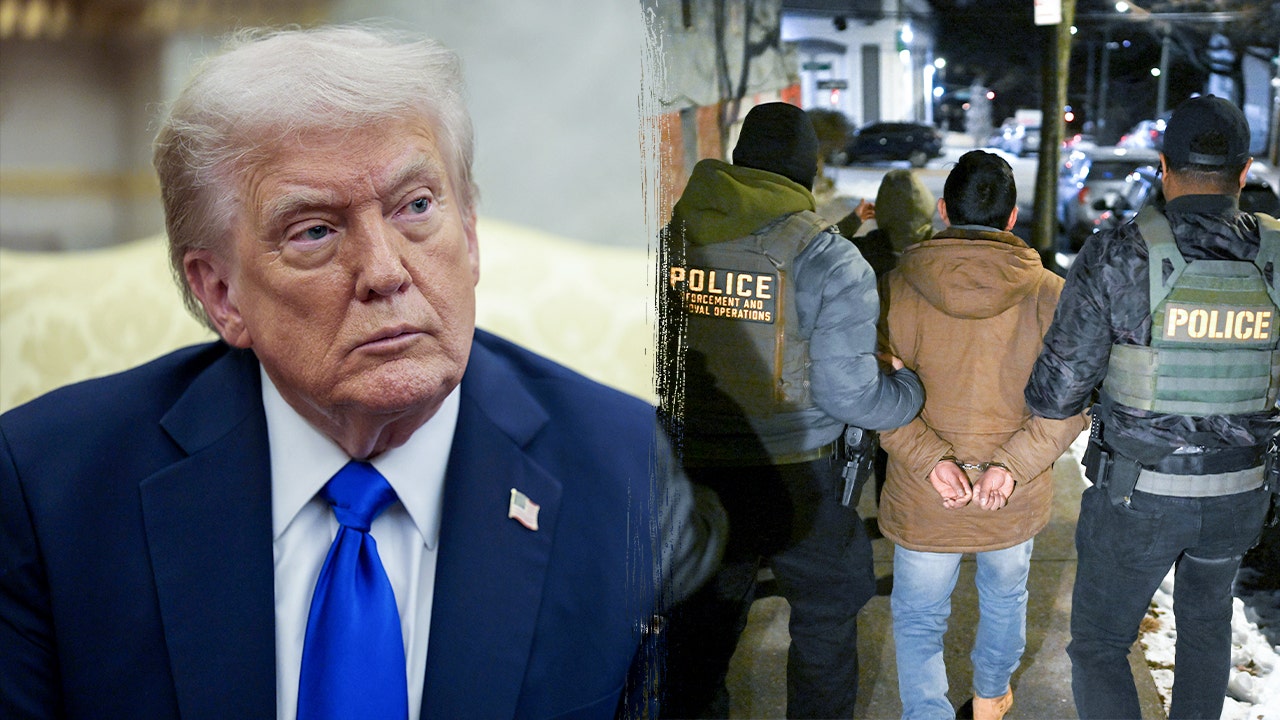
Trump admits immigration enforcement may have been too 'tough' in first interview since midterms
The Watchmen's Summary
President Donald Trump said his immigration enforcement may have been too strict and acknowledged that deportations of otherwise law-abiding undocumented workers contributed to political backlash. In an interview following the midterm elections, he defended border restrictions and the removal of people he characterized as dangerous, while recognizing that some undocumented immigrants hold jobs and pay taxes. Trump also said a compromise with Democrats on border enforcement and immigration status could be possible, though the article includes several claims and election details that are not independently verified here.
Biblical Context
Government has a legitimate responsibility to enforce law and protect the public. Romans 13:1-4 describes civil authorities as servants accountable for restraining wrongdoing, which relates to border enforcement and deportation of people who pose genuine public-safety threats. That authority is not presented as unlimited discretion: Deuteronomy 10:17-19 calls God's people to uphold justice and show love toward the foreigner, while Leviticus 19:33-34 forbids mistreating immigrants and commands that they be treated with dignity. These passages do not prescribe whether undocumented workers should be deported or granted legal status, but they frame the policy debate around both lawful government authority and impartial, humane treatment. The article's distinction between criminal offenders and otherwise law-abiding workers makes that tension especially relevant.
Watchmen Signals
Trump's comments place government authority, enforcement of immigration law, public safety, and the treatment of foreign-born workers at the center of the political debate. Romans 13:1-4 speaks to the state's responsibility to restrain wrongdoing, while Leviticus 19:33-34 and Deuteronomy 10:17-19 call for justice and humane treatment of foreigners; Scripture informs these competing responsibilities without prescribing a modern immigration system.
The discussion concerns deportation policy, election results, and a possible legislative compromise, none of which corresponds to a specific biblical prophecy. Scripture offers principles about authority and treatment of foreigners, but the supplied facts do not establish a prophetic pattern or fulfillment.
The comments came in a post-election interview and point to a possible future policy discussion rather than an immediate government action, emergency, or rapidly unfolding crisis.
Biblical Sources
Scripture references supporting the biblical context above.
The passage emphasizes God's impartial justice and care for the foreigner, offering a biblical standard against abusive or discriminatory treatment while immigration policy is debated.
Israel is commanded not to mistreat the foreigner and to love the foreigner as a native, directly informing questions about the dignity and treatment of immigrants.
Paul describes governing authorities as instituted by God and responsible for restraining wrongdoing, providing a relevant framework for lawful border enforcement and public protection.
Comments
No comments yet.
Sign in to join the conversation.
Sign InStay Informed. Grow in Biblical Understanding.
Explore important news from around the world through the context of God's Word. Create your FREE Watchmen account to discover more news analysis, Biblical Insights, and Scripture-based perspectives.
Create Your FREE AccountFree to join. No credit card required.