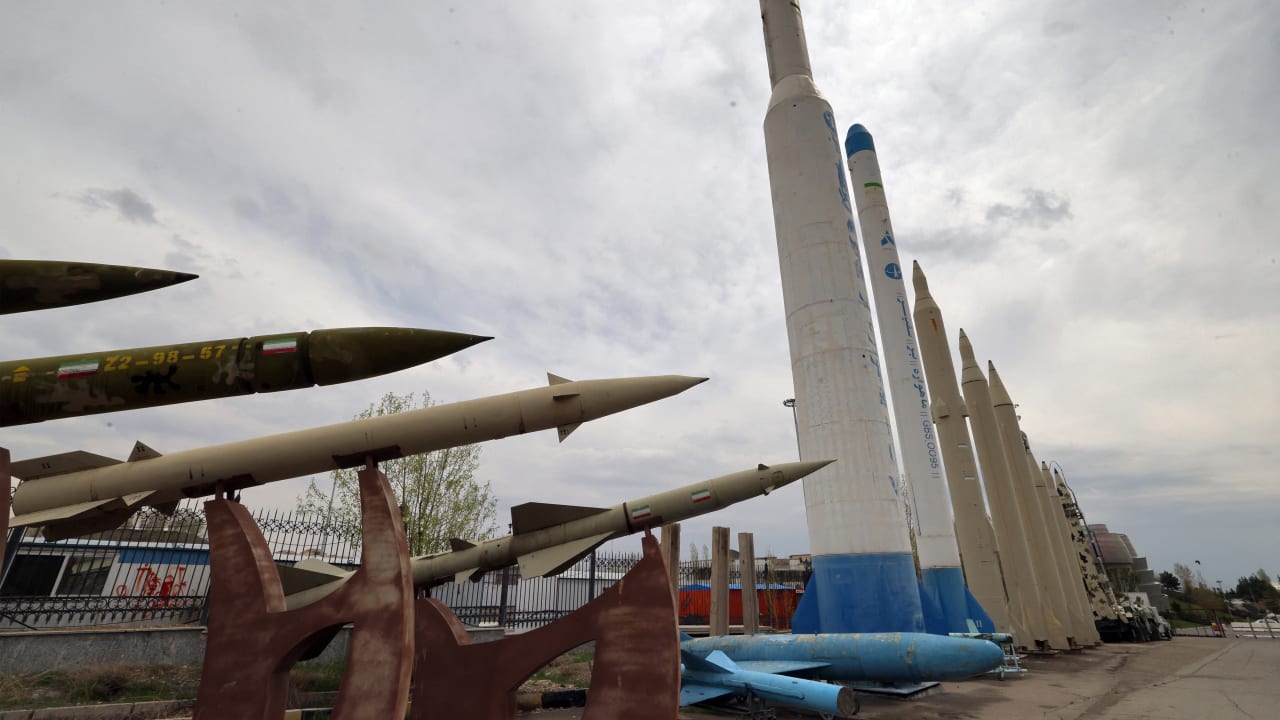
Not destroying Iran's missiles, drones 'most significant failure,' former CENTCOM deputy cmdr. says
The Watchmen's Summary
A former U.S. Central Command deputy commander says the United States and Israel failed to eliminate Iran’s ballistic-missile and drone capabilities, leaving Tehran with significant tools for threatening Israel, American forces, and regional states. Rear Adm. Robert Harward warned these systems could become targets in renewed military action. President Donald Trump has threatened further strikes while pursuing diplomacy through Qatar. Sanctions and possible blockades are increasing pressure, but claims about nuclear attacks remain speculative, and experts say the MOAB cannot destroy deeply buried Iranian facilities.
Biblical Context
War, national power, and the decisions of rulers are central to the reported confrontation. Romans 13:1-4 describes governmental authority as having a legitimate responsibility to restrain wrongdoing and pursue public order; it can inform discussion of state action without automatically endorsing every military operation or policy. Jesus warned that His followers would hear of wars and rumors of wars in Matthew 24:6-7, placing armed conflict within the troubled conditions of the present age while cautioning against treating every conflict as proof of the end. Psalm 2:1-4 portrays rulers and nations in opposition to God’s purposes. The passage offers a theological perspective on international hostility and human power, but the article does not establish that the leaders or governments involved are fulfilling this specific setting. Scripture also consistently values the restraint of violence: Psalm 46:9 says that God makes wars cease, a principle that contrasts with the article’s discussion of renewed strikes, blockades, and escalating military pressure. These passages support reflection on the responsibilities and dangers surrounding rulers, war, and regional instability. They do not validate particular weapons choices, establish that regime change is biblically required, or demonstrate that the reported conflict fulfills a specific prophecy.
Watchmen Signals
Iran’s retained missile and drone forces, the possibility of renewed attacks on Israel, and the decisions of American, Israeli, and Iranian leaders place war, national authority, threat, and regional instability at the center of the development. Scripture directly addresses those subjects, although it does not determine whether a particular strike, sanction, or regime-change policy is justified.
Iran’s identity as modern Persia and the presence of conflict involving Israel do not establish a specific prophetic fulfillment. Ezekiel 38, for example, describes a defined coalition and invasion of Israel, while the report provides no basis for identifying that coalition or concluding that such an invasion is occurring; its discussion remains focused on potential U.S. action, Iranian capabilities, and uncertain escalation.
Renewed US strikes remain possible while military pressure, sanctions, diplomacy, and activity around the Strait of Hormuz continue. The situation warrants close monitoring, but the passage describes threats and strategic assessment rather than a clearly unfolding emergency requiring immediate notification.
Biblical Sources
Scripture references supporting the biblical context above.
Jesus explicitly refers to wars, rumors of wars, and nations rising against nations. The passage directly relates to the article’s military confrontation while warning that such events must not automatically be treated as proof of the end.
The psalm describes nations and rulers joining in opposition to God’s purposes. It offers a broader theological lens for international hostility and political power, though the article does not establish that this specific prophetic-poetic setting is being fulfilled.
The statement that God makes wars cease provides a biblical counterpoint to the article’s discussion of renewed strikes, blockades, and escalating military pressure.
Paul presents governing authorities as responsible for maintaining order and restraining wrongdoing. This provides context for examining the actions and claimed responsibilities of the U.S., Israeli, and Iranian authorities without treating every policy as automatically righteous.
Comments
No comments yet.
Sign in to join the conversation.
Sign InStay Informed. Grow in Biblical Understanding.
Explore important news from around the world through the context of God's Word. Create your FREE Watchmen account to discover more news analysis, Biblical Insights, and Scripture-based perspectives.
Create Your FREE AccountFree to join. No credit card required.