Ancient discovery from time of Jesus emerges near Jerusalem's Temple Mount
The Watchmen's Summary
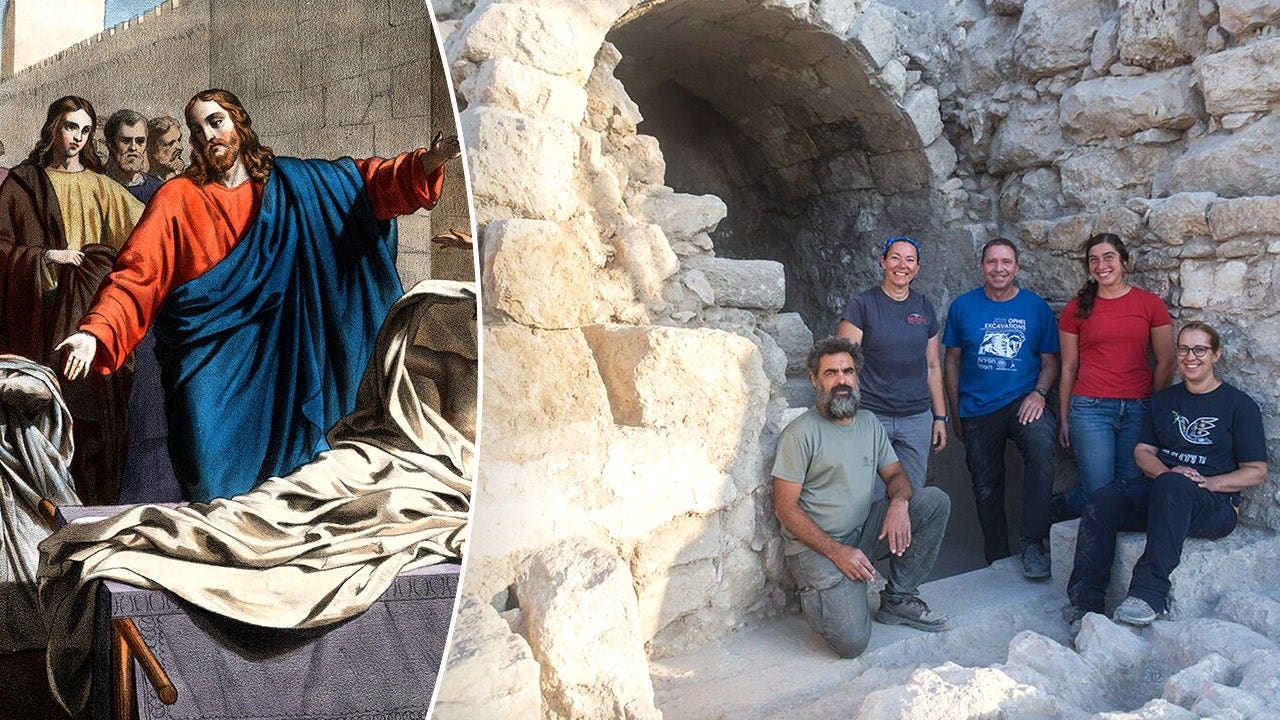
Archaeologists from the Hebrew University of Jerusalem have uncovered a remarkably preserved early first-century ritual bathing complex in the Ophel, just south of the Temple Mount. The site includes three large mikva’ot, a pool, plaza, and water system likely used by Jewish pilgrims before entering the Second Temple. Coins and debris connect the complex to Jerusalem’s destruction by Rome in A.D. 70. Researchers say the discovery illuminates Jewish purification practices that formed the historical setting for John the Baptist and early Christian baptism, though there is no evidence Jesus used the site.
Biblical Context
Jewish ritual washing was already part of the religious world described in Scripture. Leviticus 15 presents washing and immersion as responses to ritual impurity, while John 2:6 refers to stone water jars kept for Jewish purification. The newly uncovered mikva’ot therefore fit the broader purification practices known from the biblical and Second Temple settings, though the article does not establish that this exact complex is mentioned in Scripture. The site’s location near the Temple also corresponds to the Gospel picture of Jewish pilgrimage to Jerusalem. Luke 2:41-42 records Jesus’ family traveling to Jerusalem for Passover, and John 2:13 places Jesus in Jerusalem during the Passover season. These passages do not identify the Ophel complex, but they help explain why extensive purification facilities would have been built near the Temple entrances. The connection to John the Baptist and Christian baptism is more direct at the level of historical setting. John 1:25-28 records John baptizing and being questioned about the practice, while Acts 2:38-41 shows Jesus’ followers calling people to baptism. Scripture presents baptism as a significant Christian rite, but the archaeological evidence and the expert interpretation help illuminate its Jewish cultural background rather than proving that Christian baptism was simply identical to every earlier purification bath. The Roman destruction evidence is historically consistent with the first-century setting of the New Testament, but it does not by itself establish a present-day prophetic fulfillment. No distinct current prophecy is demonstrated by the excavation.
Watchmen Signals
Jewish purification, Temple pilgrimage, John the Baptist, and the baptism practiced by Jesus’ followers are all directly connected to the discovery. The complex helps illuminate the religious setting described in the Gospels and Acts, although no evidence shows that Jesus or his disciples personally used this particular site.
The coins and destruction debris provide archaeological evidence for Jerusalem’s fall to Rome in A.D. 70, but the discovery does not establish a distinct present-day fulfillment of a biblical prophecy. Its prophetic significance would be speculative rather than demonstrated by the reported facts.
The excavation was announced earlier in the fall and concerns a completed archaeological discovery rather than a rapidly changing event requiring immediate notification.
Biblical Sources
Scripture references supporting the biblical context above.
These verses document the adoption of baptism by Jesus’ followers, supporting the article’s connection between the ancient Jewish bathing context and early Christian practice.
This passage records John the Baptist’s practice of baptizing and places it within the Jewish religious setting that the archaeological evidence helps illuminate.
John refers to stone water jars kept for Jewish purification, directly illustrating the ritual-washing environment of first-century Judaism.
These verses describe washing and immersion in the context of ritual impurity, providing direct biblical background for the purification practices represented by the ancient bathing complex.
These verses record Jewish pilgrimage to Jerusalem for Passover, helping explain the need for facilities serving visitors near the Temple.
Comments
No comments yet.
Sign in to join the conversation.
Sign InStay Informed. Grow in Biblical Understanding.
Explore important news from around the world through the context of God's Word. Create your FREE Watchmen account to discover more news analysis, Biblical Insights, and Scripture-based perspectives.
Create Your FREE AccountFree to join. No credit card required.