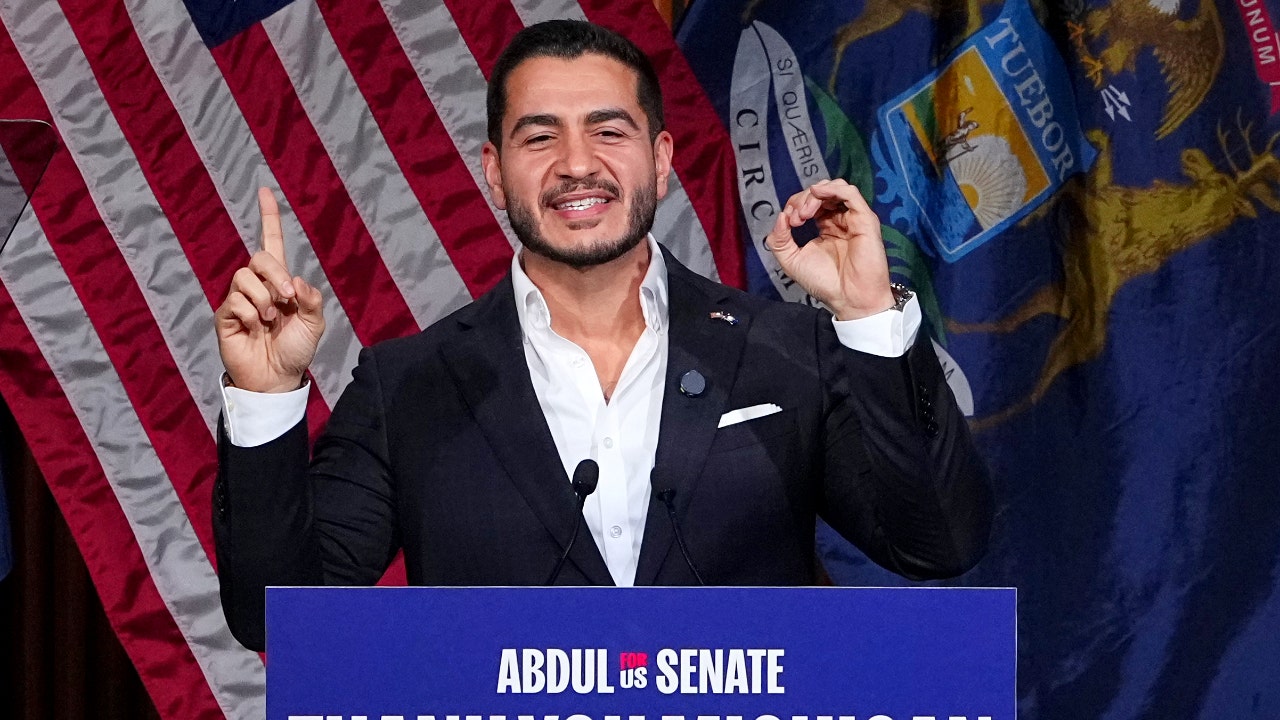
El-Sayed mocks Trump, Vance and Rogers in gloating victory speech signaling combative tone in Senate
The Watchmen's Summary
Abdul El-Sayed won Michigan’s Senate race against Republican Mike Rogers and used his victory speech to criticize President Donald Trump, Vice President JD Vance, and his former opponent. He accused Republicans of targeting his name and Muslim faith while voters faced high prices. El-Sayed also condemned U.S. spending on Israel, describing the conflict as “apartheid” and “genocidal war.” His campaign had faced allegations involving the Muslim Brotherhood, controversy over remarks concerning Israel and Jewish voters, and criticism over political associations.
Biblical Context
Abdul El-Sayed’s election and his speech raise questions about how political leaders should exercise authority, speak about opponents, and treat people whose names or religious practices differ from their own. Romans 13:1-4 describes governing authority as accountable to God and charged with restraining wrongdoing and promoting public good. That principle does not endorse every officeholder or policy, but it underscores the seriousness of public leadership and accountability. The dispute over mocking a candidate’s name and faith also connects with Scripture’s teaching on human dignity and impartiality. Genesis 1:27 grounds the equal worth of human beings in their creation in God’s image, while James 2:1-9 condemns partiality based on status or outward distinctions. These passages support opposition to religious or ethnic contempt, though they do not determine which candidate’s political program is correct. Ephesians 4:29 and Matthew 5:44 likewise call for speech that gives grace and for a posture that rejects retaliation toward enemies; those standards apply to El-Sayed’s mockery of Trump, Vance, and Rogers as well as to attacks directed at him. El-Sayed’s criticism of U.S. aid to Israel should not be treated as proof of a prophetic development. Scripture gives Israel a distinctive place in God’s redemptive history, including the continuing significance of God’s promises to the patriarchs in Romans 11:28-29, but that does not mean every policy of the modern State of Israel is beyond criticism or that every criticism is faithful. The report supplies no basis for concluding that a specific biblical prophecy is being fulfilled. Its connection to Scripture is instead found in questions of justice, impartiality, political responsibility, human dignity, and the treatment of Israel and Jewish people.
Watchmen Signals
Abdul El-Sayed’s election brings biblical questions about governing authority, impartial treatment, human dignity, public speech, and the place of Israel in political decision-making into direct view. Scripture does not settle the election or endorse either side’s policy claims, but it does speak materially to the conduct of rulers, the treatment of religious minorities, and accountability in public life.
A Michigan Senate victory, partisan conflict, and disagreement over U.S. aid to Israel do not correspond to a particular biblical prophecy. The report contains no distinctive prophetic features, and its references to Israel, Iran, and political hostility are too general to establish prophetic fulfillment.
The election result and victory speech are newly reported and may signal a shift in Michigan politics and future debates over Israel policy, but they do not require immediate emergency notification.
Biblical Sources
Scripture references supporting the biblical context above.
Paul instructs believers to avoid corrupting speech and to speak in ways that build others up, a standard relevant to the mocking and hostile rhetoric described on both sides of the campaign.
Human beings are created in God’s image, providing a biblical foundation for rejecting contempt or discrimination directed at someone because of his name, ethnicity, or manner of worship.
James condemns partiality based on outward distinctions, which is relevant to the campaign dispute over whether El-Sayed was attacked because of his Muslim faith and name.
Jesus commands love for enemies and prayer for persecutors, providing a direct ethical contrast to the victory speech’s mockery of political opponents while also challenging hostile rhetoric aimed at El-Sayed.
Paul speaks of Israel’s continuing significance in relation to God’s promises, helping frame the article’s Israel-related dispute without equating criticism of Israeli policy with prophetic fulfillment or treating the modern state as identical to every biblical reference to Israel.
Paul describes governing authorities as accountable to God and responsible for restraining wrongdoing and promoting public order, illuminating the responsibilities attached to El-Sayed’s election and the conduct of the officials he criticized.
Comments
No comments yet.
Sign in to join the conversation.
Sign InStay Informed. Grow in Biblical Understanding.
Explore important news from around the world through the context of God's Word. Create your FREE Watchmen account to discover more news analysis, Biblical Insights, and Scripture-based perspectives.
Create Your FREE AccountFree to join. No credit card required.