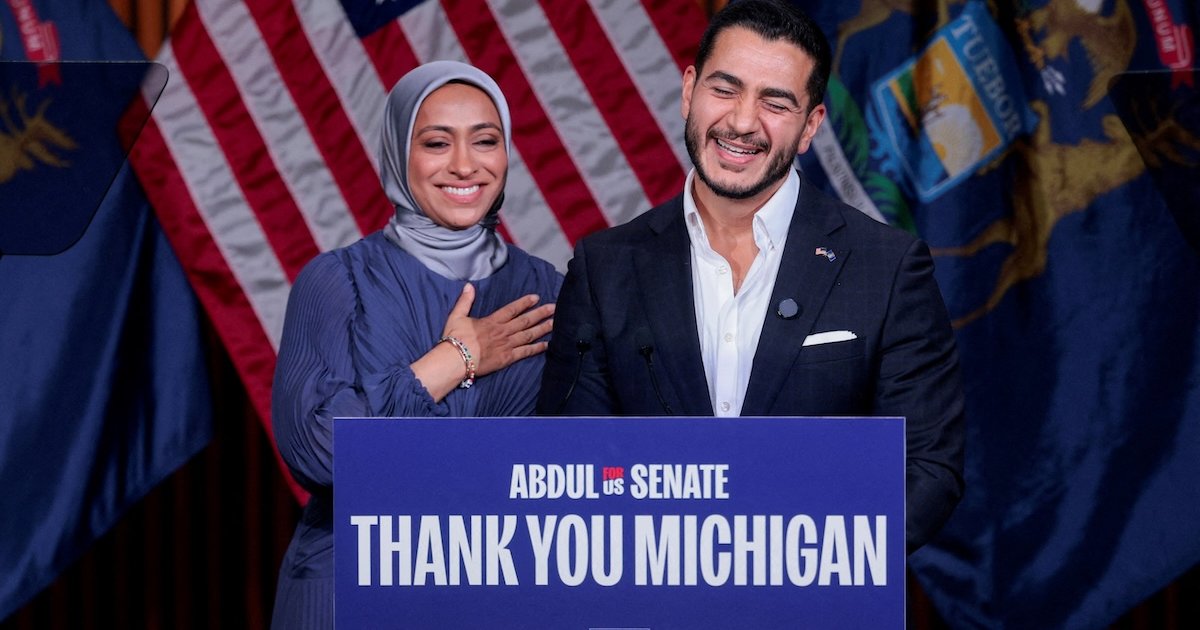
Anti-Israel Democrat Abdul El-Sayed wins Michigan Senate race, becomes first Muslim US senator
The Watchmen's Summary
Abdul El-Sayed defeated Republican Mike Rogers in Michigan’s closely contested Senate race and is set to become America’s first Muslim senator, succeeding retiring Democrat Gary Peters. The victory came during a broader Democratic midterm wave that also elevated several candidates described as hostile toward Israel. El-Sayed criticized AIPAC and U.S. support for Israel in his victory speech, while opponents cited alleged antisemitism and suspected Muslim Brotherhood ties. A survey of 482 early Jewish voters nevertheless showed El-Sayed leading Rogers, 60% to 36%, though he drew less Jewish support than other Democratic candidates.
Biblical Context
El-Sayed’s stated opposition to American support for Israel places the election within a biblical theme concerning how rulers and nations treat Israel, although Scripture does not identify a particular modern candidate or election as a fulfillment of prophecy. Genesis 12:1-3 records God’s promise to bless Abraham and make him a blessing, including a warning concerning those who dishonor him; Christians have often understood this as relevant to the way nations regard Abraham’s descendants, while recognizing that applying the passage directly to every modern policy dispute requires caution. Psalm 122:6 calls God’s people to pray for the peace of Jerusalem, supporting prayerful concern for Israel rather than partisan certainty. Romans 13:1-4 also bears on the conduct of elected officials. It describes governing authority as accountable to God and responsible, in principle, for restraining wrongdoing and promoting what is good. That passage does not settle the merits of particular U.S. aid policies or establish that criticism of Israel is automatically sinful, but it provides a framework for evaluating public rhetoric, foreign-policy decisions, justice, and the protection of innocent people. The article’s allegations of antisemitism are likewise relevant to biblical commands against partiality and injustice, such as Leviticus 19:15, though the article does not provide enough substantiation to determine whether those allegations are true. No specific prophetic passage is sufficiently matched by this election to conclude that prophecy is being fulfilled.
Watchmen Signals
Abdul El-Sayed’s election, his stated opposition to U.S. support for Israel, and the controversy over alleged antisemitism engage biblical concerns about the treatment of Israel, justice, and the accountability of political rulers. Scripture offers principles for evaluating those issues, but it does not identify this candidate or election as a predetermined biblical event.
A senator’s anti-Israel statements and the election of other candidates described as hostile toward Israel do not correspond to a distinctive prophetic event in Scripture. Biblical passages concerning Israel and the nations provide important principles for observation and prayer, but the facts presented do not establish that a particular prophecy is being fulfilled.
The election result and victory speech are newly reported and may influence upcoming congressional debate and U.S.-Israel relations. They warrant attention, but they do not describe an immediate emergency requiring urgent notification.
Biblical Sources
Scripture references supporting the biblical context above.
God’s promise to Abraham includes a blessing associated with him and a warning concerning those who dishonor him. This provides a biblical basis for taking national treatment of Israel seriously, while not making the passage a direct prediction about a modern Senate election.
The command to judge fairly and avoid partiality offers a biblical standard relevant to allegations of antisemitism and to the broader question of whether political arguments treat people and communities justly.
The command to pray for the peace of Jerusalem supports a measured, prayerful concern for Israel and its security amid political disputes over U.S. policy.
Paul presents governing authority as accountable to God and responsible for public justice. That principle helps frame the responsibilities of an elected senator and the evaluation of rhetoric and foreign-policy decisions.
Comments
No comments yet.
Sign in to join the conversation.
Sign InStay Informed. Grow in Biblical Understanding.
Explore important news from around the world through the context of God's Word. Create your FREE Watchmen account to discover more news analysis, Biblical Insights, and Scripture-based perspectives.
Create Your FREE AccountFree to join. No credit card required.