Federal judge orders DOJ to ensure poll monitors are not law enforcement officials
The Watchmen's Summary
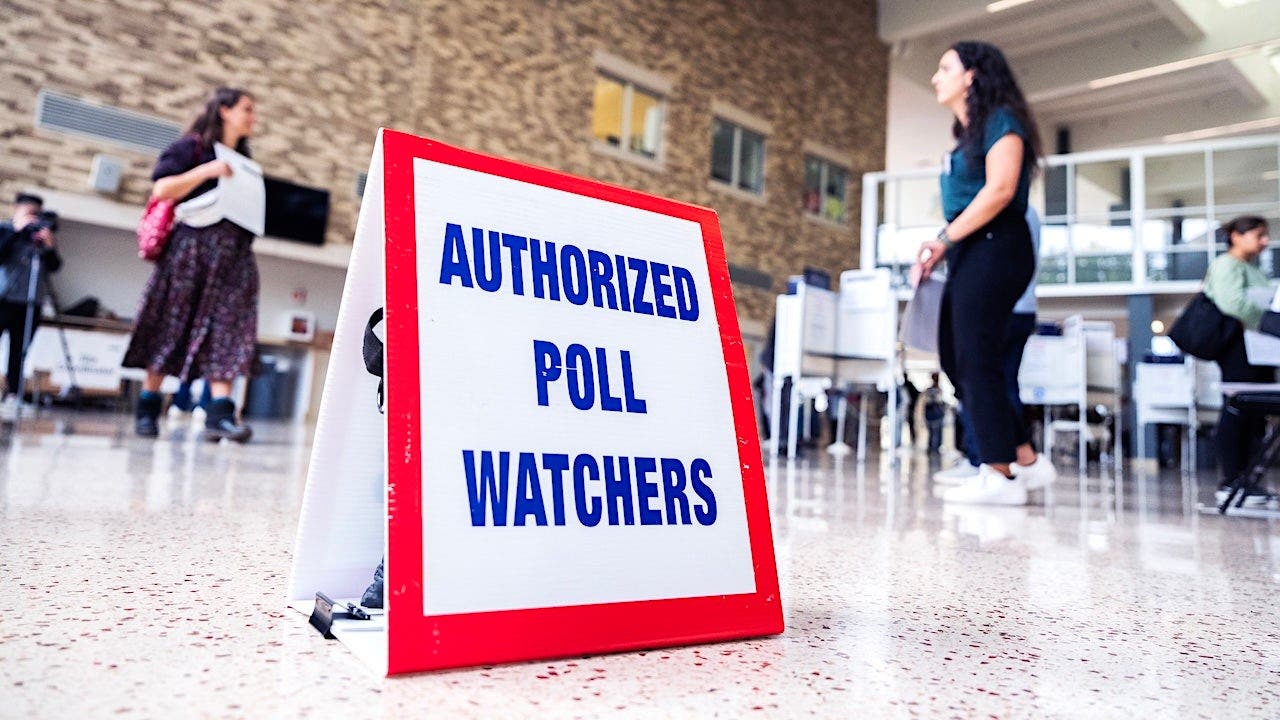
A federal judge denied the NAACP’s request to stop the Justice Department from deploying election monitors, while imposing significant limits on their conduct. For the November 3 election, monitors must be administrative or clerical personnel, unarmed, out of uniform, without federal insignia, and unable to make arrests. They may not interfere with voters or election officials and may speak with voters outside polling places only after ballots are cast. The ruling followed concerns that federal personnel could intimidate voters or violate the Voting Rights Act.
Biblical Context
The order’s treatment of voter access, intimidation, and government authority connects with biblical principles concerning just administration and the protection of vulnerable people. Deuteronomy 16:18-20 commands judges and officials to administer justice impartially and reject bribery or distortion of judgment; that principle is relevant to the court’s effort to preserve a fair voting process, though Scripture does not prescribe modern election-monitoring procedures. Proverbs 31:8-9 calls rulers to speak for those who cannot adequately defend themselves and to judge fairly. In this setting, the concern that federal personnel might intimidate or interfere with voters can be examined through the broader biblical duty to protect people from abuse of power. Romans 13:3-4 describes civil authority as having a legitimate role in restraining wrongdoing and serving the public good, while also distinguishing lawful authority from arbitrary intimidation. These passages support evaluating both the government’s responsibility to protect election integrity and the need to limit official power at polling places. The connection is principled and relevant, not a direct biblical endorsement of any particular election procedure.
Watchmen Signals
Voting access, protection from intimidation, and the proper limits of public authority are connected to biblical commands for rulers to administer justice, defend vulnerable people, and use authority for legitimate public good. Scripture does not address federal election monitors specifically, so the connection rests on those broader principles rather than a direct rule about modern election procedures.
The court’s restrictions on federal election monitors do not correspond to a particular biblical prophecy or identifiable prophetic pattern. The dispute concerns contemporary election administration and civil authority, with no specific prophetic text supplying a credible comparison.
The ruling came shortly before Election Day, with the Justice Department required to report by the following morning how it would comply. The situation warrants monitoring, but it does not describe an immediate emergency or major upheaval.
Biblical Sources
Scripture references supporting the biblical context above.
Moses instructs Israel’s judges and officials to administer justice impartially and not pervert judgment. This supports examining safeguards intended to preserve fair treatment and prevent coercion in the administration of public affairs.
The passage calls those with authority to speak for the vulnerable and judge righteously. It relates to concerns that voters should be able to exercise their rights without intimidation or improper interference.
Paul describes civil authorities as responsible for restraining wrongdoing and serving a public purpose. The passage provides a framework for considering both the government’s election-integrity role and the limits placed on official power.
Comments
No comments yet.
Sign in to join the conversation.
Sign InStay Informed. Grow in Biblical Understanding.
Explore important news from around the world through the context of God's Word. Create your FREE Watchmen account to discover more news analysis, Biblical Insights, and Scripture-based perspectives.
Create Your FREE AccountFree to join. No credit card required.