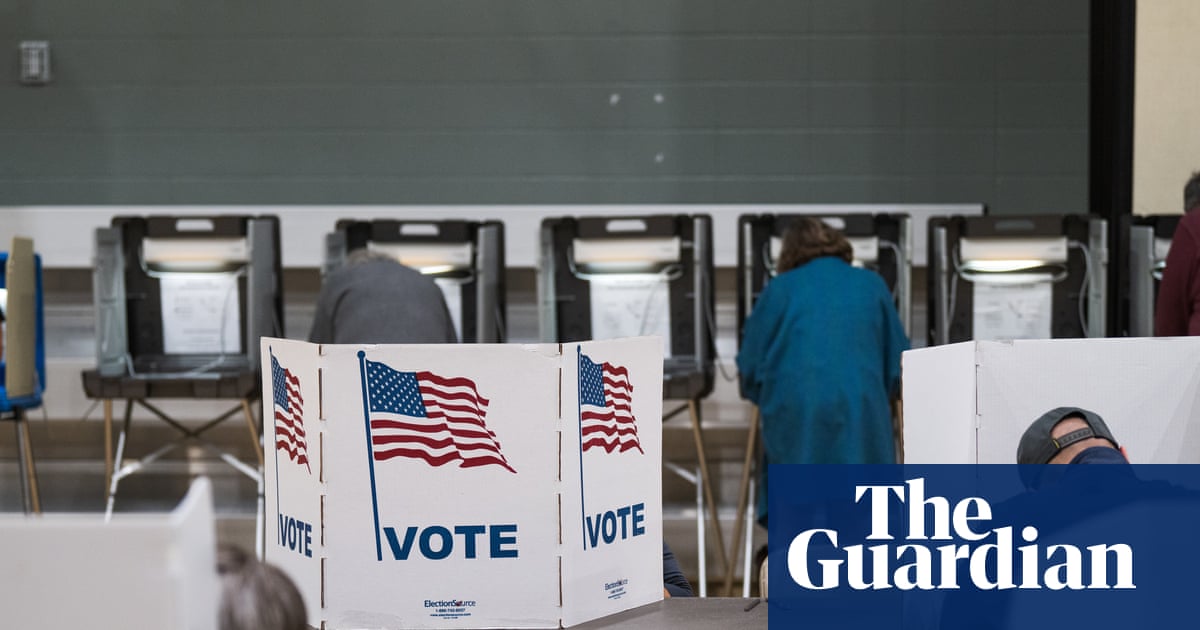
We answered your US midterm questions on the economy, the Iran war, immigration and more
The Watchmen's Summary
A Guardian election roundup examines how the November 3, 2026 US midterms could reshape Congress. It reviews tensions between progressive and centrist Democrats, the influence of cryptocurrency, technology companies, AIPAC-linked groups and Super PACs, and the political effects of the reported nine-month Iran war. It also considers inflation, energy costs, tariffs, labor conditions, and President Donald Trump’s mass-deportation agenda. Several conclusions remain predictive, including expected party gains, candidates’ electoral prospects, and the future impact of campaign spending.
Biblical Context
The election questions touch several areas Scripture addresses directly: the use of political authority, justice in public life, warfare, economic burdens, political power, and the treatment of foreigners and detainees. Romans 13:1–4 describes governing authority as accountable to God and concerned with punishing wrongdoing and promoting what is good; it does not endorse every policy of a particular government. That principle is relevant to debates over congressional power, executive action, war, and immigration enforcement. Justice is especially relevant where the roundup describes detention conditions, deadly operations, voter restrictions, and the influence of wealthy political donors. Proverbs 31:8–9 calls rulers and others with public responsibility to speak for those unable to speak for themselves and to defend the rights of the poor and needy. Psalm 82:3–4 similarly commands the defense of the weak and vulnerable. These passages illuminate the moral questions raised by the treatment of detainees and by political decisions affecting people with limited power, though they do not settle the disputed policy choices reported here. Leviticus 19:33–34 commands Israel to treat the foreigner residing among them with love and justice. The passage is addressed to Israel under the Mosaic covenant, so applying its principle to modern immigration policy requires care; it nevertheless provides a clear biblical concern for the dignity and fair treatment of immigrants. The article’s discussion of mass deportations, detention, and border controls should therefore be assessed not only by political effectiveness but also by whether vulnerable people are treated justly. The reported campaign spending and corporate or ideological influence also raise questions about impartial justice and the misuse of power. Deuteronomy 16:19 warns judges against taking bribes and perverting justice, while 1 Timothy 6:9–10 warns about the spiritual dangers associated with the pursuit of wealth. Neither passage maps directly onto modern Super PAC law, but both support scrutiny of whether money distorts public decisions or places private interests above justice. Finally, Luke 3:14 records John the Baptist’s instruction to soldiers not to extort or abuse their authority and to be content with their wages. It offers a relevant moral principle for evaluating warfare and the conduct of state agents, without declaring that the reported Iran conflict fulfills prophecy. No specific prophetic passage is established by the supplied facts. War, political division, economic hardship, international tension, and pressure on immigrants are recurring biblical concerns, but the roundup does not identify the distinctive circumstances required to responsibly connect these events to a particular prophecy.
Watchmen Signals
Congressional power, the conduct of government, war, economic pressure, campaign influence, immigration enforcement, and the treatment of detainees are all subjects Scripture addresses through teachings on righteous authority, impartial justice, stewardship of power, and care for foreigners and the vulnerable. Those principles illuminate the choices described here, although they do not prescribe a particular party, candidate, or modern immigration and economic policy.
The Iran war, political division, economic hardship, and immigration conflict resemble broad themes found in Scripture, but the supplied facts do not correspond to a distinctive prophetic passage or pattern. Nothing here establishes prophetic fulfillment; the events are better understood as contemporary political and policy developments.
The material is a retrospective guide to reader discussions and upcoming midterm coverage, not a notice of an immediate change or rapidly escalating crisis. Although it discusses serious issues, it does not require prompt notification based on the information provided.
Biblical Sources
Scripture references supporting the biblical context above.
Warns about the dangers associated with the desire for wealth, offering a moral lens for the article’s discussion of billionaire donors, corporations, Super PACs, and political influence.
Prohibits accepting bribes and perverting justice, supporting careful scrutiny of money’s influence on political decisions without equating modern campaign spending automatically with bribery.
Commands Israel to treat resident foreigners with love and fairness; its covenant setting differs from modern policy, but it directly informs the moral concern for immigrants raised by deportation and detention practices.
John the Baptist tells soldiers not to extort or abuse their authority and to be content with their wages, a principle relevant to the conduct of state agents and the moral evaluation of warfare.
Calls for advocacy and justice on behalf of those who lack power, illuminating the article’s treatment of detainees, vulnerable communities, and public policy.
Urges rulers to defend the weak, poor, and needy, providing a biblical framework for evaluating detention conditions and policies affecting vulnerable people.
Describes governing authority, its accountability to God, and its responsibility to restrain wrongdoing and promote good; relevant to the article’s discussion of elections, war, executive power, and immigration enforcement.
Comments
No comments yet.
Sign in to join the conversation.
Sign InStay Informed. Grow in Biblical Understanding.
Explore important news from around the world through the context of God's Word. Create your FREE Watchmen account to discover more news analysis, Biblical Insights, and Scripture-based perspectives.
Create Your FREE AccountFree to join. No credit card required.