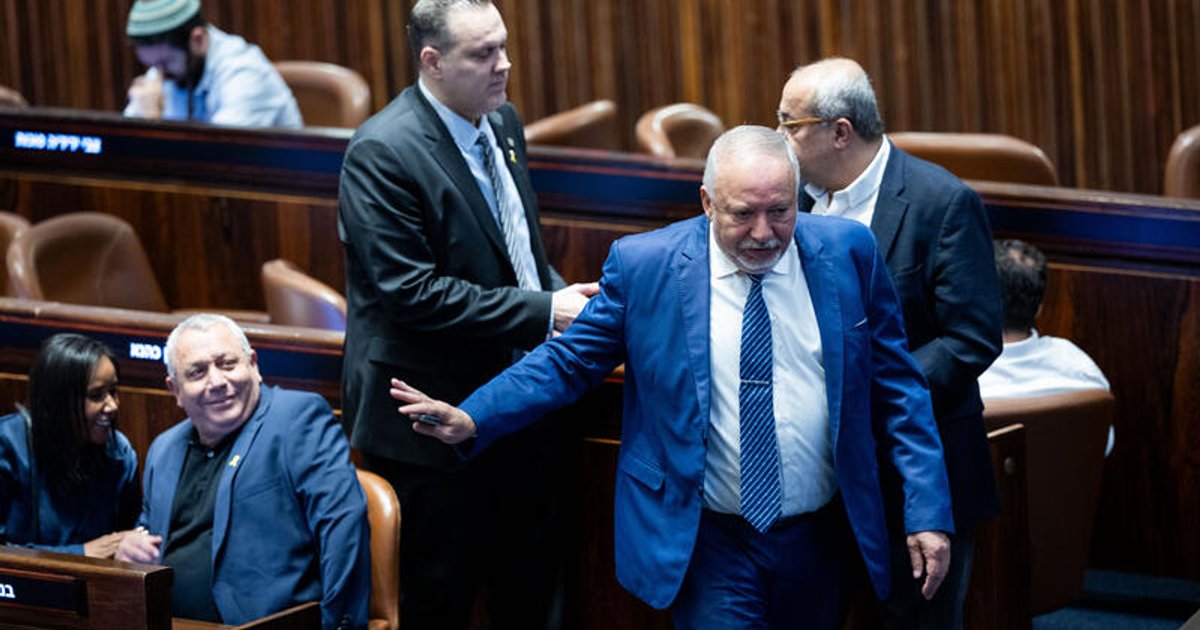
‘Change Bloc’ in disarray: Liberman refuses Eisenkot endorsement as Pres Herzog weighs first candidate to establish new gov’t
The Watchmen's Summary
Israel’s election produced no clear governing majority: Gadi Eisenkot’s Yashar party won 21 seats, while the broader Change Bloc holds 48, short of the 61 needed to form a government. President Isaac Herzog is beginning consultations with party leaders, but internal disputes—especially Avigdor Liberman’s refusal to endorse Eisenkot—complicate efforts to build a minority government. Arab parties hold 19 seats, while ultra-Orthodox parties are also being considered. A unity government remains possible, but continued deadlock could lead to another election.
Biblical Context
The political deadlock brings biblical questions about national leadership, the conduct of rulers, and the pursuit of justice into view, but Scripture does not prescribe Israel’s modern coalition system or settle whether any particular party should govern. Deuteronomy 17:14-20 describes the responsibilities and limits placed on Israel’s king, emphasizing that rulers are accountable to God’s law rather than personal power. That principle provides a relevant framework for evaluating political leadership, although it does not identify Eisenkot, Netanyahu, Herzog, or any current coalition as fulfilling the passage. Deuteronomy 16:18-20 commands Israel’s officials and judges to administer justice impartially and reject bribery. The passage is relevant to the article’s focus on governmental formation and proposed legislative changes because political authority is presented as a public trust that should serve justice, not merely partisan advantage. Romans 13:1-4 likewise describes civil authority as a limited institution responsible for order and the punishment of wrongdoing; it offers a general New Testament framework for government rather than commentary on the legitimacy of a particular Israeli coalition. The article also reports sharp disagreement among Jewish, Arab, secular, religious, and nationalist parties. Scripture repeatedly recognizes the importance of justice toward people who may be politically or socially vulnerable, including the command in Leviticus 19:33-34 to treat the foreigner fairly. That principle does not resolve the competing claims about Israel’s identity, the Arab parties’ positions, or the West Bank, but it does make the treatment of minority communities and disputed populations a legitimate biblical concern. No specific prophetic passage is established by the election arithmetic, coalition negotiations, or prospect of another election; these are political developments that may be thematically relevant without demonstrating prophetic fulfillment.
Watchmen Signals
Israel’s unresolved government formation places national leadership, the responsibilities of public officials, and relations between Jewish and Arab communities at the center of the news. Scripture addresses accountable rule, impartial justice, and fair treatment of vulnerable or minority populations, although it does not prescribe Israel’s modern coalition rules or determine which party should form the government.
The election produces divided blocs, coalition negotiations, and the possibility of another vote, but no particular prophetic passage describes these specific parliamentary developments. Israel’s political instability and the involvement of Arab parties are not, by themselves, evidence that a biblical prophecy is being fulfilled.
Party consultations and coalition negotiations are approaching, and the rival blocs have not secured a governing majority. The possibility of a unity government, minority government, or new elections warrants monitoring, but no immediate emergency is described.
Biblical Sources
Scripture references supporting the biblical context above.
These instructions require officials to administer justice impartially and reject corruption, providing a relevant standard for evaluating the exercise of public authority.
The passage sets out responsibilities and limitations for Israel’s king, supporting consideration of accountable national leadership while not prescribing the modern coalition process.
The command to treat the foreigner or resident alien with love and fairness is relevant to the article’s discussion of Arab political representation and relations between communities.
Paul describes civil government as an authority responsible for public order and the punishment of wrongdoing, offering a general framework for understanding governmental responsibility.
Comments
No comments yet.
Sign in to join the conversation.
Sign InStay Informed. Grow in Biblical Understanding.
Explore important news from around the world through the context of God's Word. Create your FREE Watchmen account to discover more news analysis, Biblical Insights, and Scripture-based perspectives.
Create Your FREE AccountFree to join. No credit card required.