Do the US, Israel agree on targets, challenges, timelines in a potential third Iran war? - analysis
The Watchmen's Summary
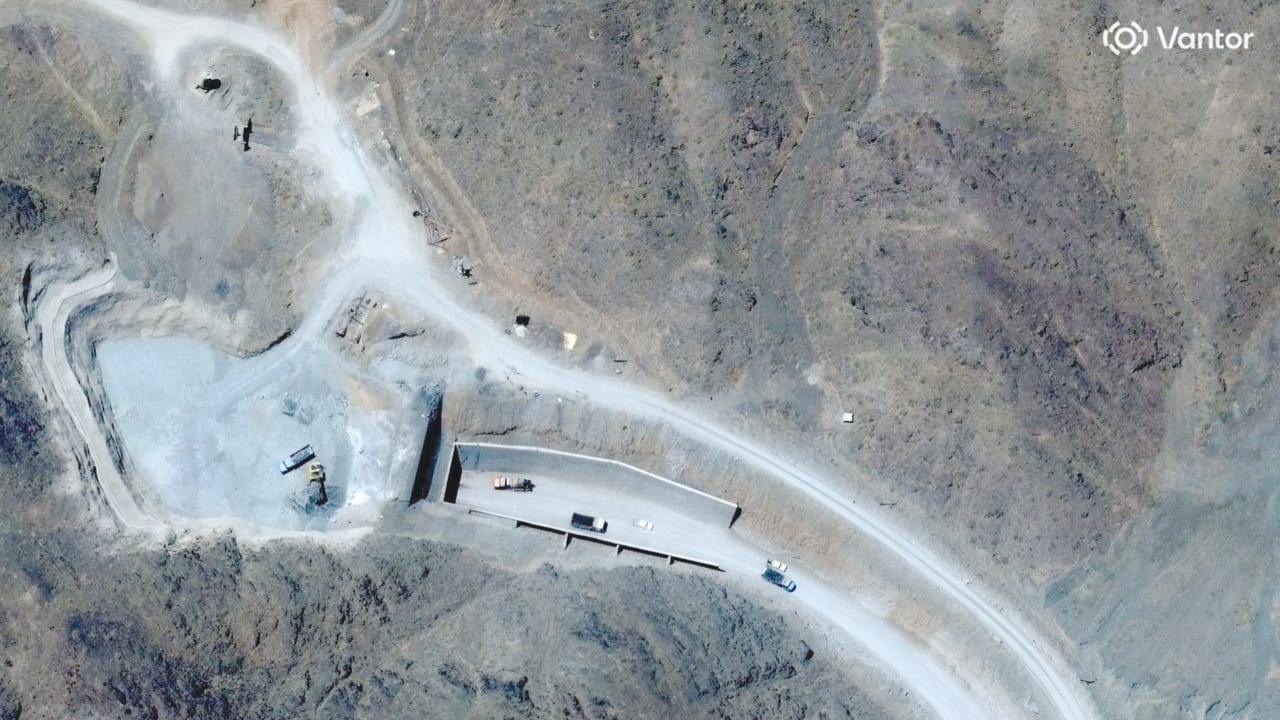
The piece outlines how a possible third U.S.-Israeli war with Iran might unfold, including efforts to establish air supremacy, strike underground nuclear and ballistic-missile facilities, and suppress dispersed Iranian missile forces. It focuses particularly on the deeply buried Pickaxe Mountain site, whose destruction is described as uncertain even with U.S. bunker-busting weapons. The analysis also considers Iranian retaliation against Israel, American bases, energy infrastructure, naval forces, and the Strait of Hormuz. It questions whether a short operation could achieve lasting strategic results.
Biblical Context
A possible U.S.-Israeli conflict with Iran places warfare, national security, retaliation, and the protection of civilian populations at the center of the discussion. Jesus warned that nations would rise against nations and that wars would be part of a troubled age, but He did not provide a timetable by which every modern conflict could be identified as a fulfillment of prophecy (Matthew 24:6-7). That passage supports the seriousness of the subject while cautioning against treating war reports as prophetic proof. Psalm 2 portrays rulers and nations opposing one another while affirming God’s ultimate authority over human power. It offers a broad theological framework for interpreting international conflict, not a specific identification of Iran, Israel, or a particular military campaign. Romans 13:1-4 also recognizes the governing authority’s responsibility to restrain wrongdoing and wield force justly; it can illuminate the stated security rationale for military action, but it does not automatically validate every decision made by a government. The article’s references to Israel and Iran do not establish a particular prophetic fulfillment. Passages sometimes associated with Persia or a future attack on Israel describe distinctive events that are not demonstrated here. The supplied material instead describes a proposed or anticipated U.S.-Israeli campaign against Iran, with uncertain chronology, objectives, and results. Scripture therefore helps frame the realities of war, governmental responsibility, and human vulnerability, while providing no sufficient basis for declaring that a specific prophecy is unfolding.
Watchmen Signals
A possible U.S.-Israeli war with Iran raises the biblical subjects of nations at war, governmental authority, national security, and the human consequences of armed conflict. Scripture addresses those realities directly, although it does not validate the article’s unverified operational claims or identify this proposed campaign as a specific biblical event.
The proposed conflict includes Israel, Iran, nuclear facilities, missiles, and regional warfare, but those features alone do not correspond specifically enough to a defined prophetic passage. Texts sometimes linked to Persia or a future attack on Israel describe different and more distinctive circumstances, and the article does not establish that those conditions are present.
Military preparations, previous strikes, and contingency planning indicate an evolving confrontation, but the text does not establish that a new operation is underway or that an immediate attack is imminent. The situation warrants close monitoring rather than urgent notification.
Biblical Sources
Scripture references supporting the biblical context above.
Jesus speaks of wars, conflicts among nations, and upheaval. The passage provides a relevant biblical perspective on the article’s discussion of a possible regional war, while not identifying this particular conflict as prophetic fulfillment.
The psalm depicts nations and rulers plotting against one another while emphasizing God’s sovereignty over human power. It offers a broad theological framework for international confrontation rather than a specific prediction about this operation.
Paul describes governing authorities as responsible for public order and acknowledges the state’s power to punish wrongdoing. This relates to the security and military rationale presented by the United States and Israel, without endorsing every military action or policy.
Comments
No comments yet.
Sign in to join the conversation.
Sign InStay Informed. Grow in Biblical Understanding.
Explore important news from around the world through the context of God's Word. Create your FREE Watchmen account to discover more news analysis, Biblical Insights, and Scripture-based perspectives.
Create Your FREE AccountFree to join. No credit card required.