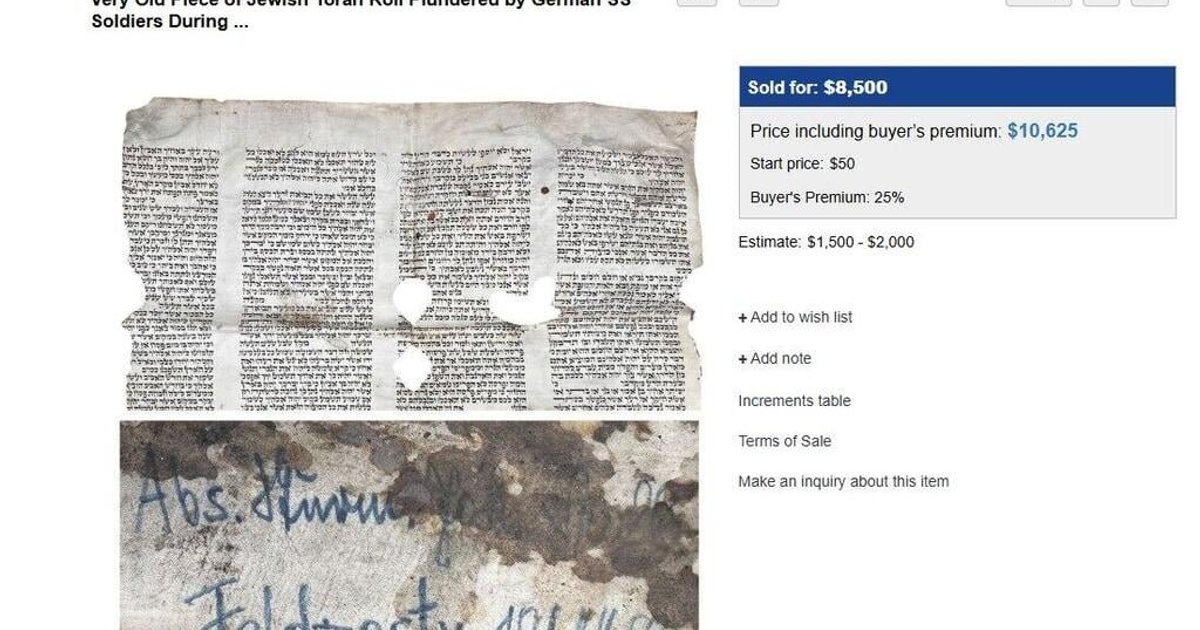
Norwegian auction cancels sale of Nazi-looted Torah fragment following outcry
Summary
A Norwegian auction house canceled the sale of a Torah fragment believed to have been looted by Nazi forces and possibly used as wrapping paper during the Holocaust. After an $8,500 winning bid, international criticism and intervention by Israel’s Foreign Ministry led to the fragment’s withdrawal and planned donation to Remember Us The Holocaust in San Diego. The World Jewish Restitution Organization welcomed the decision but called for investigation. The fragment’s provenance has not been independently verified, leaving important questions about its ownership and history unresolved.
Watchmen Signals
A Torah fragment, the persecution and dispossession of Jewish communities under Nazism, and the effort to prevent a possibly looted sacred object from being sold all touch subjects Scripture addresses: Israel, Jewish religious life, theft, justice, and restitution. The Bible does not speak specifically to Holocaust-era provenance investigations, so the connection supports ethical and theological context rather than a direct ruling on this case.
The canceled auction, Israel’s diplomatic intervention, and the disputed history of the parchment do not correspond to a specific biblical prophecy. Scripture’s teachings about Israel, Jewish suffering, and justice provide context, but the available facts do not establish prophetic fulfillment or a distinctive prophetic pattern.
The auction has already been canceled and the fragment is being transferred to a Holocaust remembrance organization. Further questions about its provenance and the auction house’s conduct may warrant monitoring, but no immediate emergency or rapidly escalating event requires prompt notification.
Biblical Context
The Torah fragment’s claimed identity as a sacred Jewish manuscript connects the story to Scripture’s treatment of Israel, Jewish religious life, and the preservation of holy writings. Deuteronomy 31:24-26 describes the written law being preserved and placed beside the ark, illustrating that Israel’s sacred text was not regarded as an ordinary possession. That passage does not address modern auctions or Holocaust restitution, but it helps explain why a Torah manuscript carries religious significance beyond its monetary value. The alleged Nazi seizure and possible commercial handling of Jewish property also relate to biblical prohibitions against theft and commands to pursue honest restitution. Exodus 22:1-4 establishes restitution for stolen property, while Leviticus 19:11-13 forbids stealing, defrauding, and withholding what belongs to another. These passages do not provide a complete legal framework for recovering Holocaust-era artifacts, especially where provenance remains unverified, but they support the moral seriousness of investigating ownership rather than treating a potentially looted object simply as merchandise. Scripture also repeatedly condemns injustice against vulnerable people and calls rulers to uphold justice. Deuteronomy 24:17-18 forbids depriving the sojourner or widow of justice and reminds Israel of its own experience of oppression. Romans 13:1-4 presents civil authority as responsible for restraining wrongdoing and pursuing justice. Those principles can illuminate calls for governmental investigation and restitution, although the article does not establish the full facts needed to determine legal responsibility. Romans 11:28-29 further recognizes the continuing significance of the Jewish people in relation to God’s promises. It does not specifically discuss Holocaust artifacts or Israel’s diplomatic intervention, but it provides a relevant New Testament context for treating Jewish history and suffering with seriousness rather than contempt. Nothing in the reported cancellation and donation identifies a specific biblical prophecy being fulfilled.
Biblical Sources
Scripture references supporting the biblical context above.
The command to protect vulnerable people from injustice and remember Israel’s own oppression supports careful attention to historical dispossession and the treatment of victims.
Moses commands that the written law be preserved beside the ark, supporting the distinction between a sacred Torah manuscript and an ordinary collectible.
The law requires restitution for stolen property, providing a relevant moral framework for questions about the recovery and handling of allegedly looted property.
These verses prohibit stealing, defrauding, and withholding what belongs to another, principles relevant to unresolved ownership and restitution questions.
Paul speaks of the Jewish people as beloved in relation to the patriarchs and affirms God’s faithfulness to His calling, providing broader context for the story’s concern with Jewish identity and historical suffering.
Paul describes civil authorities as responsible for restraining wrongdoing and pursuing justice, which provides limited context for calls to investigate the artifact’s handling.
Comments
No comments yet.
Sign in to join the conversation.
Sign InStay Informed. Grow in Biblical Understanding.
Explore important news from around the world through the context of God's Word. Create your FREE Watchmen account to discover more news analysis, Biblical Insights, and Scripture-based perspectives.
Create Your FREE AccountFree to join. No credit card required.