'We will cut out your tongue': Gazan teacher threatened after questioning anti-Jewish education in UNWRA school
Summary
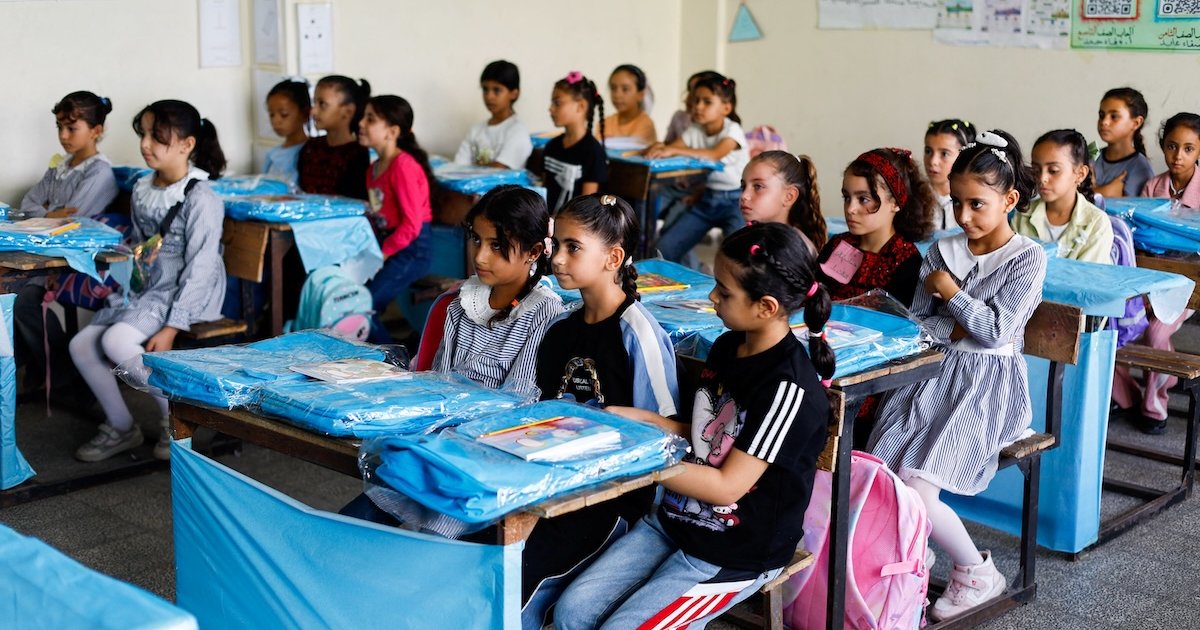
A Palestinian geography teacher told the New York Post that colleagues at a Gaza UNRWA school promoted hatred of Jews, praised Hamas, and encouraged children to support continued fighting against Israel. She said a senior official threatened her with scissors after she objected, prompting her to withdraw complaints because of fears for herself and her family. The school has since closed and become a shelter. The report cites UN Watch allegations about antisemitic curricula and Hamas influence, while USIEA is developing an alternative education plan.
Watchmen Signals
Teaching Gazan children to hate Jews, glorify Hamas, and continue violent struggle raises direct biblical concerns about hatred, truthful instruction, the formation of children, and the pursuit of peace. Genesis 12:3 adds a specifically biblical reason to reject hostility toward Israel’s people, although the article’s allegations still require independent verification.
The testimony and allegations describe possible antisemitic indoctrination and Hamas influence, but they do not correspond to a distinct prophetic event with identifiable fulfillment markers. Biblical passages about hostility toward Israel may provide moral and thematic context, yet the supplied facts do not establish that a particular prophecy is being fulfilled.
The school has already closed, while several cited investigations and funding decisions predate this account. A new alternative education plan is now being developed, making the issue worth monitoring but not requiring immediate emergency notification.
Biblical Context
Children are especially vulnerable to the beliefs and loyalties taught by adults. Proverbs 22:6 presents early instruction as formative, while Deuteronomy 6:6-7 describes the deliberate responsibility to teach children faithfully in everyday life. Those passages do not establish a modern curriculum policy, but they help explain why using a school to cultivate hatred or glorify violence is morally serious. The alleged teaching that Jews are responsible for Palestinian suffering conflicts with Scripture’s prohibition of hatred and its command to seek the good of one’s neighbor. Leviticus 19:17-18 rejects hatred and calls for love of one’s neighbor; Ephesians 4:25 commands truthfulness rather than destructive falsehood; and Romans 12:18 urges believers, as far as possible, to live peaceably. These passages support concern about antisemitic instruction and the replacement of truth and peace with collective blame and violence. Genesis 12:3 also gives Israel a distinctive place in God’s covenant purposes and warns of hostility toward those connected with Abraham. That passage should not be used to treat every modern political dispute as prophetic fulfillment, nor does it settle contemporary policy questions. It does, however, provide a specifically biblical reason to reject teaching that directs hatred against Jews as a people. The article’s allegations therefore have a meaningful biblical dimension, while the factual claims themselves still require verification.
Biblical Sources
Scripture references supporting the biblical context above.
These verses present deliberate, repeated instruction of children as a serious responsibility; they provide context for evaluating what beliefs and loyalties adults intentionally teach the young.
Paul’s command to put away falsehood and speak truthfully bears on allegations that children were given a distorted, blame-centered account of Jews and the conflict.
God’s promise concerning Abraham and those who bless or dishonor him gives Israel a distinctive place in biblical history and supports rejecting hostility toward Jews, though it does not establish that this modern event fulfills prophecy.
The passage rejects hatred and commands love of one’s neighbor, directly opposing the alleged instruction that Jews should be blamed collectively or hated.
The verse emphasizes that early instruction can shape a child’s later path, illuminating the responsibility of teachers and institutions that form children’s beliefs.
The call to live peaceably, insofar as it depends on believers, contrasts with alleged classroom encouragement of continued fighting and the glorification of violence.
Comments
No comments yet.
Sign in to join the conversation.
Sign InStay Informed. Grow in Biblical Understanding.
Explore important news from around the world through the context of God's Word. Create your FREE Watchmen account to discover more news analysis, Biblical Insights, and Scripture-based perspectives.
Create Your FREE AccountFree to join. No credit card required.