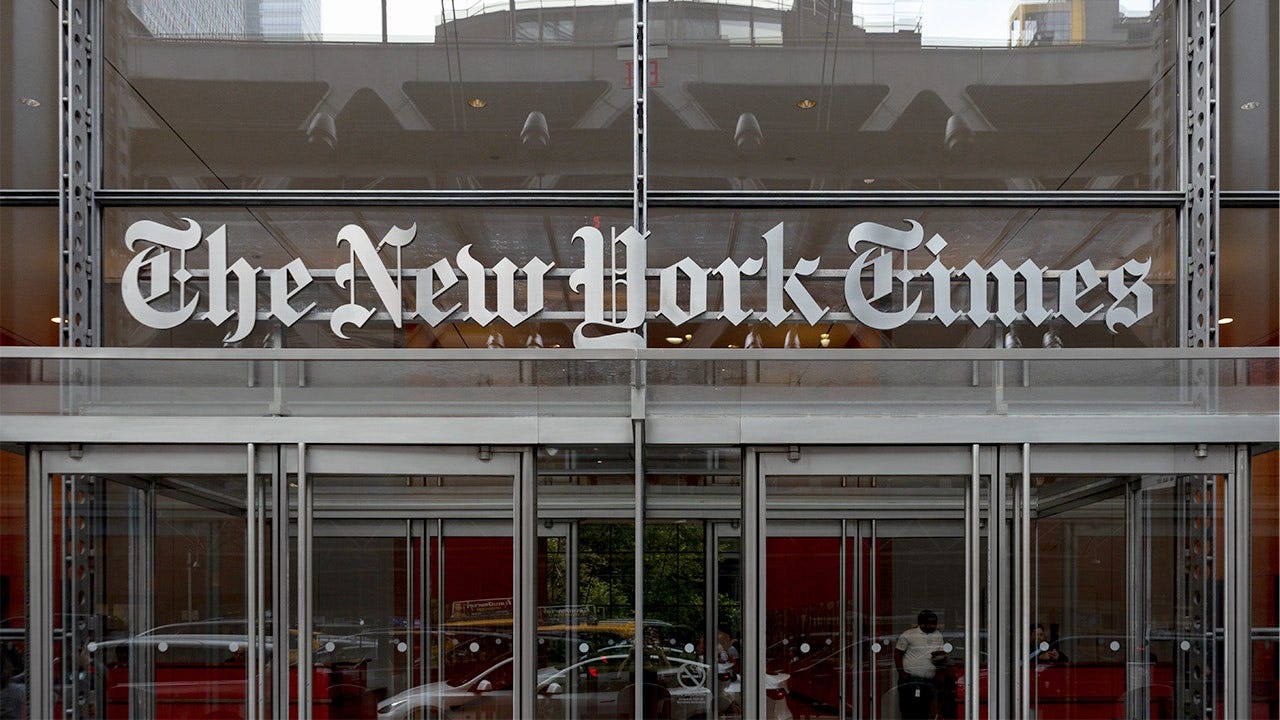
New York Times editor admits paper should be more 'discerning' on labeling liberals
Summary
New York Times standards editor Patrick Healy acknowledged that the paper may apply “liberal” and “conservative” labels inconsistently after law professor Josh Blackman objected to being identified as conservative in two February articles. Blackman said a search of Times archives suggested conservative law professors were labeled more often than liberal ones, though the article does not independently verify his findings. He argued that reporting specific affiliations, legal filings, or potential conflicts would inform readers better than broad political descriptors. Healy agreed the criticism had merit but offered no specific policy change.
Watchmen Signals
A New York Times standards editor acknowledged that liberal and conservative labels may be applied unevenly, potentially shaping how readers judge experts before considering their arguments. Leviticus 19:15’s warning against partiality and Ephesians 4:25’s call for truthful speech support concerns about fair, accurate public description, although Scripture does not directly address modern newsroom labeling practices.
The dispute involves media terminology, perceived political imbalance, and journalistic standards. Those facts do not correspond to a particular biblical prophecy or distinctive prophetic pattern; a concern about fairness and truthfulness should not be presented as evidence of prophetic fulfillment.
The comments reflect an interview and an ongoing standards dispute, not a rapidly unfolding event requiring immediate notification.
Biblical Context
The Times’ acknowledgment that political labels may be applied unevenly raises a recognizable biblical concern about impartial judgment. Leviticus 19:15 forbids perverting justice through partiality, and while the passage addresses judicial judgment rather than newsroom style, its principle supports applying standards fairly rather than treating one group as the unmarked norm and another as the deviation. The issue also concerns truthful, responsible communication. Ephesians 4:25 instructs believers to put away falsehood and speak truthfully to one another; it does not prescribe a modern media-labeling policy, but it supports careful descriptions that help readers understand a source rather than encouraging assumptions. Scripture does not establish that the New York Times acted with deliberate bias, and the supplied evidence is limited to an editor’s acknowledgment and Blackman’s unverified comparison. No specific prophetic passage is identified: the dispute concerns contemporary journalistic standards, not a discernible fulfillment of biblical prophecy.
Biblical Sources
Scripture references supporting the biblical context above.
Paul instructs believers to reject falsehood and speak truthfully. The passage supports careful, honest public description, though it does not directly prescribe how news organizations should identify analysts or professors.
This command prohibits partiality and calls for just judgment. It provides a relevant biblical principle for evaluating whether political labels are applied consistently, while recognizing that its original setting is judicial and communal fairness rather than journalism.
Comments
No comments yet.
Sign in to join the conversation.
Sign InStay Informed. Grow in Biblical Understanding.
Explore important news from around the world through the context of God's Word. Create your FREE Watchmen account to discover more news analysis, Biblical Insights, and Scripture-based perspectives.
Create Your FREE AccountFree to join. No credit card required.