Giant statues of pharaoh with Moses link discovered after farmer finds inscribed stone
Summary
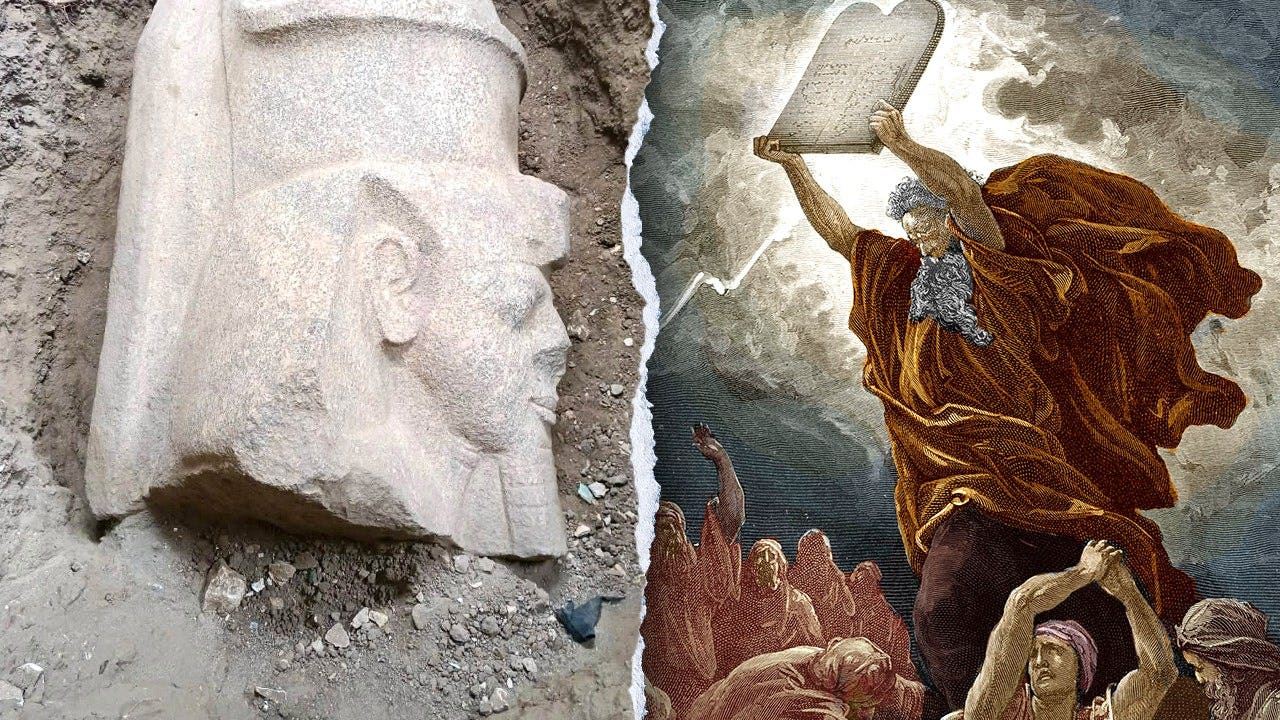
An Egyptian farmer in Behbeit El-Hagar discovered an inscribed stone while tending cucumbers, prompting archaeologists to excavate the site. Egypt’s Ministry of Tourism and Antiquities said researchers found the remains of two colossal statues believed to depict Ramses II, including a granite block bearing his royal titles. One statue’s head is more than five feet tall, and the original monument may have reached nearly 28 feet. The discovery may illuminate ancient Egyptian history, but it does not establish Ramses II as the pharaoh of Exodus.
Watchmen Signals
Biblical Context
Ramses II’s proposed connection to the Exodus makes the discovery directly relevant to the historical setting of a biblical account, but the connection must remain carefully limited. Exodus describes an unnamed Egyptian pharaoh who opposes Moses’ demand to release the Israelites. In Exodus 5:1–2, Moses and Aaron present that demand, and Pharaoh refuses to acknowledge the Lord’s authority. The later narrative records judgments on Egypt and Pharaoh’s eventual order that Israel depart, particularly in Exodus 7–12 and 12:31–32. These passages explain why archaeologists and historians may compare discoveries associated with a major New Kingdom pharaoh to the Exodus narrative. The relevant biblical text does not identify Ramses II, and Scripture does not say that the pharaoh’s statues, monuments, or royal titles would serve as evidence of the Exodus. Therefore, the statues can contribute to historical study of ancient Egypt without confirming the biblical ruler’s identity or proving the events described in Exodus. No direct prophetic fulfillment is identified: this is an ancient archaeological discovery, not a present event corresponding to a specific biblical prophecy.
Biblical Sources
Scripture references supporting the biblical context above.
Moses and Aaron confront Pharaoh and demand that he let Israel go, establishing the biblical ruler and conflict to which the article’s proposed Ramses II connection refers.
This passage begins the account of Pharaoh’s resistance and the judgments on Egypt, providing context for the article’s reference to the plagues.
Pharaoh finally tells Moses and Aaron to depart with the Israelites after the final plague, completing the central confrontation described in the article.
Comments
No comments yet.
Sign in to join the conversation.
Sign InStay Informed. Grow in Biblical Understanding.
Explore important news from around the world through the context of God's Word. Create your FREE Watchmen account to discover more news analysis, Biblical Insights, and Scripture-based perspectives.
Create Your FREE AccountFree to join. No credit card required.