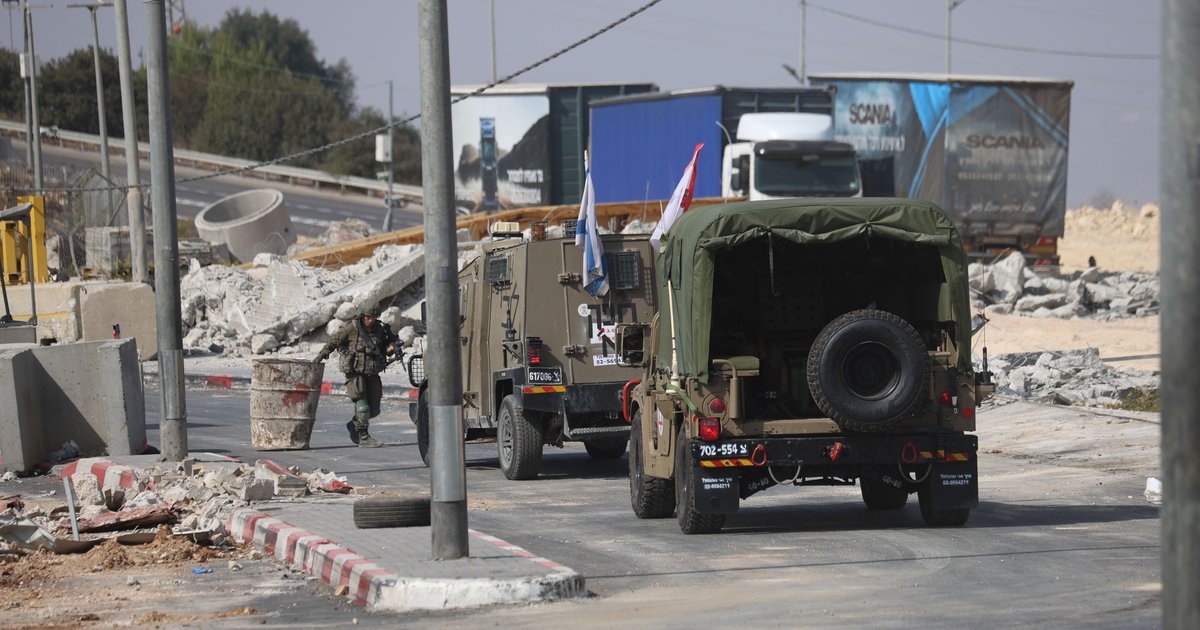
IDF launches counterterrorism operation in Hebron after two soldiers killed
Summary
Two Israeli soldiers, Staff Sgt. Ron Yonatan Roytman and Sgt. Yuval Shai Svilem, were killed and three others wounded in a shooting at Judea Junction south of Hebron. The two attackers were killed in an exchange of fire. Israel then launched a joint IDF, Shin Bet, Border Police, and Civil Administration operation involving searches, interrogations, area closures, and possible demolitions of the attackers’ homes. Israeli officials described the measures as counterterrorism and deterrence, while B’Tselem and Palestinian advocates condemned them as collective punishment and unlawful displacement.
Watchmen Signals
Biblical Context
The killing of Israeli soldiers and the reported terrorist attack directly raise the biblical concern that human life is not to be taken unjustly. Genesis 9:6 grounds the seriousness of murder in humanity’s creation in God’s image; it supports treating the deaths as a grave moral wrong, without by itself determining the correct military or legal response. Romans 13:1-4 describes governing authorities as possessing responsibility to restrain serious wrongdoing and to punish evil. That principle helps explain the state’s duty to protect civilians and security personnel, investigate attacks, and confront organized violence. It does not automatically validate every measure taken by authorities; actions must still be assessed for justice, proportionality, and treatment of the innocent. Scripture also places limits on punishment. Deuteronomy 24:16 states that people should not be put to death for the wrongdoing of others, and Exodus 23:7 commands Israel’s judges to keep away from the killing of the innocent. These passages do not directly adjudicate Israel’s modern policy of demolishing attackers’ homes, but they make the distinction between holding perpetrators accountable and imposing punitive harm on uninvolved family members or residents morally important. The competing claims in the report therefore involve a genuine biblical tension between public protection and the prohibition of unjust or collective punishment. Hebron also has a specific place in biblical history. Joshua 14:13-14 records Caleb receiving Hebron as an inheritance in the land, giving the location historical significance within the biblical account of Israel. That connection explains why developments there may carry added significance for Christian readers, but the passage does not identify this particular security operation as prophetic fulfillment.
Biblical Sources
Scripture references supporting the biblical context above.
The passage establishes an important principle that individuals should not be punished for the wrongdoing of others, which is relevant to allegations that home demolitions could affect uninvolved relatives or residents.
The command to avoid condemning or killing the innocent provides a biblical framework for evaluating security measures, restrictions, and demolitions that may affect civilians.
Human life is treated as sacred because people are made in God’s image; this supports the gravity of the soldiers’ killings and the moral wrong of murder.
Hebron’s identification as Caleb’s inheritance in the biblical account explains the location’s historical significance within the land narratives of Scripture, without establishing a prophetic claim about this event.
Civil authorities are described as having responsibility to restrain wrongdoing and protect the public, relevant to Israel’s stated counterterrorism response while not endorsing every specific action.
Comments
No comments yet.
Sign in to join the conversation.
Sign InStay Informed. Grow in Biblical Understanding.
Explore important news from around the world through the context of God's Word. Create your FREE Watchmen account to discover more news analysis, Biblical Insights, and Scripture-based perspectives.
Create Your FREE AccountFree to join. No credit card required.