'IN THE WAR ROOM' – The risks PM Netanyahu was willing to take
Summary
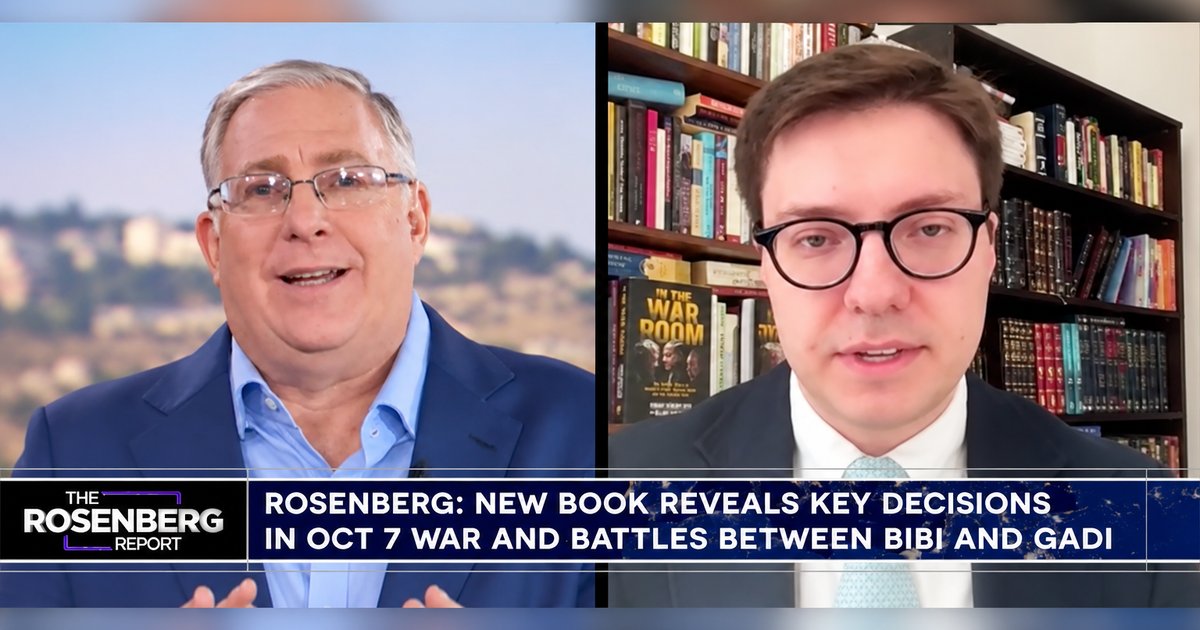
In Part Two of The Rosenberg Report, Elliot Kaufman describes Israeli wartime debates after Hamas’s October 7, 2023 attack. Defense Minister Yoav Gallant reportedly urged an immediate major strike on Hezbollah, but Prime Minister Benjamin Netanyahu declined, fearing a wider war and insufficient U.S. support. Kaufman says Netanyahu later accepted greater risks, including a failed operation targeting Hamas leaders in Doha, intensified military pressure in Gaza, strikes against Hezbollah, and direct action against Iran. The discussion also examines hostage negotiations and the eventual release of remaining captives.
Watchmen Signals
Biblical Context
Israel’s war with Hamas and Hezbollah, the danger posed to civilians and hostages, and the decisions of national leaders connect directly with biblical teaching about government responsibility, justice, protection of the vulnerable, and the sober calculation of military force. Romans 13:1-4 describes civil authorities as accountable for restraining wrongdoing and protecting public order; that principle is relevant to the responsibilities faced by Israeli leaders, though it does not automatically endorse every military decision reported here. The hostage crisis also brings Proverbs 24:11-12 into view. Its instruction to rescue those being led toward death supports a moral concern for captives and endangered civilians. The passage does not prescribe a particular hostage-negotiation strategy, and it should not be used to determine whether a specific strike or exchange was justified. Likewise, Luke 14:31-32 presents a general principle of counting the cost before entering conflict. That principle illuminates Netanyahu’s reported fear that attacking Hezbollah could open a wider war, but it is not a direct commentary on modern military policy. Scripture also repeatedly holds rulers and societies accountable for justice rather than merely for victory. Deuteronomy 16:18-20 commands judges and officials to pursue justice and reject partiality or bribery, while Psalm 82:3-4 calls for defending the weak and rescuing the vulnerable. These passages provide relevant moral standards for evaluating the treatment of hostages, civilians, prisoners, and displaced people. They do not establish that any particular Israeli, Hamas, Hezbollah, Iranian, Qatari, or American action fulfilled biblical prophecy. The reported events may invite comparisons with end-times passages because Israel, Iran, regional warfare, and international conflict are involved. However, the supplied facts do not present the distinctive features of a particular prophetic passage. The connection is therefore one of biblical ethics and national responsibility, not a demonstrated prophetic fulfillment.
Biblical Sources
Scripture references supporting the biblical context above.
These instructions require Israel’s officials to administer justice impartially and pursue what is right. They provide a moral standard relevant to the conduct of national leaders and the treatment of people affected by war.
Jesus uses a king’s deliberation before war to illustrate the importance of soberly assessing strength and consequences. This offers a general biblical parallel to the reported debate over whether striking Hezbollah would trigger a wider conflict.
The passage calls people to rescue those being led toward death and insists that God sees and judges whether people protect the vulnerable. It relates to the article’s discussion of hostages and endangered civilians, without prescribing a specific rescue or negotiation method.
The psalm calls rulers to defend the weak, uphold the afflicted, and rescue the vulnerable. It relates to the article’s hostage and civilian-protection issues as an ethical standard, not as a claim about the outcome of any particular operation.
Paul describes governing authorities as responsible for restraining wrongdoing and serving a public-order function. This materially relates to the responsibilities of Israeli leaders making decisions about national defense, though it does not validate every policy or military action.
Comments
No comments yet.
Sign in to join the conversation.
Sign InStay Informed. Grow in Biblical Understanding.
Explore important news from around the world through the context of God's Word. Create your FREE Watchmen account to discover more news analysis, Biblical Insights, and Scripture-based perspectives.
Create Your FREE AccountFree to join. No credit card required.