The Mecca Pact: Is Saudi Arabia turning away from Israel?
Summary
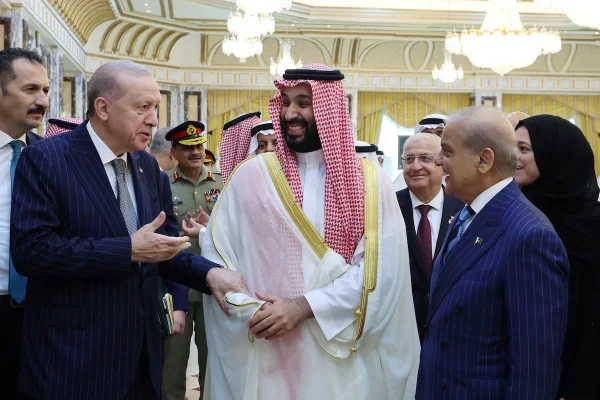
Podcast hosts Joel and Lynn Rosenberg discuss a defense agreement signed in Mecca on Aug. 7 by Saudi Arabia, Turkey, and Pakistan. The pact reportedly treats an attack on one member as an attack on all, creating a potentially significant Islamic security bloc with substantial military resources. Rosenberg argues it does not yet demonstrate a Saudi strategic break with Israel, citing the partners’ lack of military intervention after recent Houthi attacks. He views Turkey as the principal concern and considers, but largely rejects, identifying the pact as fulfillment of Ezekiel 38–39.
Watchmen Signals
Biblical Context
The article explicitly frames the defense agreement through Ezekiel 38–39 and discusses whether it could relate to a future coalition against Israel. That is a legitimate biblical connection because the passage directly addresses a future invasion involving named peoples and Israel. However, identifying Magog with Russia, Persia with Iran, and Gomer with Turkey is an interpretive framework, not an identification stated explicitly in the passage. The article’s proposed connection is therefore speculative rather than established. Ezekiel 38:13 describes Sheba, Dedan, and other merchants questioning the invading force rather than clearly joining it, which the hosts use to distinguish Arabian states from the aggressors. Daniel 2:21 and Daniel 7:13–14 support the article’s broader theological emphasis that human rulers and alliances are temporary while God’s rule is sovereign and enduring. These passages do not specifically interpret the Saudi-Turkish-Pakistani agreement or establish that it fulfills prophecy.
Biblical Sources
Scripture references supporting the biblical context above.
The verse teaches that God changes times and removes and establishes rulers, supporting the article’s general emphasis on divine sovereignty over changing political alliances.
This passage describes the everlasting dominion of the Son of Man, supporting the closing contrast between temporary human alliances and God’s enduring kingdom.
This passage introduces Gog, Magog, and several peoples associated with a future attack against Israel. The article invokes it when comparing the reported defense agreement with a possible end-times coalition, while acknowledging that the comparison is uncertain.
Sheba, Dedan, and other merchants question the invader’s actions in this passage. The article uses this detail to argue that Arabian peoples may appear as observers or questioners rather than as the principal invaders.
Comments
No comments yet.
Sign in to join the conversation.
Sign In