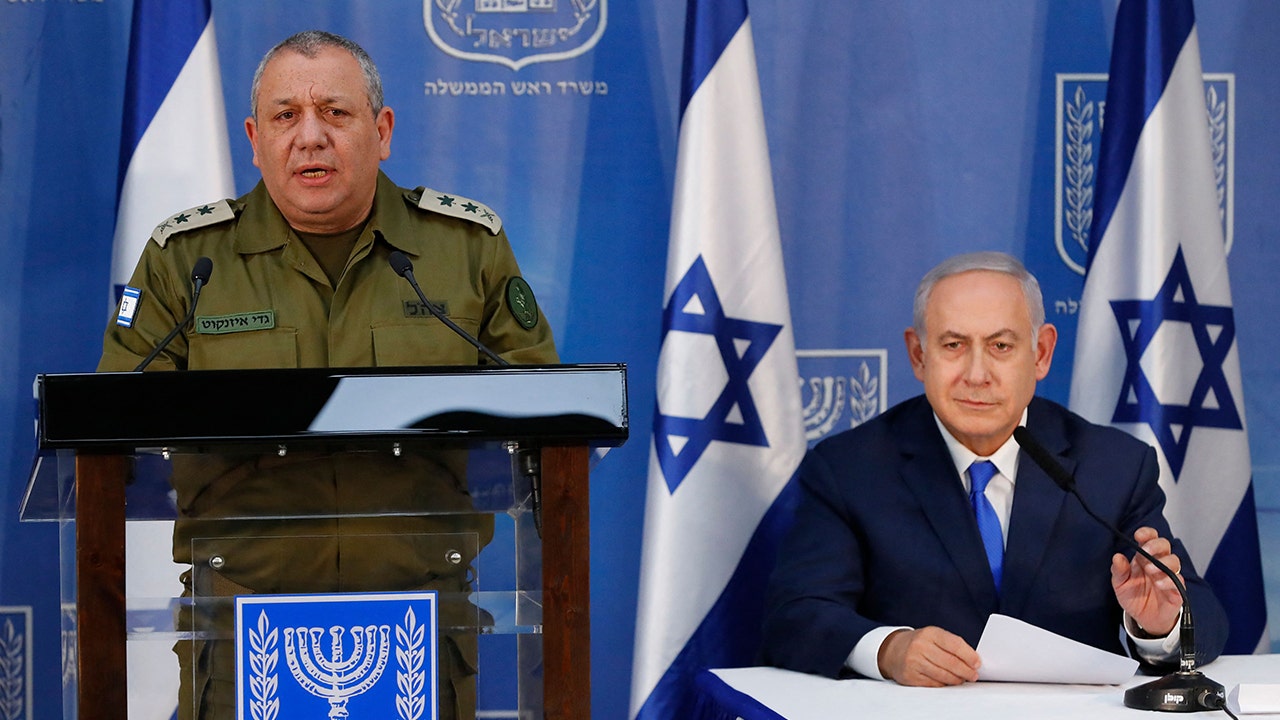
Former Israeli army chief Gadi Eisenkot emerges as Netanyahu’s leading election challenger
Summary
Israel’s Oct. 27 election is presented as a contest between longtime Prime Minister Benjamin Netanyahu and retired Lt. Gen. Gadi Eisenkot, whose centrist Yashar party reportedly holds a narrow polling lead. Neither party is expected to win an outright majority, making coalition negotiations over the 61-seat threshold decisive. Eisenkot, a former IDF chief of staff who lost a son and two nephews in the war with Hamas, resigned from Netanyahu’s war cabinet after criticizing its strategy. The result could affect military policy, West Bank security, Iran-related threats, and Israel’s international standing.
Watchmen Signals
Biblical Context
The election places questions of national leadership, military responsibility, justice, and the treatment of neighboring populations at the center of public decision-making. Deuteronomy 17:14-20 describes the king’s authority while placing him under moral and legal restraints: he must remain subject to God’s law, avoid self-exaltation, and govern with disciplined judgment. That principle does not identify either candidate as approved or disapproved by God, but it is materially relevant to a contest involving executive power and wartime decisions. The article’s discussion of alleged failures before the October 7 attack and Eisenkot’s resignation over the absence of a comprehensive strategy also raises the biblical issue of accountability in leadership. Second Samuel 23:3-4 presents righteous rule as the exercise of authority in the fear of God and for the good of the people. This provides a meaningful standard by which claims about military judgment, political responsibility, and protection of civilians may be considered, though Scripture does not settle the article’s disputed factual allegations. The report’s references to Jewish extremist violence in the West Bank and heated rhetoric against Palestinians connect with Scripture’s repeated demand for impartial justice and protection from oppression. Micah 6:8 summarizes the obligation to do justice, love mercy, and walk humbly with God; Proverbs 31:8-9 calls rulers to speak for those who cannot adequately defend themselves and to judge righteously. These passages do not endorse a particular Israeli coalition or prescribe a modern territorial policy, but they are directly relevant to evaluating how authorities treat vulnerable people and respond to violence. Romans 13:1-4 recognizes civil government as an authority responsible for restraining wrongdoing and pursuing public order. In this setting, that principle bears on the government’s duty to protect Israel’s population from Hamas and Hezbollah while also exercising authority justly. It does not imply that every government action is righteous, nor does it remove the obligation to assess claims of abuse or disproportionate conduct. The article’s election, military conflict, and Israel-related geography do not by themselves establish a particular prophetic fulfillment. No distinctive prophetic event is sufficiently identified in the supplied facts, so the relevant biblical connections are ethical and governmental rather than predictive.
Biblical Sources
Scripture references supporting the biblical context above.
David’s final words associate legitimate rule with fearing God and governing justly, providing a biblical standard for assessing claims about political and military leadership.
The passage describes the responsibilities and restraints of Israel’s king, making it materially relevant to a national leadership contest and the exercise of wartime political power.
The call to do justice, love mercy, and walk humbly with God is relevant to the article’s discussion of government conduct, violence, and treatment of Palestinians and other affected civilians.
These verses call those with authority to speak for the vulnerable and judge righteously, directly illuminating claims about public protection, extremist violence, and the responsibilities of government.
Paul describes civil authority as responsible for public order and the restraint of wrongdoing, relevant to the government’s security obligations amid attacks by Hamas and Hezbollah while not implying that every governmental action is just.
Comments
No comments yet.
Sign in to join the conversation.
Sign InStay Informed. Grow in Biblical Understanding.
Explore important news from around the world through the context of God's Word. Create your FREE Watchmen account to discover more news analysis, Biblical Insights, and Scripture-based perspectives.
Create Your FREE AccountFree to join. No credit card required.